 Transitour
AI-Powered Tour Operator Software: What It Can Automate

AI tour operator software is becoming relevant for a very practical reason: transport and travel operations teams are under pressure to respond faster, manage more enquiries and avoid mistakes without adding more manual work. For coach operators, bus companies, DMCs and tour transport teams, the real question is not whether AI sounds interesting. The question is what it can actually automate inside the daily flow from enquiry to quote, confirmed booking, dispatch and invoicing.
Many operators still manage this flow with a mix of email, WhatsApp, spreadsheets, calendars and accounting tools. That may work when the volume is low. It becomes harder when requests arrive outside office hours, clients expect quick answers, dispatchers need accurate vehicle and driver availability, and finance needs clear information after the trip is completed.
This is where automation can create a measurable operational difference. Not by replacing the operations team, but by removing repetitive steps, organizing information earlier and making sure the right details reach the right workflow before a booking becomes a problem.
What AI tour operator software should automate first
The most valuable automation usually starts before a booking exists. A potential customer sends a message through the website or WhatsApp asking for a coach, minibus, shuttle or airport transfer. The enquiry may include some details, but rarely everything an operations team needs to prepare a reliable quote.
A strong AI tour operator software setup should help collect the missing information in a structured way. That can include the date, pick-up point, destination, number of passengers, luggage, vehicle type, route notes, special requests and whether the trip is one-way, return, multi-stop or recurring.
For many teams, this is one of the biggest hidden time costs. Staff spend valuable time asking the same follow-up questions, copying details from messages into another system and trying to understand whether the request is ready for pricing. AI can help by turning an unstructured conversation into a clearer operational request.
1. Lead capture from web and WhatsApp
Tour and transport enquiries do not always arrive during office hours. A school coordinator may send a message in the evening. A DMC may request availability for a next-day transfer. A corporate client may ask for a recurring shuttle while the operations team is already busy with live dispatch.
AI can help by keeping the first response active through a website chat widget or WhatsApp channel. Instead of leaving the request unanswered until the next morning, the assistant can capture the enquiry, ask for key trip details and keep the opportunity moving.
For operators, this does not only improve customer experience. It also reduces the risk of losing a booking simply because another supplier responded faster. In commercial transport operations, response time can be a competitive advantage, especially when the request is urgent or the client is comparing several suppliers.
Transitour + AI is designed around this type of use case: capturing leads from WhatsApp and the web, qualifying enquiries and helping move confirmed requests into the operational workflow.
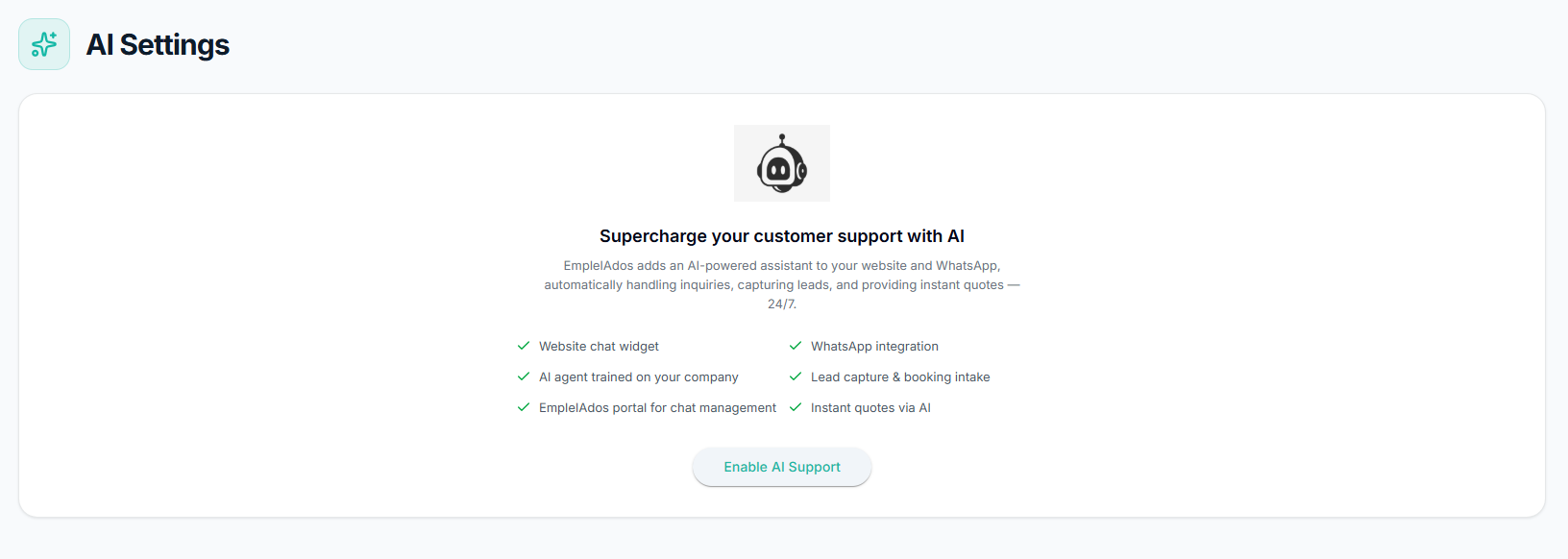
Transitour + AI supports website chat, WhatsApp enquiries, lead capture and instant quote workflows.
2. Qualification of transport requests
Not every enquiry is ready for a quote. Some messages are incomplete. Others are too vague. Some may not match the type of service an operator provides. Without a structured qualification step, teams can waste time on requests that cannot be priced correctly.
AI can help by asking for missing information before the request reaches the operations team. For example, if a client asks for “a coach from the airport to the hotel”, the assistant can request the date, time, passenger count, luggage, pick-up terminal, destination address and whether a return service is needed.
This matters because transport pricing depends on operational details. Route, distance, waiting time, vehicle capacity, passenger count, date, time and client-specific rates can all affect the final quote. A better-qualified request helps the team respond faster and reduces the risk of sending an inaccurate price.
For DMCs and travel companies, this is also useful because requests often involve several movements, multiple groups or repeated transfers across different days. The earlier the request is structured, the easier it is to turn it into a workable booking.
3. Drafting quotes faster
Quote preparation is one of the most obvious areas for automation. Many operators still prepare quotes by checking old prices, looking at spreadsheets, calculating distance, reviewing rate cards and copying the final answer into an email or message.
That manual process is slow and inconsistent. It can also create margin problems if the wrong rate is used, if a waiting charge is missed or if a client-specific agreement is not applied.
AI can support the quoting process by helping draft the response once the relevant details are collected. The final price still needs to be based on the operator’s pricing logic and business rules, but automation can reduce the amount of repetitive writing and data handling involved.
In Transitour, the broader operational platform supports structured pricing, configurable rates, multi-stop routes and quote management. Transitour + AI adds the commercial automation layer by helping qualify enquiries and prepare quote workflows from web and WhatsApp conversations.
4. Turning accepted quotes into bookings
The gap between a quote and a confirmed booking is another common source of operational friction. A client accepts by email, someone marks it in a spreadsheet, another person creates the booking, and dispatch later needs to understand what was agreed.
This handoff is where errors happen. A time can be copied incorrectly. A route note can be missed. A passenger count may change but not reach the dispatcher. The accepted quote may not be linked properly to the final booking or invoice.
Automation helps by making the quote-to-booking process more structured. When the request is confirmed, the booking can move into the operational system with the relevant information already organized. This gives the team a clearer path from commercial opportunity to confirmed work.
Transitour is built to connect quoting, reservations, dispatch and invoicing in one structured platform. That connection is important because AI is most useful when it feeds a real operational system, not when it simply creates another isolated message thread.
5. Routing confirmed bookings into dispatch
For transport operators, a confirmed booking is only useful if it can be planned and executed. Dispatch teams need to know what is unassigned, which jobs have a vehicle and driver, what is in progress and what has been completed.
This is why automation should not stop at the sales conversation. Once a booking is confirmed, the next step is operational visibility. The team needs to assign vehicles, drivers and resources while checking availability, capacity and timing.
Transitour includes a dispatch board that helps teams view bookings by operational status. For coach and bus operators, this type of board is useful because the team can quickly distinguish between unassigned work, assigned jobs, active trips and completed services.
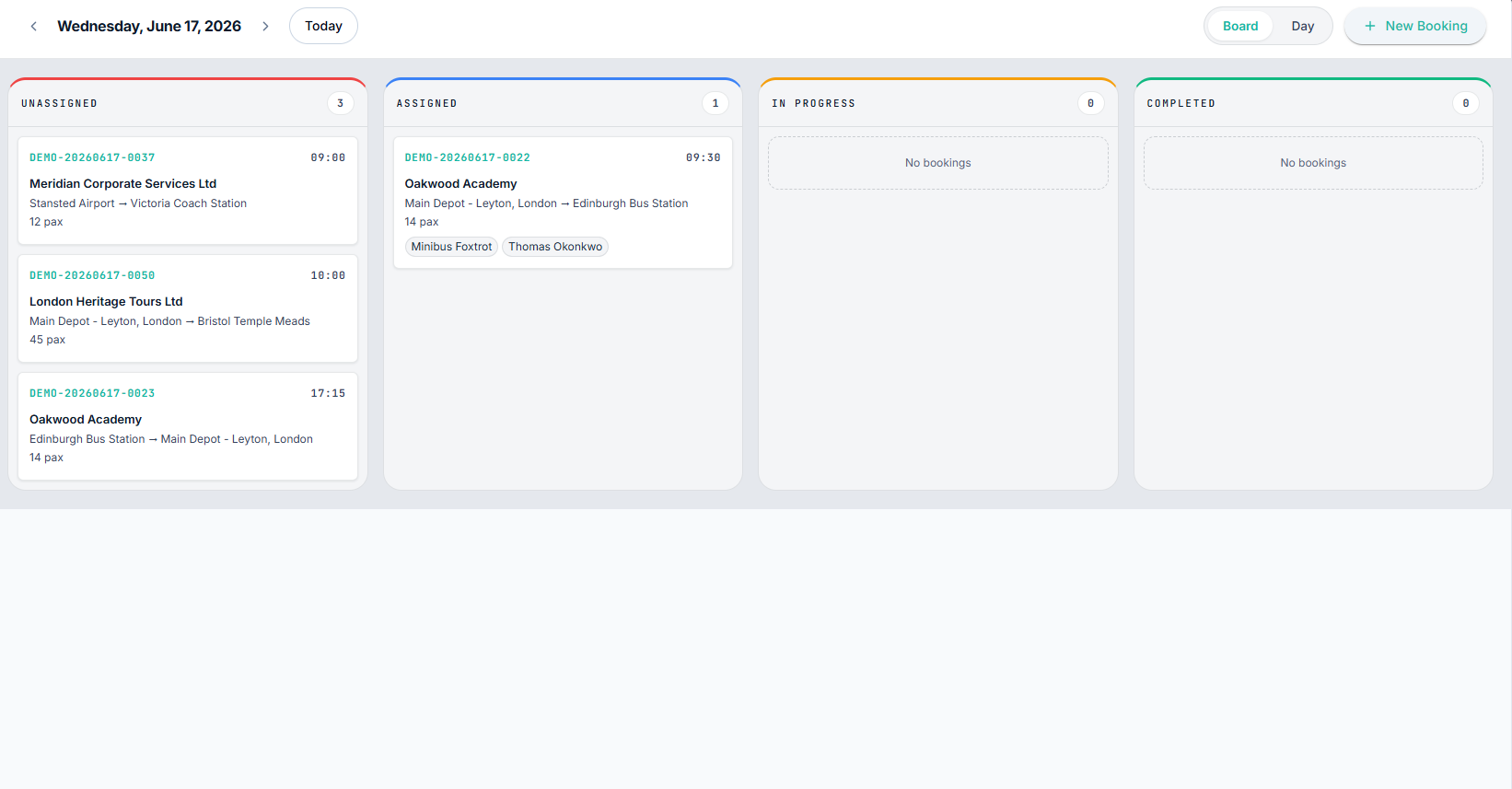
Transitour gives dispatch teams a clear board view of bookings by operational status.
6. Reducing repetitive admin across the operation
The value of automation is not only speed. It is also consistency. If every enquiry, quote and booking follows a different manual path, managers have less control over the operation. Reporting becomes harder. Follow-up depends on memory. Finance may receive incomplete information. Dispatch may need to ask commercial teams for missing details.
AI can reduce repetitive admin by helping collect the same types of information in the same way. A more structured intake process supports better planning later. It also makes it easier to review enquiries, accepted quotes, confirmed bookings and completed services.
For operators managing coaches, buses, limousines, taxis or MPVs, this can make a significant difference. The same platform can support different types of work, from long-distance tours and school trips to airport transfers, corporate shuttles and premium chauffeur services.
What AI should not automate blindly
Automation is useful, but transport operations still require human judgment. A dispatcher may need to decide whether a vehicle is suitable for a specific route. A manager may need to approve a special price. A driver assignment may depend on local knowledge, compliance or working-time constraints.
For that reason, AI should not be treated as a replacement for operational control. It should be treated as a way to prepare better information, reduce repetitive steps and help teams make faster decisions.
Good tour operator automation should keep the human team in control of the important decisions. The system should support the workflow, not hide it.
How to evaluate AI tour operator software
When comparing tools, operators should look beyond the AI label. The most important question is whether the software connects automation with the real transport workflow.
Useful questions include:
- Can it capture enquiries from the website and WhatsApp?
- Can it qualify requests before the team spends time on them?
- Can it support quote preparation using structured trip information?
- Can confirmed bookings move into dispatch instead of staying in emails?
- Can the same platform support bookings, vehicles, drivers, schedules, invoicing and reporting?
- Can the team keep control over pricing, availability and operational decisions?
If the answer is no, the AI feature may become another disconnected tool. If the answer is yes, it can become part of a more efficient operating model.
Where Transitour fits
Transitour is designed for operators that need to manage the full flow from customer request to invoice. The platform brings together quotes, bookings, scheduling, dispatch, vehicles, drivers, invoicing and operational reporting in one system.
Transitour + AI extends that workflow with AI-powered support for web and WhatsApp enquiries. It can help capture leads, qualify requests, support quote workflows and route confirmed bookings into the dispatch process. This makes the AI layer practical because it is connected to the operational platform where the team already manages vehicles, drivers, reservations and daily work.
For a small operator, this can mean responding to more requests without increasing admin. For a growing coach or bus company, it can mean more consistent intake, clearer handoffs and fewer manual gaps between sales and operations. For DMCs and tour transport teams, it can help standardize enquiries that often arrive in different formats from different clients.
Conclusion: AI is useful when it removes real operational work
The best use of AI in transport operations is not a flashy chatbot. It is a practical workflow that helps teams capture enquiries, qualify trip details, prepare quotes, convert accepted work into bookings and move confirmed services into dispatch.
AI tour operator software should make the operation easier to control, not harder to supervise. It should reduce repetitive admin, improve response time and help the team work from cleaner information.
Ready to see how AI tour operator software can support your booking and dispatch workflow? Try Transitour free for 7 days or book a demo with the team to see how web and WhatsApp enquiries can become structured quotes, confirmed bookings and dispatch-ready work.