 Transitour
Best Coach Operator Software: What to Look for in 2026

Choosing the right coach operator software in 2026 is no longer just about replacing spreadsheets. For many coach operators, bus operators, DMCs and tour transport companies, the real challenge is connecting the entire operation: customer requests, quotes, bookings, vehicles, drivers, schedules, dispatch, invoices and reporting.
When these processes live in separate tools, small mistakes become expensive. A quote is sent with an old rate. A booking is confirmed before vehicle availability is checked. A driver is assigned manually and a conflict is only noticed the night before. Finance has to chase the operations team to know which trips are completed and ready to invoice.
The best software for coach operators should reduce those risks. It should give operations teams a structured way to move from the first enquiry to a completed, invoiced trip without relying on scattered emails, manual calendars or disconnected files.
Why coach operator software matters more in 2026
The expectations around private coach hire, shuttle services, school transport, tours and corporate travel have changed. Customers expect faster responses. Travel businesses want clear confirmation. Dispatchers need real-time visibility. Managers need to know which vehicles are busy, which jobs are profitable and where capacity is being wasted.
At the same time, many operators are still running a modern transport business with tools that were never designed for transport operations. A spreadsheet can store information, but it cannot properly manage dispatch status, driver assignment, vehicle compliance, quote validity, recurring routes or invoice tracking. A generic CRM can manage contacts, but it usually does not understand trips, stops, capacity, route pricing or operational handover.
This is where dedicated coach operator software becomes valuable. It gives each team a shared operational system instead of asking every department to maintain its own version of the truth.
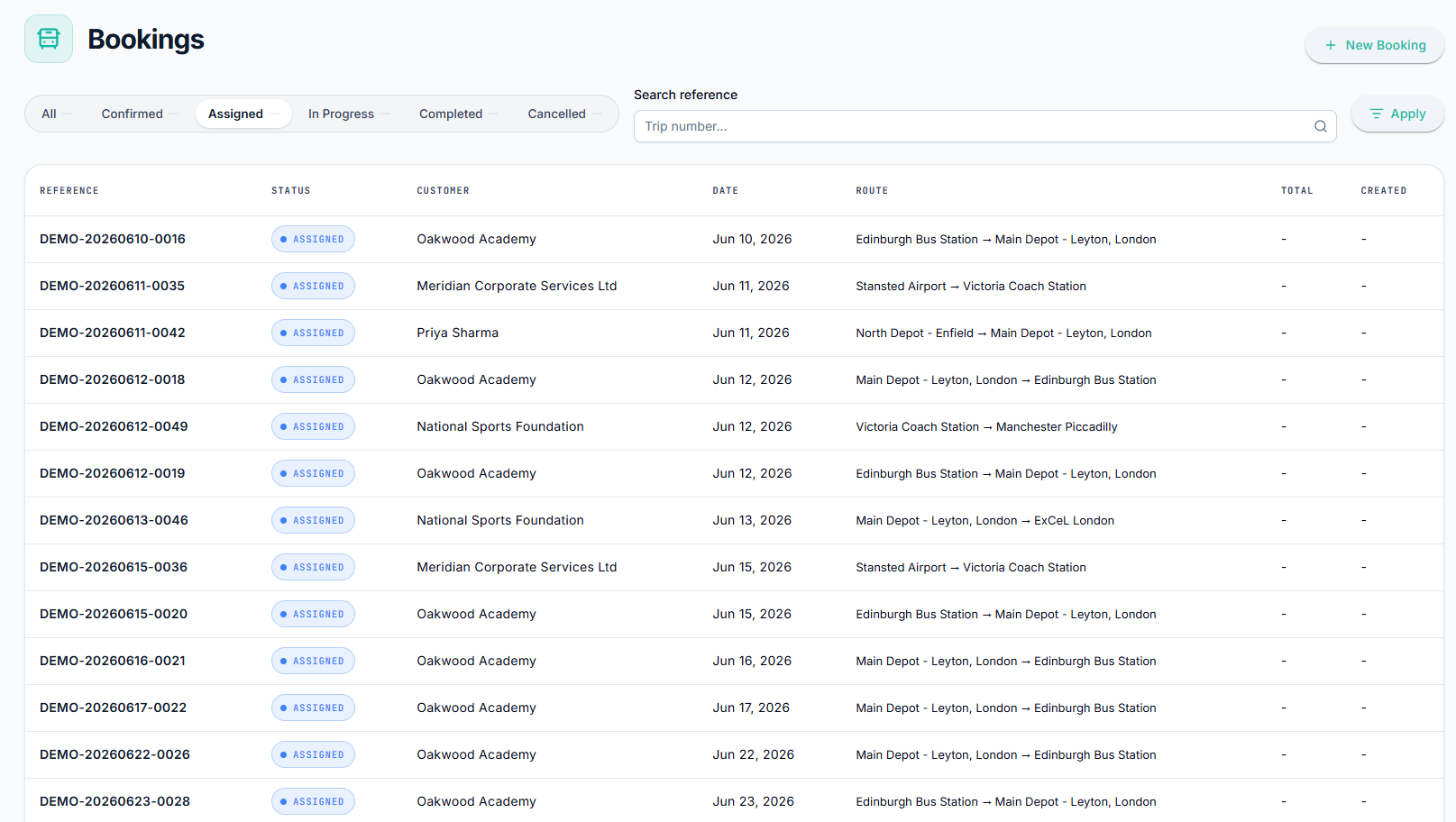
Transitour gives dispatch teams a clear board view of bookings by operational status.
What the best coach operator software should include
When comparing platforms, it is useful to look beyond feature lists and ask a more practical question: can this system support the way a coach business actually works every day?
1. A connected quote-to-booking workflow
For many operators, the commercial process begins with a quote request. That request may arrive by email, web form, phone or WhatsApp. The team then needs to calculate a price, check the route, review availability, send the quote and follow up before the customer chooses another provider.
Good coach management software should help structure this process. It should support configurable pricing, different rate cards, customer-specific fares, minimum charges and multi-stop routes where relevant. Once a quote is accepted, the information should not need to be retyped into another system. The accepted quote should become an operational booking with the right customer, route, date, passenger and vehicle information attached.
Transitour is built around this kind of structured flow. It helps operators quote, schedule, dispatch and invoice from one platform, with configurable pricing and multi-stop route support. For teams that currently copy information from quote documents into calendars and then into accounting tools, this can remove a lot of repeated manual work.
2. Booking management with clear operational status
A confirmed trip is not the end of the process. It is the beginning of operational responsibility. The team still needs to know whether the booking is unassigned, assigned, in progress, completed or cancelled. If these statuses are not visible, the dispatcher has to ask around or check multiple tools before making decisions.
The best coach booking software should provide a central booking view where teams can search, filter and understand the current status of every job. This is especially important for operators that handle airport transfers, school trips, multi-day tours, corporate shuttles or seasonal contracts at the same time.
Transitour supports centralized booking and dispatch workflows so operations teams can see what is happening across bookings instead of relying on separate notes or chat messages. This is useful for both small operators and larger fleets, because the operational problem is the same: every booking needs a clear status and owner.
3. Driver, vehicle and capacity visibility
Coach operations depend on people and assets. A booking cannot be treated as confirmed in practice unless the right vehicle and driver can be assigned. This means the software should help teams understand vehicle capacity, driver records, fleet bases, vehicle types and availability before the trip reaches the day of operation.
For example, a 55-seat coach booking, a premium minibus request and a multi-stop school route may all require different vehicles, different driver considerations and different timing. If this information is handled manually, dispatch teams may only discover conflicts when schedules become crowded.
Transitour centralizes vehicles and drivers and supports real availability checks before assignment. It also includes compliance-related vehicle reminders, such as ITV, insurance, tachograph calibration and maintenance, according to the product information available. Where compliance data is used, this helps operators reduce the risk of assigning a vehicle that should not be used.
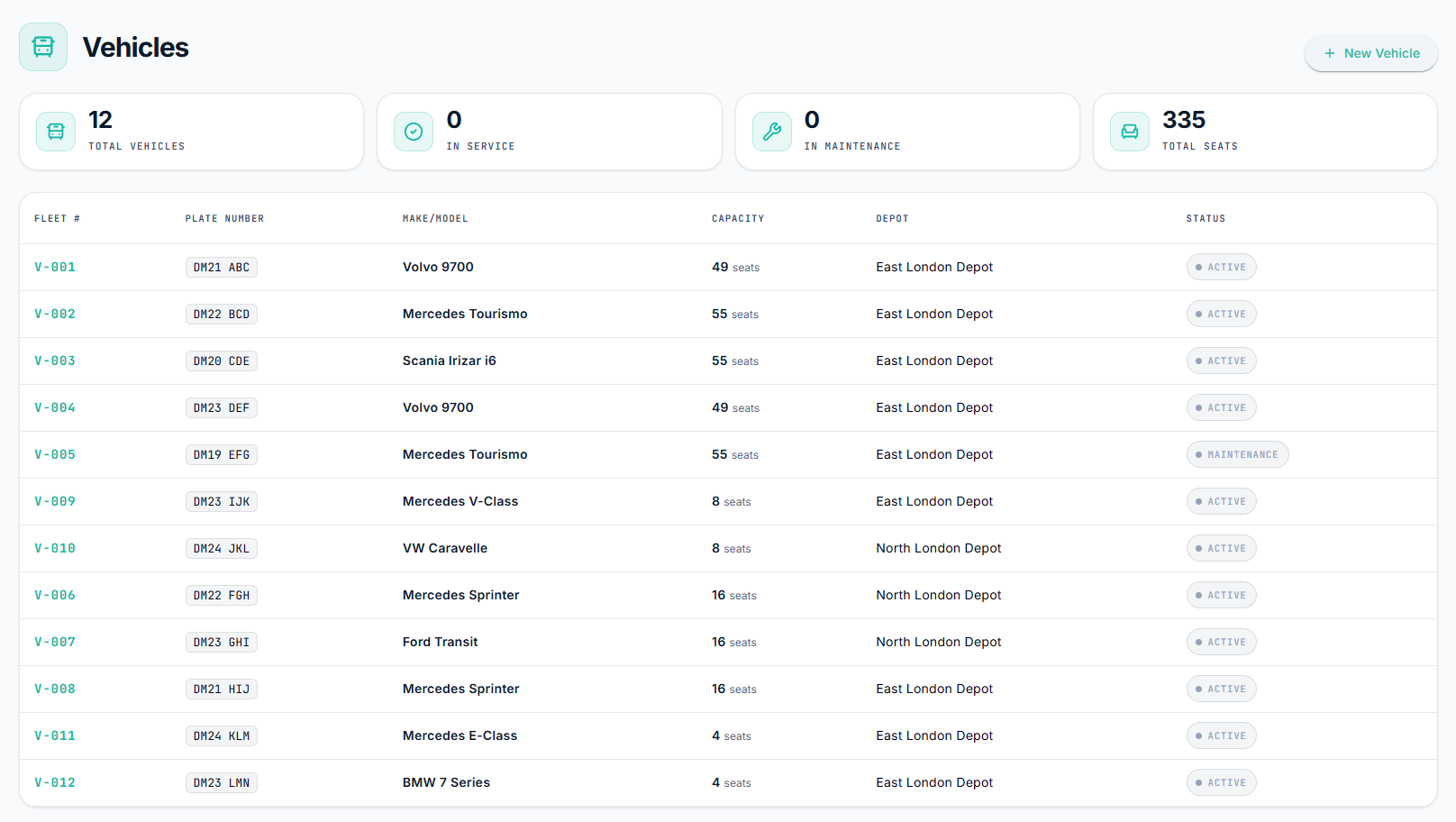
A central vehicle list gives operations teams visibility over capacity and availability.
4. Scheduling that reflects real transport work
Scheduling in coach operations is not just a calendar. A weekly view needs to help the team understand workload, upcoming trips and possible conflicts. Recurring services, shuttle contracts, school runs, tours and private hires often overlap, and they may share the same vehicles and drivers.
A strong bus dispatch software or scheduling platform should make upcoming work visible in a way that is useful for daily planning. It should help the operations team see what is happening this week, what needs attention and which resources are already committed.
Transitour includes scheduling and dispatch views designed for transport operations. This is especially relevant for operators moving away from spreadsheets, because the aim is not simply to digitize a calendar. The aim is to create a more reliable planning process.
5. Dispatch built for daily control
Dispatch is where operational plans meet reality. A driver may be delayed, a customer may change a pickup time, a vehicle may need maintenance or a booking may move from confirmed to in progress. When dispatch information is spread across calls, emails and messaging apps, the dispatcher becomes the only person who truly knows what is happening.
The best coach dispatch software should reduce that dependency. It should give the team a clear daily board, status visibility and a structured way to follow bookings from assignment to completion.
Transitour’s dispatch board is designed around operational status, with bookings grouped in a way that helps teams understand what is unassigned, assigned, in progress and completed. For coach and bus operators, this kind of visibility can make the difference between reacting late and managing the day proactively.
Reporting and invoicing should not be an afterthought
Many operators only think about reporting at the end of the month, when they need to understand revenue, pending invoices, completed trips or quote conversion. But if operational data has been scattered across spreadsheets, email threads and accounting software, reporting becomes slow and unreliable.
Good transport management software should connect operations with finance. Completed bookings should be easier to track. Invoices should be connected to the work performed. Managers should be able to review revenue and understand how commercial opportunities are converting into confirmed work.
Transitour includes invoicing and reporting capabilities that connect bookings, invoices, revenue and quote conversion in management views. This gives owners, transport managers and finance teams a clearer picture of the business without waiting for manual spreadsheet consolidation.
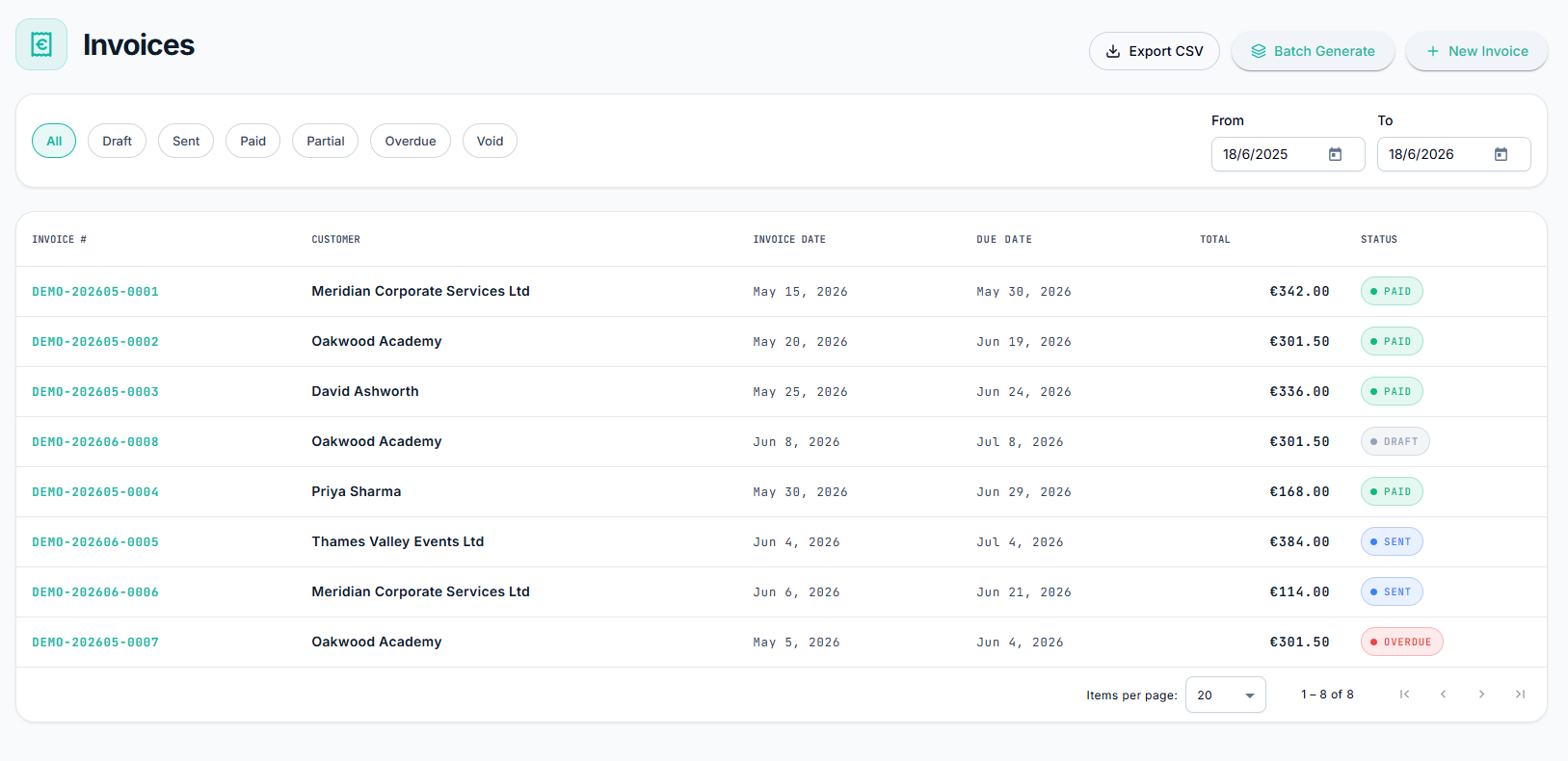
Revenue reporting connects bookings, invoices and quote conversion in one management view.
What about AI in coach operator software?
In 2026, AI can be useful for transport operators, but only when it solves a real operational problem. The goal should not be to add AI for its own sake. The goal should be to respond faster, reduce missed enquiries and help teams move qualified requests into the right workflow.
For coach operators, one practical AI use case is lead capture and quote preparation. Many requests arrive outside office hours or through channels such as WhatsApp and website forms. If the team responds too slowly, the customer may choose another operator.
Transitour + AI is positioned around this commercial problem. According to the product information, it can capture leads from WhatsApp and web, qualify enquiries, draft quotes and route confirmed bookings to the dispatch board. This makes AI part of the quote and booking workflow rather than a separate chatbot disconnected from operations.
How to compare coach operator software vendors
Before choosing a platform, operators should evaluate the system against real operational scenarios rather than only looking at screenshots or pricing pages.
- Can the system manage the full journey from quote to invoice? If not, teams may still need manual handovers between tools.
- Does it understand transport-specific data? Look for routes, stops, vehicle types, drivers, passenger counts, luggage, statuses and recurring services.
- Can it support different fleet sizes? A platform should work for a small operator but still support growth, multiple vehicles and more structured teams.
- Does it improve dispatch visibility? The daily board should help the team understand what needs action now.
- Does it support reporting? Owners and managers need visibility into bookings, revenue, utilization and quote conversion.
- Can it reduce manual admin? The value of software is not only storing data. It should reduce duplicate entry, missed follow-ups and avoidable coordination work.
Where Transitour fits
Transitour is a SaaS platform for coach, bus, limousine, taxi and MPV fleet operations. It is designed to help operators quote, schedule, dispatch and invoice vehicles from one structured platform. Its product focus is operational: pricing, booking management, dispatch, driver and vehicle records, multi-stop routes, compliance reminders, role-based access, API/webhooks, invoicing, reporting and AI-assisted lead capture where the AI plan is used.
This makes Transitour a strong fit for operators that have outgrown manual tools but do not want a generic system that ignores the realities of transport work. It is especially relevant for coach operators, bus operators, tour transport companies, DMCs and travel businesses that need better control from customer request to completed trip.
Conclusion: the best coach operator software is the one that connects the operation
The best coach operator software in 2026 should do more than store bookings. It should connect commercial, operational and financial workflows so the team can respond faster, plan more accurately, dispatch with confidence and understand performance.
If your team is still managing quotes, bookings, drivers, vehicles, schedules, dispatch and invoicing across spreadsheets, calendars and disconnected tools, it may be time to move to a structured platform.
Transitour helps coach and bus operators bring quoting, booking management, dispatch, reporting and invoicing into one place. Start with a free trial, book a demo or contact the Transitour team to see how it could fit your operation.