 Transitour
Bus Scheduling Software for Coach Operators: How to Plan Trips Without Conflicts

Bus scheduling software becomes essential when your operation reaches the point where spreadsheets, shared calendars and manual WhatsApp updates no longer give your team enough control. A single booking change can affect vehicle availability, driver assignment, route timing, passenger capacity, invoicing and customer communication.
For coach operators, bus companies, DMCs and tour transport teams, scheduling is not just about placing a trip on a calendar. It is about making sure every trip can actually be delivered without conflicts. The right vehicle must be available. The driver must be suitable and active. The route must make sense. The booking status must be clear. And the office needs to see what is planned, what is assigned, what is in progress and what is already completed.
When those details live in different tools, the risk grows quickly. One person updates a spreadsheet. Another person changes a booking in a calendar. A dispatcher receives a last-minute message. Finance waits for the completed trip information before invoicing. The result is not always a dramatic failure, but it is usually operational friction: duplicated work, unclear responsibility, preventable mistakes and lost time.
Why scheduling conflicts happen in bus and coach operations
Most conflicts do not happen because the team is careless. They happen because the operation has too many moving parts for manual planning to remain reliable.
A typical week can include school runs, airport transfers, day tours, corporate shuttles, private hire jobs, multi-day tours and recurring contracts. Each service has its own pickup point, destination, time window, passenger count, vehicle type, luggage requirement, customer expectation and internal status.
Conflicts usually appear in five areas:
- Vehicle conflicts: the same coach is expected to cover two jobs too close together.
- Driver conflicts: the assigned driver is already planned for another service or is not suitable for that job.
- Capacity conflicts: the selected vehicle does not match the passenger or luggage requirement.
- Route conflicts: travel time, pickup points or multi-stop journeys are not considered properly.
- Status conflicts: a booking is confirmed commercially but has not been assigned operationally.
These issues are especially common when bookings are accepted by sales, planned by operations, assigned by dispatch and closed by finance in different systems. The booking may exist, but the operational truth is fragmented.
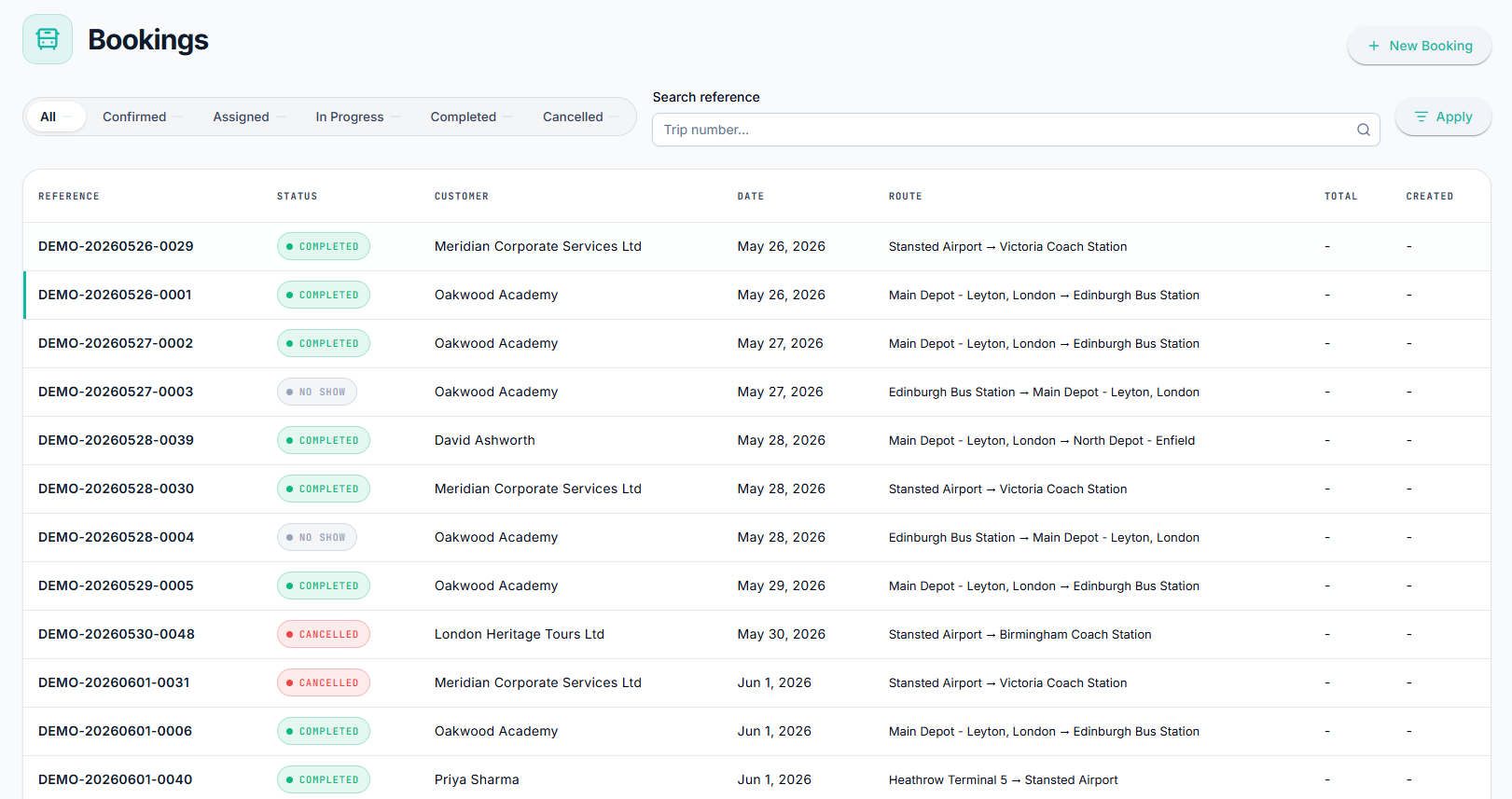
A weekly schedule view helps operations teams detect conflicts before they affect daily dispatch.
What bus scheduling software needs to solve
Good bus scheduling software should give operations teams one reliable view of upcoming trips, workload and capacity. It should help the team understand what is happening this week, what needs attention today and which services still require assignment.
For a transport company, the value is not only a cleaner calendar. The real value is operational control. A scheduling system should help answer practical questions such as:
- Which trips are planned for each day?
- Which bookings are confirmed but not yet assigned?
- Which vehicles are active and available?
- Which drivers can be assigned?
- Are there recurring trips that need to be generated or reviewed?
- Can the team move from booking to dispatch without retyping the same information?
That is why generic calendars often fall short. They can show time, but they do not usually understand fleet capacity, vehicle types, drivers, booking statuses, routes, contracts, invoicing or operational workflows.
From booking request to scheduled trip
In a real transport business, scheduling starts before the dispatcher opens the daily board. It often starts with a customer request.
A DMC may ask for a coach for a group arrival at the airport. A school may request a recurring route for the term. A corporate client may need a shuttle for several days. A tour operator may confirm a multi-stop itinerary with different pickup times. Each of those requests needs to become structured operational data.
Transitour helps centralize this flow by connecting key steps such as booking creation, route details, vehicle type, passengers, stops and operational status. Instead of keeping the commercial request in one place and the schedule in another, the trip can move through a more structured process.
This matters because conflicts are easier to prevent when the trip is created with the right information from the start. If the booking includes the date, time, passengers, route and vehicle type, the scheduling and dispatch teams have a stronger basis for planning.
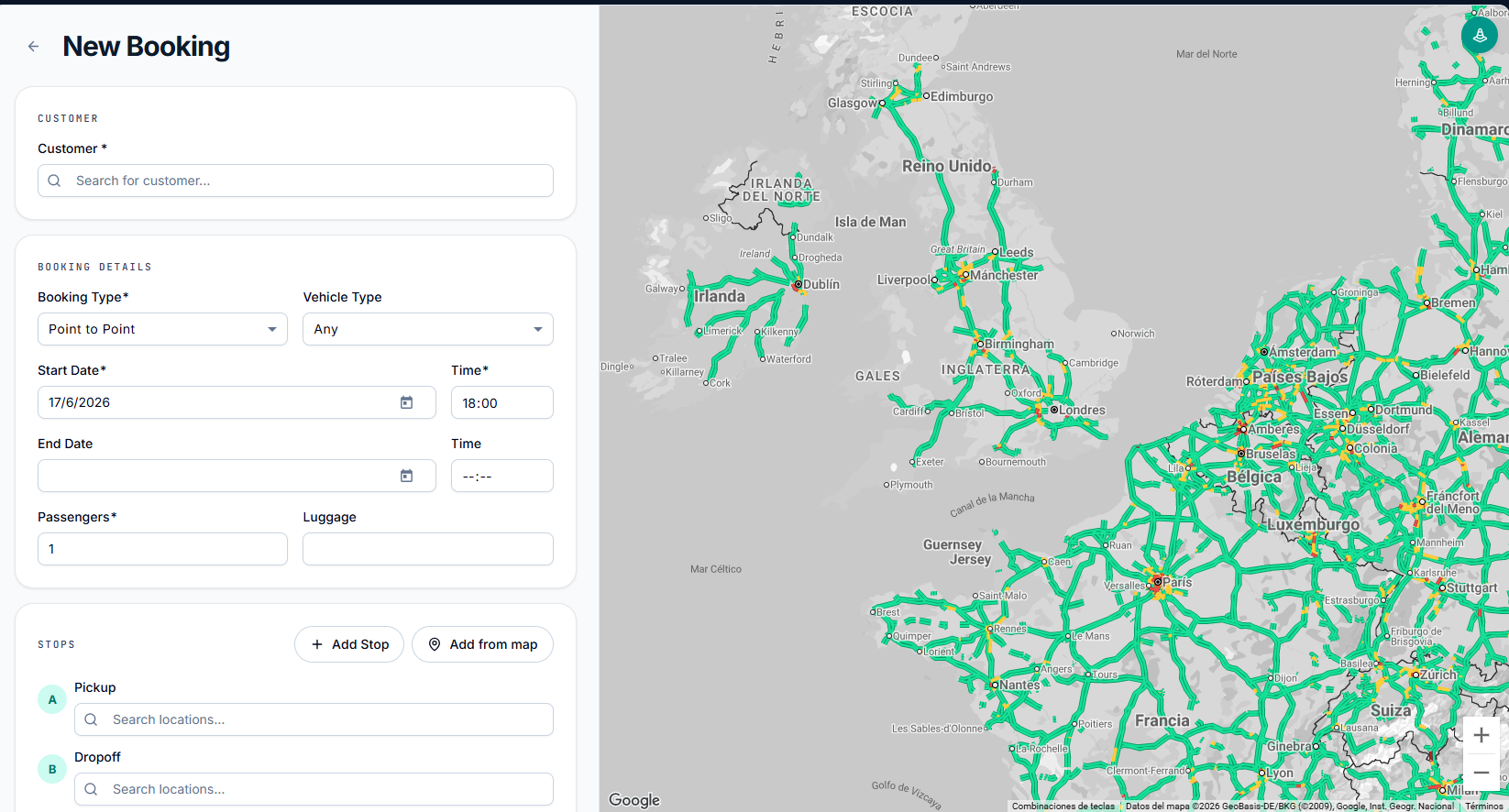
Structured booking data gives dispatchers the information they need to plan each trip correctly.
Weekly visibility is where planning becomes manageable
Daily dispatch is important, but many scheduling problems are created days before the service runs. If the team only reacts on the morning of the job, there is less time to solve capacity gaps, driver availability issues or vehicle conflicts.
A weekly schedule view helps operations teams see the workload across several days. This is useful for identifying busy periods, checking whether recurring services are correctly planned and spotting days where the same resources may be under pressure.
For coach and bus operators, this is especially important during peak periods such as school terms, event seasons, cruise arrivals, airport transfer peaks, conference weeks or tourist high season. A week may look manageable on paper until the team sees that several large jobs require similar vehicles at overlapping times.
With a clearer schedule, dispatchers can plan earlier, communicate better and reduce last-minute decisions. Managers can also see whether the fleet is being used efficiently or whether too much capacity remains idle on certain days.
Vehicle and driver visibility reduces assignment errors
Scheduling without fleet visibility is incomplete. A trip is not truly planned until the right vehicle and driver can be assigned.
For example, a 55-seat coach cannot be replaced by a smaller vehicle without affecting the service. A vehicle in maintenance should not be treated as available. A driver record should be clear enough for the dispatcher to assign the right person to the right job. When this information is not centralized, teams often rely on memory, calls or old spreadsheets.
Transitour includes fleet and driver views that support operational planning. The vehicle list gives teams a central view of fleet numbers, models, capacity, bases and status. Driver records help dispatch teams keep the people side of the operation connected to assignment decisions.
This is where scheduling becomes more than a calendar. It becomes a practical planning workflow that connects bookings, drivers, vehicles and capacity.
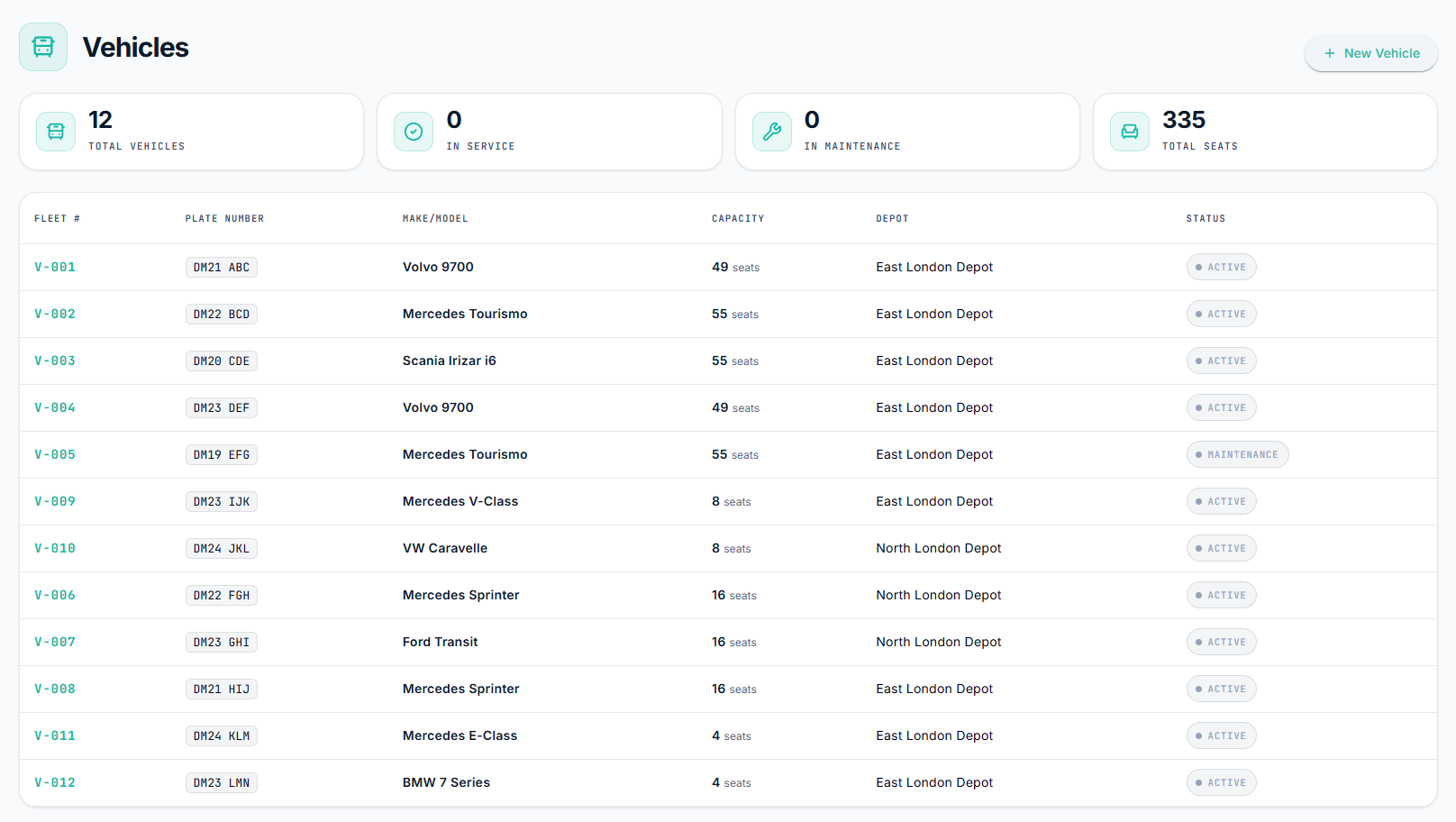
Fleet visibility helps operators assign the right vehicle to each service and avoid capacity issues.
Recurring trips need structured scheduling
Many transport businesses do not only manage one-off private hire jobs. They also manage recurring services: school routes, corporate shuttles, hotel transfers, event contracts, seasonal routes or regular DMC programs.
Recurring work is valuable because it creates predictable revenue. But it also creates planning pressure. If repeated trips are copied manually, small mistakes can multiply across the week or month. A wrong time, missing vehicle requirement or unclear driver assignment can affect several services, not just one.
Transitour supports recurring trip management for repeated routes such as school runs, shuttles and scheduled transport services. This helps operators manage repeated work more consistently and reduce the need to recreate the same operational information again and again.
Dispatch visibility connects the schedule with the day of operation
A schedule is only useful if it connects with execution. Once the day starts, dispatchers need to know which bookings are unassigned, which are assigned, which are in progress and which are completed.
This is where a dispatch board becomes valuable. A weekly schedule helps the team plan ahead. A daily dispatch view helps the team manage execution. Together, they reduce the gap between what was planned and what is actually happening.
For an operations team, this visibility is practical. It helps answer questions such as:
- Which bookings still need a vehicle or driver?
- Which services are already in progress?
- Which trips have been completed and can move toward invoicing?
- Which routes or clients require immediate attention?
Transitour is designed around this kind of operational flow. It brings together quoting, scheduling, dispatch, fleet visibility and invoicing so that transport teams can manage the journey from the first request to the paid invoice in a more structured way.
Reporting turns scheduling into better management
Scheduling is not only about avoiding mistakes. It also affects profitability.
If vehicles are underused, if too many trips are planned inefficiently, or if completed bookings are not connected cleanly to invoicing, the business loses visibility. Managers need to understand not only what happened, but also how the operation is performing.
Reporting helps connect scheduling decisions with business outcomes. Fleet utilization reports can help identify idle capacity and improve vehicle usage. Revenue reporting can connect bookings, invoices and quote conversion in one management view.
For growing operators, this matters because planning decisions affect margins. A better schedule can reduce operational stress, but it can also support better commercial decisions.
When should an operator move away from spreadsheets?
Spreadsheets can work at the beginning. They are flexible, familiar and cheap. But they become risky when the operation needs several people to coordinate bookings, drivers, vehicles, routes, invoices and customer updates at the same time.
It may be time to move to bus scheduling software if:
- Your team checks several tools before confirming a trip.
- Dispatchers rely on phone calls to confirm availability.
- Recurring trips are copied manually every week.
- Booking changes are hard to track.
- Finance waits too long for completed trip information.
- Managers cannot easily see workload, utilization or upcoming capacity issues.
The goal is not to add another system. The goal is to replace fragmented planning with one operational workflow.
Conclusion: bus scheduling software should prevent conflicts before they reach dispatch
The best bus scheduling software does more than display trips on a calendar. It helps operators plan work, understand capacity, assign vehicles and drivers, manage recurring services, follow booking status and connect operations with reporting and invoicing.
For coach operators, bus companies, DMCs and travel transport teams, that level of visibility can reduce manual work and make daily operations easier to control.
Transitour helps operators bring bookings, scheduling, dispatch, fleet visibility and invoicing into one structured platform. If your team is still planning trips across spreadsheets, calendars and disconnected tools, it may be time to see how a dedicated transport operations platform works in practice.
Ready to see bus scheduling software built for real transport operations?
Book a Transitour demo or start a free trial to see how your team can plan trips, reduce scheduling conflicts and manage bookings, vehicles, drivers and dispatch from one place.