 Transitour
Charter Bus Software: How to Manage Quotes, Bookings, Dispatch and Invoicing in One Platform

For many operators, charter bus software becomes essential when quotes, bookings, dispatch, drivers, vehicles and invoices can no longer be managed reliably with spreadsheets, emails, calls and disconnected tools. A growing charter bus company needs more than a shared calendar. It needs a structured way to move from customer request to confirmed booking, from booking to dispatch, and from completed trip to invoice and reporting.
At first, manual processes may seem flexible. A dispatcher knows the drivers. A manager remembers which coach is usually available. A quote can be copied from a previous job. A booking can be added to a spreadsheet. But as the number of requests, routes, vehicles and clients grows, that flexibility often turns into operational risk.
Information gets duplicated. Quote details are stored separately from bookings. Driver and vehicle assignments are checked manually. Finance teams may need to reconstruct what happened after the trip. Management has limited visibility over revenue, pending invoices and quote conversion. For charter bus companies, coach operators, bus operators and tour transport companies, this can affect customer service, profitability and operational control.
Transitour is designed to help transport operators manage this full workflow in one structured platform: quoting, booking, scheduling, dispatch, vehicle and driver coordination, invoicing and reporting. Instead of forcing teams to jump between spreadsheets, calendars, inboxes and accounting tools, Transitour connects the operational steps that happen every day.
What is charter bus software?
Charter bus software is a specialized system for managing the commercial, operational and administrative work of charter bus companies and coach operators. It usually supports quote management, booking management, dispatch, scheduling, driver and vehicle coordination, invoicing and reporting.
The key difference between charter bus management software and generic tools is context. A charter bus booking is not just a calendar event. It includes a customer, route, pickup point, destination, passenger count, luggage, vehicle type, timing, driver assignment, pricing, operational status and invoicing information. When these details live in separate systems, teams spend too much time checking, copying and correcting information.
A proper transport management software platform helps create a single source of truth. Sales can see quotes. Operations can see confirmed work. Dispatch can assign drivers and vehicles. Finance can track invoices. Managers can review revenue and performance. This is why many operators eventually move from manual processes to dedicated bus booking software and bus dispatch software.
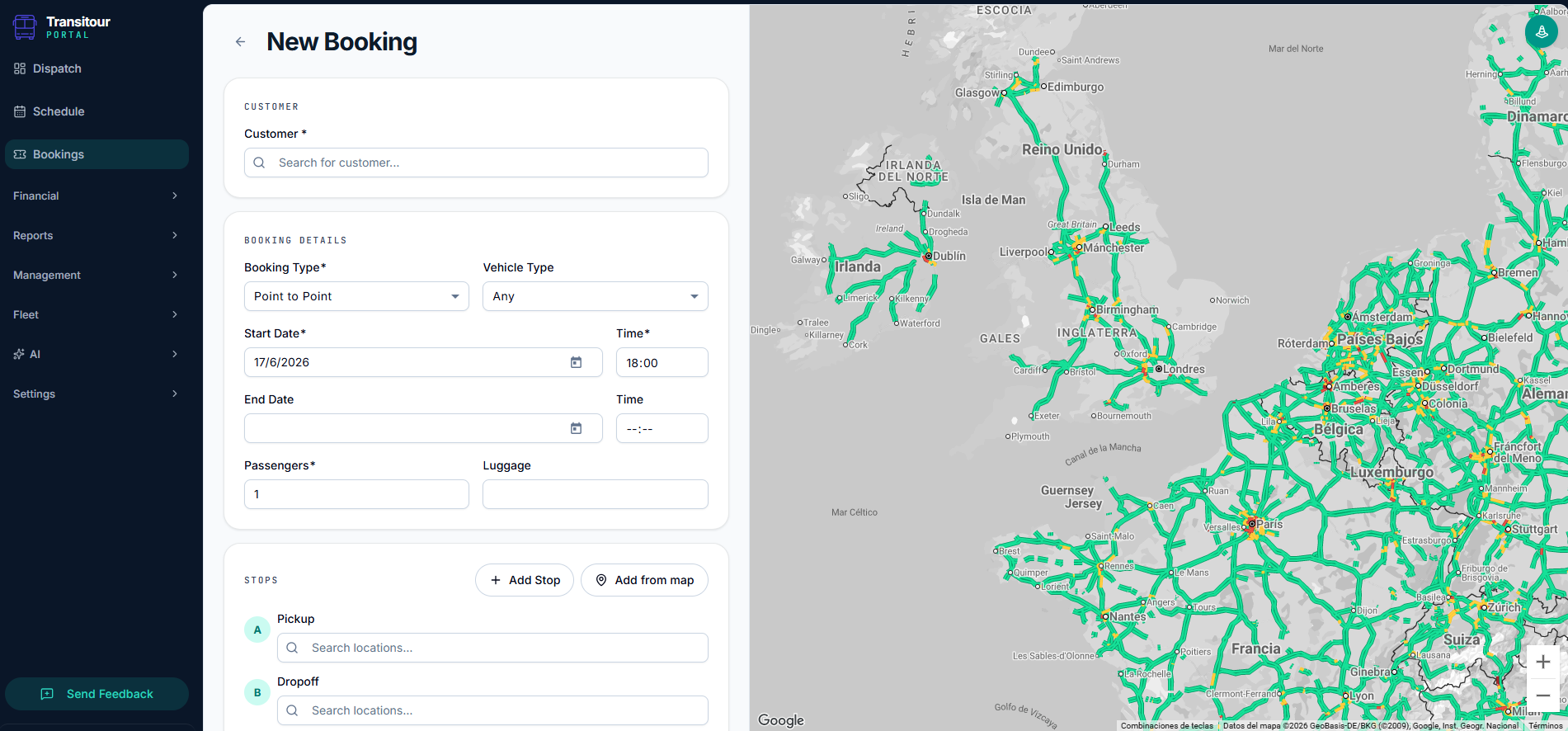
Suggested caption: Transitour centralizes customer, trip, route and passenger details when creating a new booking.
Why spreadsheets and disconnected tools slow down charter bus operations
Spreadsheets are useful for small teams, but they are not built for live transport operations. They do not automatically connect quote status with booking status, vehicle availability, driver assignments, invoicing or reporting. As a result, teams often create their own workarounds.
A quote may be prepared in one file, sent by email, confirmed by phone and then copied into a calendar. Dispatch may use another spreadsheet to assign vehicles and drivers. Finance may use separate software to create invoices. Management may rely on manual exports to understand revenue. Each step may work on its own, but the full workflow is fragile.
The most common problems include:
- Slow quote response: teams need to check prices, availability and route details manually before replying.
- Duplicated data entry: customer and trip details are copied from one tool to another.
- Unclear booking status: it is difficult to know whether a job is quoted, confirmed, assigned, in progress, completed or cancelled.
- Dispatch conflicts: driver and vehicle allocation becomes harder when availability is not visible in one place.
- Delayed invoicing: finance teams may wait for operational confirmation before issuing invoices.
- Limited reporting: revenue, pending payments and quote conversion are hard to monitor accurately.
For growing operators, these issues do not just create admin work. They can reduce conversion, increase errors and make it harder to scale operations without adding more manual coordination.
Quote management in charter bus software
Quote management is one of the first areas where charter bus software can create commercial impact. When a customer requests a private hire, school trip, corporate transfer, tour, airport movement or event shuttle, speed matters. Operators that respond faster with clear, structured quotes are better positioned to win the booking.
But fast quoting should not mean uncontrolled pricing. Transitour supports configurable pricing structures and rate cards, helping operators manage different pricing models, rules and customer rates in a more consistent way. This helps reduce the risk of preparing quotes from memory or using outdated spreadsheets.
With quote tracking, teams can see which quotes are draft, sent, accepted or expired. This gives sales and operations a clearer view of the pipeline before work becomes a confirmed booking. It also helps managers understand where opportunities are being won or lost.
For operators using Transitour + AI, the platform can also help capture leads from WhatsApp and web channels, qualify requests, draft quotations and route confirmed bookings into the dispatch workflow. This is especially useful for companies that receive many enquiries outside office hours or want to reduce the response time from first contact to quote.
Booking management: from accepted quote to confirmed trip
Once a quote is accepted, the next step is turning it into an operational booking. This is where many manual systems break down. A confirmed job must contain enough information for dispatch, drivers, vehicles, customer communication and invoicing.
Transitour helps operators centralize booking details such as client, date, time, route, stops, passenger information and vehicle type. Instead of creating separate records in different tools, teams can manage bookings in one structured flow.
Good coach booking software should also make booking status visible. A booking may be confirmed but not yet assigned. It may be assigned but not completed. It may be in progress, cancelled or ready for invoicing. When these states are visible, teams spend less time asking for updates and more time managing exceptions before they become problems.
For charter bus companies that handle tours, school transport, corporate work, private groups or recurring services, this central booking view helps create operational discipline. Everyone can work from the same information rather than from different versions of the truth.
Dispatch and scheduling: plan the work and control the day
Dispatch is where the promise made to the customer becomes an operational reality. Even if the quote and booking are correct, the trip still needs the right vehicle, the right driver, the right timing and clear visibility for the operations team.
This is where bus dispatch software and coach dispatch software become important. Dispatch teams need to know what is unassigned, what is assigned, what is currently in progress and what has been completed. A static spreadsheet or calendar rarely gives enough context for that level of control.
Transitour provides dispatch and schedule views that help operators organize daily and weekly work. The dispatch board gives teams a practical view of bookings by operational status, while the weekly schedule helps show upcoming trips and workload across the week.
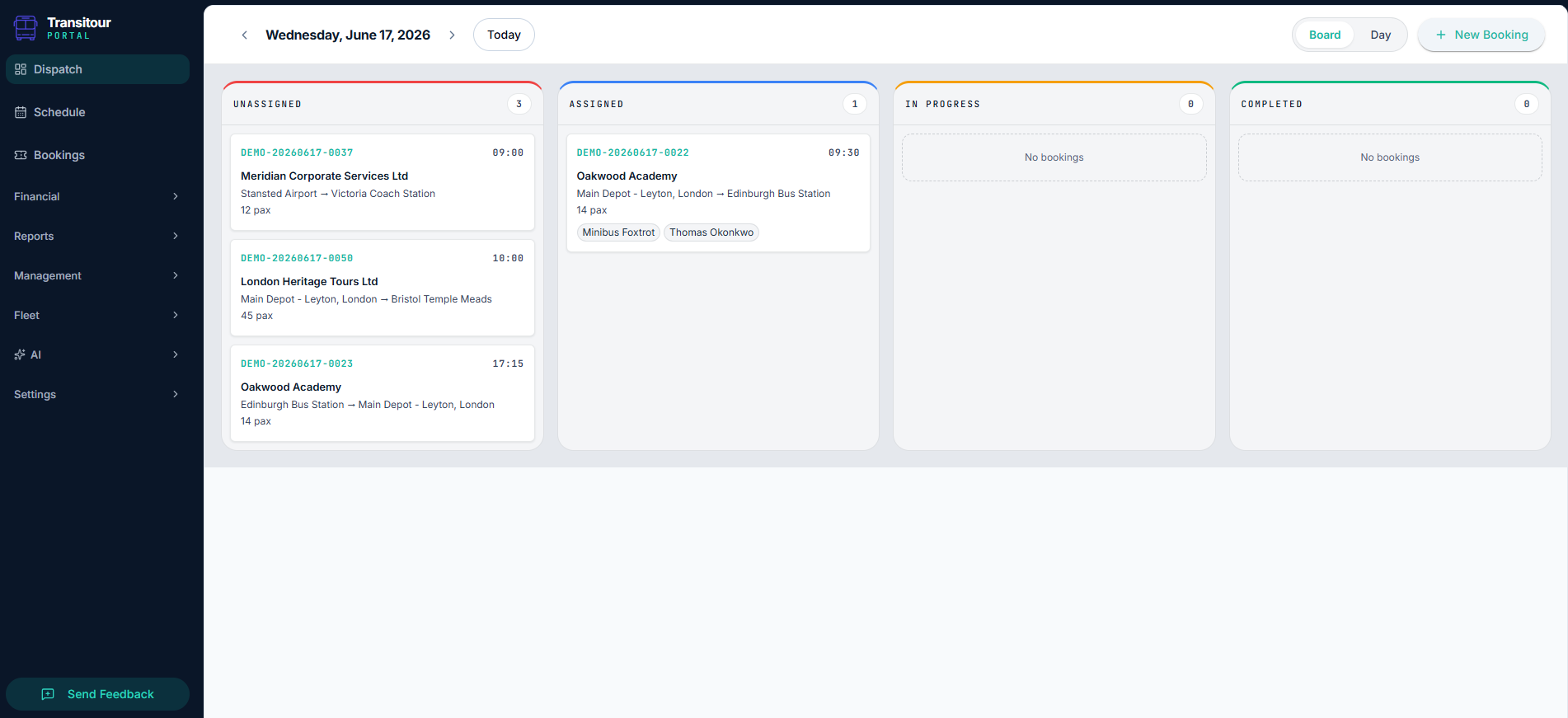
Transitour gives dispatch teams a clear board view of bookings by operational status.
For operators managing multiple vehicles, bases, drivers and route types, scheduling visibility is essential. It helps reduce last-minute surprises, supports better planning and gives teams a clearer picture of capacity.
Driver and vehicle coordination
Charter bus operations depend on matching the right resources to the right job. A booking may require a specific vehicle capacity, luggage space, licence class, base location or driver availability. When that information is scattered, dispatch decisions become slower and more error-prone.
Transitour centralizes vehicle and driver records to support operational planning. Vehicle information can include fleet number, model, capacity, base and status. Driver records can help teams maintain a clearer view of who is available for assignment and operational coordination.
The platform also supports vehicle compliance reminders for items such as ITV, insurance, tachograph calibration and maintenance. When a vehicle is not compliant, it should not be treated like a normal available resource. This is an important distinction for operators that need to maintain operational discipline and reduce compliance risk.
For growing companies, this is where transport management software becomes more valuable than a simple booking tool. It connects bookings with the operational resources needed to deliver them.
Invoicing: connect completed work with finance
Invoicing is often where disconnected systems create unnecessary delays. If finance does not know which trips have been completed, what was agreed or whether there were changes, invoices can be late or inaccurate. This affects cash flow and creates extra admin for both operations and finance.
Transitour helps connect operational activity with invoicing and payment visibility. Invoice screens can show statuses such as draft, sent, paid and overdue, helping teams understand where each invoice stands.
This is especially useful for operators that manage many bookings across different customer types: private clients, schools, corporate accounts, tour operators, event planners or recurring contracts. A booking and invoicing software workflow helps reduce the gap between completed service and financial follow-up.
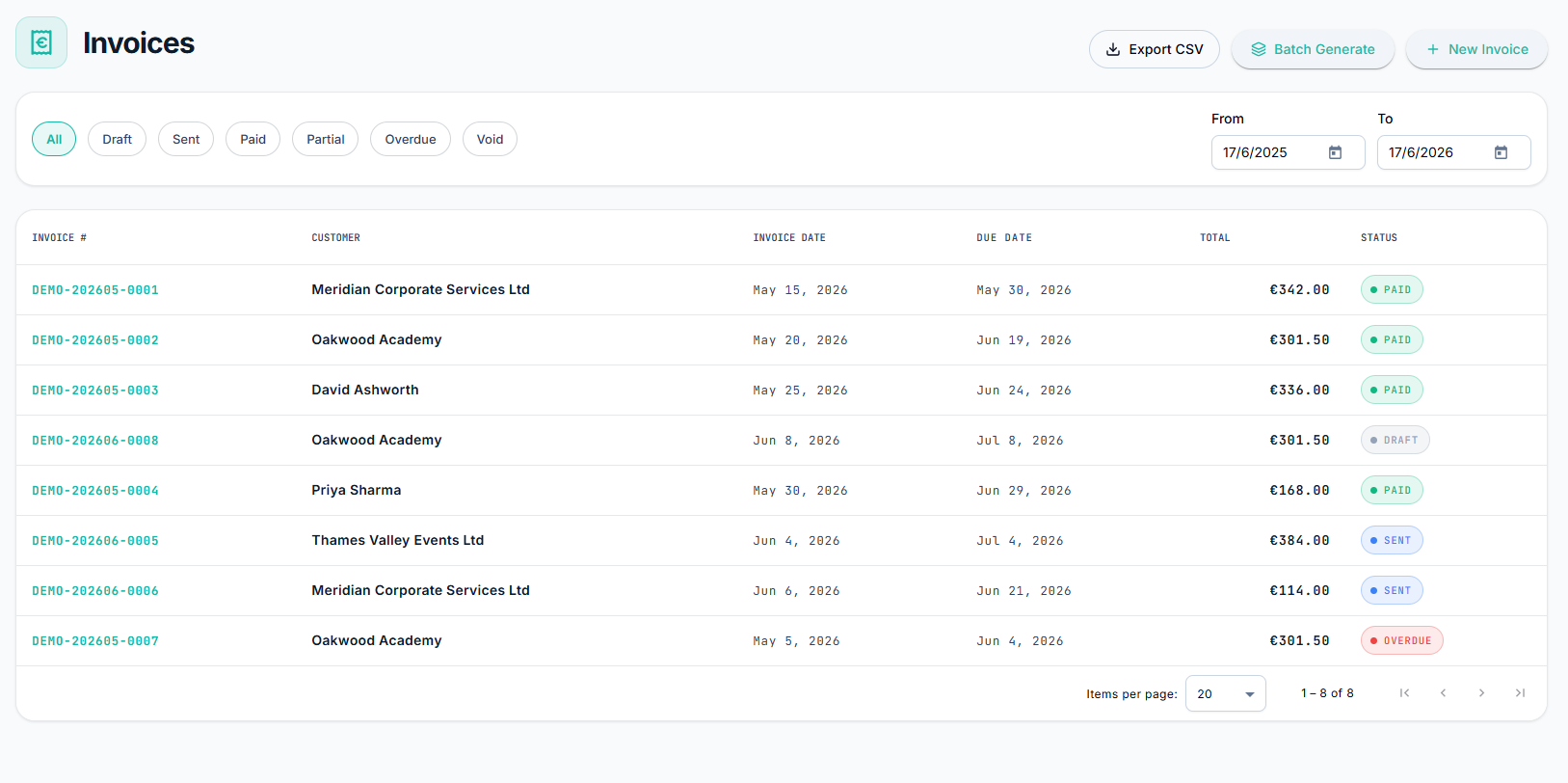
Transitour connects operational activity with invoicing, payment tracking and revenue visibility.
Reporting and revenue visibility
Managers need more than a list of bookings. They need to understand performance. How much revenue has been generated? What is still pending? How many invoices are paid or overdue? How many bookings came from quotes? Which parts of the operation are producing value?
Transitour includes reporting views such as revenue reporting and fleet utilization reporting. Revenue reporting can connect income, pending payments, invoices, bookings and quote conversion in one management view. Fleet utilization reporting can help operators understand how vehicles are being used and where capacity may be idle.
This matters because operational data is only useful if it helps decision-making. When reporting depends on manual spreadsheets, managers may only see the business after the fact. With a more structured system, reporting becomes part of the operational workflow.
How Transitour connects the full workflow
The real value of charter bus software is not one isolated feature. It is the way the workflow connects. A quote should lead naturally to a booking. A booking should move into scheduling and dispatch. Dispatch should connect drivers and vehicles. Completed work should support invoicing. Invoices and bookings should feed reporting.
Transitour is built around this connected flow. Operators can quote, schedule, dispatch and invoice vehicles from one platform, with role-based access for different teams and a structure designed for real transport operations. It supports operators of coaches, buses, limousines, taxis and MPV fleets, making it suitable for companies that manage varied transport services from a single operational base.
For charter bus companies, coach operators and tour transport companies that still rely on spreadsheets, emails and disconnected software, Transitour offers a practical next step: a dedicated platform for the work your team already does every day.
Ready to replace fragmented tools with charter bus software?
If your team is spending too much time copying quote details, checking availability manually, chasing dispatch updates or preparing invoices after the fact, it may be time to move to a dedicated charter bus software platform.
Transitour helps operators manage quotes, bookings, dispatch, scheduling, vehicles, drivers, invoicing and reporting in one structured workflow. Start with a free trial, book a demo or contact the Transitour team to see how your charter bus operation could run with fewer manual steps and clearer visibility from quote to invoice.