 Transitour
Coach Booking Software: From Customer Request to Confirmed Trip
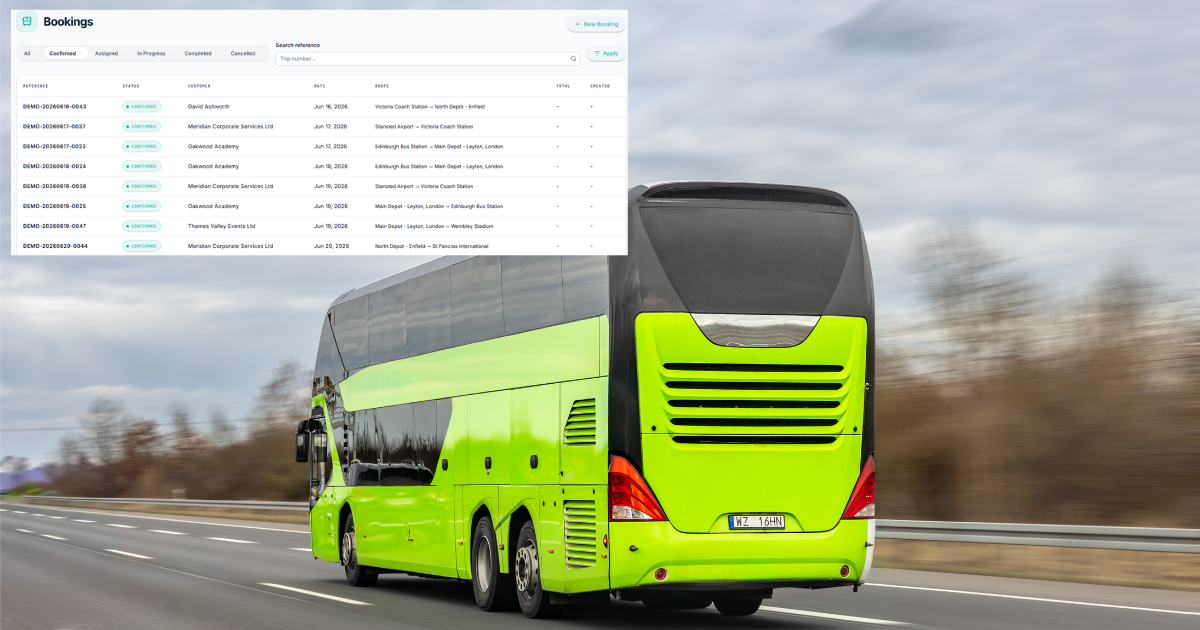
For many coach and bus operators, the booking process does not fail because the team lacks experience. It fails because too much of the workflow depends on disconnected tools. A customer request arrives by email, WhatsApp, phone or website form. Someone checks availability in a calendar. Another person looks for prices in a spreadsheet. A quote is prepared manually, sent to the customer, followed up later and, if accepted, converted into a confirmed trip that still needs a vehicle, driver, route notes and eventually an invoice. Coach booking software exists to make that journey easier to control.
The challenge is not only creating a booking. The real challenge is managing the full path from first request to confirmed trip without losing commercial opportunities, creating operational conflicts or leaving finance with incomplete information. For coach operators, bus operators, tour transport companies, DMCs and travel businesses, every delay between enquiry and confirmation can affect conversion, customer confidence and profitability.
Why manual booking workflows slow coach operators down
Many operators start with a practical mix of tools: an inbox, a shared calendar, spreadsheets, accounting software and direct messages between the office and dispatch. This can work when the volume of work is small. But as soon as the business handles more enquiries, repeat clients, multi-stop routes, airport transfers, school trips, corporate transport or tours, the cracks become visible.
A typical request may include the date, passenger number, pickup point, destination, luggage, waiting time, return journey, vehicle type and special notes. If this information is stored in different places, the team has to rebuild the same booking several times. Customer service needs it for the quote. Operations needs it for planning. Dispatch needs it for assignment. Finance needs it for invoicing. Management needs it for reporting.
The result is not just extra admin. It can lead to slower response times, duplicated data entry, missing trip details, unclear booking status and poor visibility over which quotes are likely to convert. When a customer asks for a change, the team may need to check several systems before giving a reliable answer.
This is where a structured booking workflow becomes commercially important. The faster a team can respond with accurate information, the better the chance of converting the request into a confirmed trip.
What coach booking software should manage from the first request
Good coach booking software should help teams capture the operational details that matter from the beginning. A request is not just a name and a date. It is the start of a service that may require the right vehicle capacity, the correct route, driver availability, pricing rules, customer terms and later invoicing.
For example, a DMC may request transport for a multi-day group tour with several stops and waiting time. A school may request a recurring trip. A corporate client may ask for repeated shuttle services. A private customer may need a one-off airport transfer. Each case has different commercial and operational requirements, but the booking team needs one consistent process.
A structured system should help operators record:
- Customer and contact details.
- Pickup, destination and intermediate stops.
- Date, time, passenger count and luggage details.
- Vehicle type or capacity requirements.
- Quote status, booking status and confirmation status.
- Operational notes needed by dispatch and drivers.
- Financial details needed for invoicing and reporting.
When this data is captured once and reused across the workflow, teams reduce manual work and avoid many of the small mistakes that create pressure later in the operation.
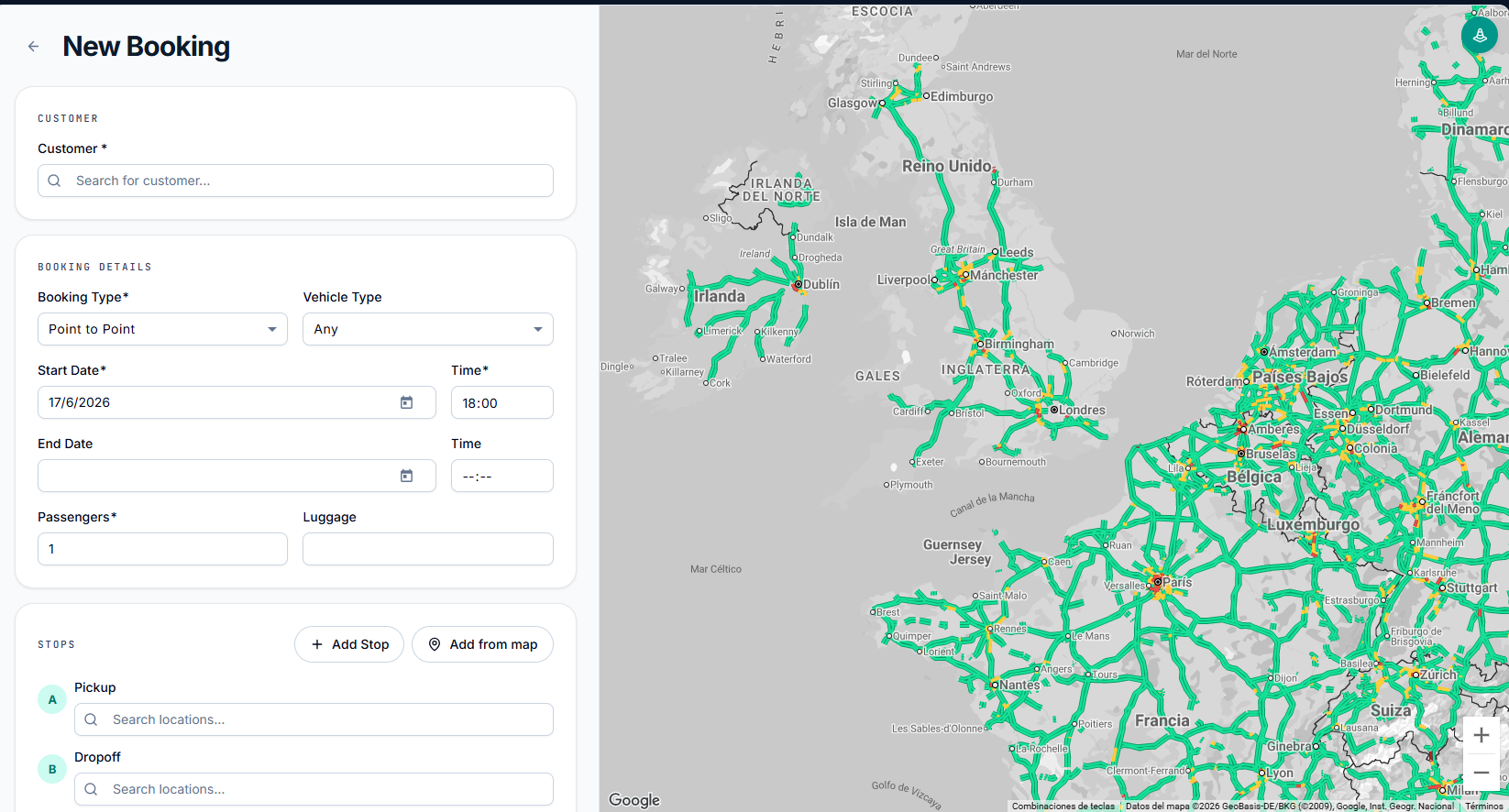
Transitour centralizes customer, trip, route and passenger details when creating a new booking.
Coach booking software should connect quotes with confirmed trips
One of the most important parts of the booking workflow is the gap between a quote and a confirmed trip. In many companies, quotes are prepared manually and tracked through email threads or spreadsheets. This makes it difficult to know which opportunities are still open, which quotes have been accepted, which ones have expired and which ones need follow-up.
For a busy operator, quote visibility matters because it affects both sales and planning. If the commercial team cannot see what is likely to convert, operations may have an incomplete view of future demand. If operations cannot see the pipeline, the company may struggle to plan capacity. If finance cannot connect the final booking with the quote, the invoicing process becomes more manual.
Transitour is designed around this operational journey. The platform helps operators quote, schedule, dispatch and invoice vehicles from one structured system. It supports configurable pricing, multi-stop routes, real availability checks, role-based access and invoice tracking. This means the booking process is not isolated from operations or finance.
For operators, the practical value is simple: the quote should not become a separate document that has to be recreated later. It should become part of the same operational record that moves toward confirmation, assignment, completion and invoicing.
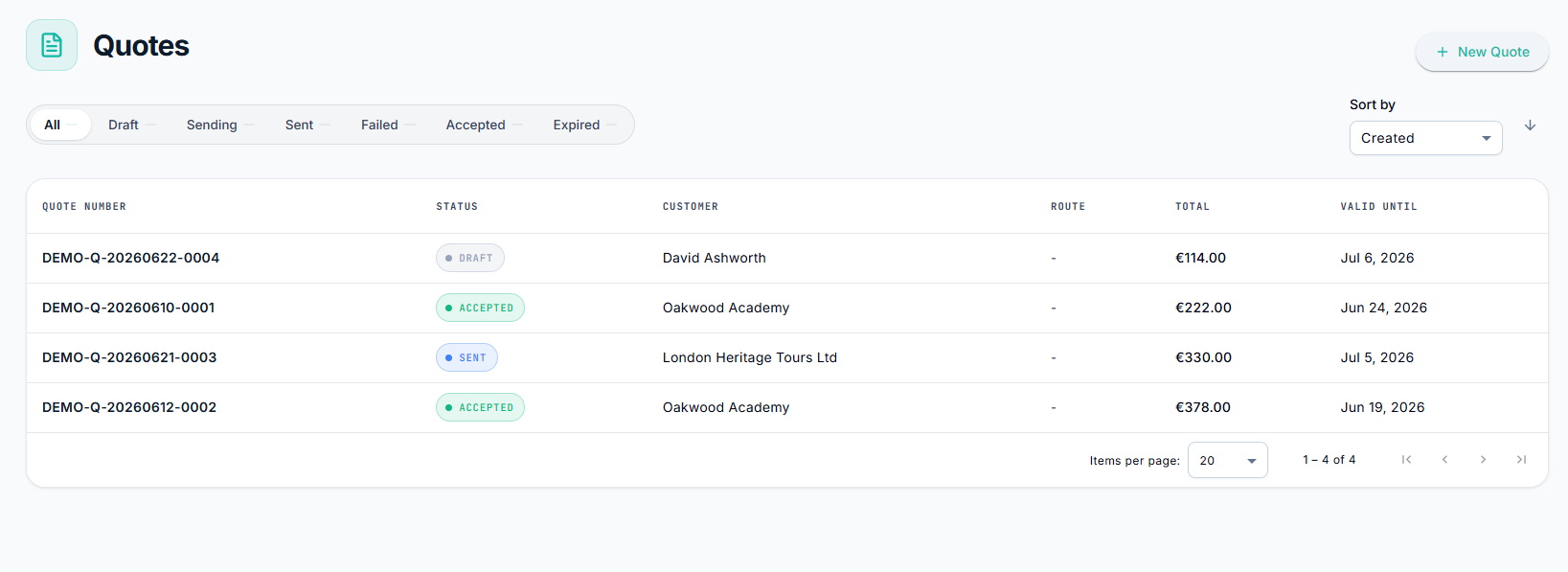
Quote tracking helps teams follow commercial opportunities before they become confirmed bookings.
From confirmed booking to dispatch handoff
A confirmed booking is not the end of the process. For operations teams, it is the beginning of delivery. Once the customer confirms, the trip needs to be visible to the people responsible for assigning vehicles and drivers, checking availability, managing routes and preparing the service.
This handoff is where many manual workflows become risky. A booking may be confirmed by the sales or customer service team, but dispatch may not have the latest passenger number, route change, pickup note or timing update. If the booking is copied manually from one place to another, the risk of missing information increases.
Coach booking software should make this handoff more reliable. A confirmed trip should carry the details already captured during the request and quote stages. Dispatch teams should be able to see what has been confirmed, what still needs assignment and which trips are already in progress or completed.
For a coach operator running day tours, school transfers, airport services and corporate transport on the same fleet, this visibility is essential. A vehicle cannot be treated as available just because it is not visible in one calendar. A driver cannot be assigned confidently if their working hours, existing jobs or licence requirements are unclear. A confirmed booking needs to become part of the operational plan, not another message in a long thread.
Why booking visibility improves profitability
The cluster for this article is reporting, profitability and conversion, and that connection is important. Booking management is not only an operational issue. It affects revenue and decision-making.
When bookings, quotes and invoices live in separate systems, managers often struggle to answer basic commercial questions:
- How many quotes are being converted into confirmed bookings?
- Which type of work generates better revenue per booking?
- How much revenue is confirmed but not yet invoiced?
- Which bookings are completed but still waiting for financial follow-up?
- Where is the business losing time between request, quote and confirmation?
These questions matter because operators do not only need more bookings. They need bookings that can be delivered profitably with the available fleet, drivers and operational capacity.
Transitour includes reporting views that connect bookings, invoices, revenue and quote conversion. Used well, this helps operators understand not only what happened, but where the booking process can improve. If quotes are not converting, the issue may be response time, pricing, follow-up or availability. If completed bookings are not invoiced quickly, the issue may be the handoff between operations and finance. If revenue is growing but fleet utilization is poor, the issue may be planning and allocation.
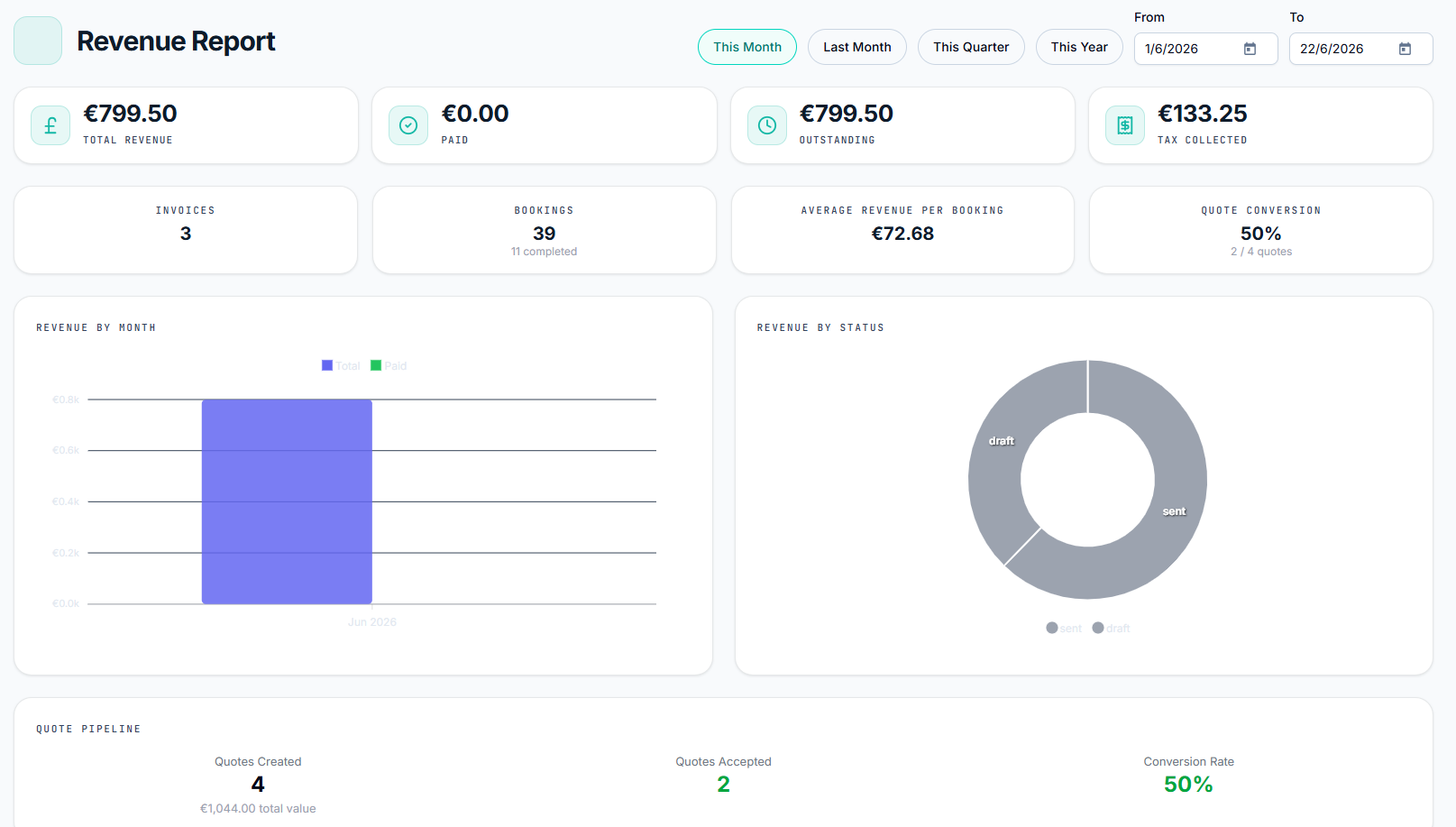
Revenue reporting connects bookings, invoices and quote conversion in one management view.
What to look for in coach booking software
Operators evaluating coach booking software should look beyond a simple reservation calendar. A calendar can show dates and times, but it usually does not manage the full commercial and operational workflow.
A stronger system should support the journey from enquiry to quote, from quote to confirmed trip and from confirmed trip to dispatch and invoicing. For coach and bus operators, useful capabilities include:
- Centralized booking records: so the team works from one source of truth instead of scattered emails and spreadsheets.
- Structured quote management: so draft, sent, accepted and expired quotes can be tracked more clearly.
- Configurable pricing: so different rate cards, time bands, minimum charges or customer-specific tariffs can be managed more consistently.
- Multi-stop route support: so complex trips can be prepared with pickup, destination, waiting time and notes.
- Driver and vehicle assignment: so confirmed work can move into dispatch with better operational control.
- Invoicing connection: so completed work can move into financial follow-up without rebuilding the job manually.
- Reporting: so managers can see conversion, revenue, invoices and operational performance.
For larger operators, API access, webhooks, role-based access and regional data hosting may also be important. For teams that receive many enquiries outside office hours, AI-assisted lead capture and quote preparation can help reduce response time. Transitour’s AI plan is positioned for capturing leads from WhatsApp and web, qualifying enquiries, drafting quotes and routing confirmed bookings to the dispatch board.
Example: a customer request becomes a confirmed trip
Imagine a travel business sends a request for a coach transfer from an airport to a hotel, with a return trip two days later and an intermediate stop on the way. In a manual workflow, the team may need to check the inbox, calculate the route, look up pricing, confirm vehicle capacity, prepare the quote, send it, wait for acceptance, then copy the details into a dispatch calendar and later into an invoice.
In a structured coach booking software workflow, the same request can be treated as one connected record. The customer and route details are captured during booking creation. Pricing can be handled through configured rules. The quote can be tracked by status. Once accepted, the booking becomes visible for operational assignment. After the service is completed, the financial workflow has a clearer path toward invoicing and revenue reporting.
The benefit is not that software replaces the judgement of an experienced operations team. The benefit is that it gives that team a cleaner structure, fewer repeated steps and better visibility at each stage.
When should an operator move beyond spreadsheets?
Spreadsheets are flexible, and many transport businesses use them successfully in the early stages. But they become limiting when the business needs faster response times, clearer booking status, better quote follow-up, dispatch visibility and financial reporting.
A practical sign that it is time to move to coach booking software is when the team spends more time checking information than making decisions. Another sign is when confirmed bookings need to be copied into multiple places before they can be delivered. A third sign is when management cannot easily see conversion, revenue, pending invoices or booking performance without asking someone to prepare a manual report.
At that point, the cost is not only administrative. It affects customer experience, operational reliability and commercial control.
Conclusion: better booking workflows lead to better operations
Coach booking software should not be seen as a digital form for creating reservations. For modern coach operators, bus companies, DMCs and travel transport teams, it should connect the full workflow from customer request to confirmed trip, dispatch handoff, invoicing and reporting.
Transitour helps operators bring quotes, bookings, scheduling, dispatch and invoicing into one structured platform. For teams that want to reduce manual work, respond faster to enquiries and gain better visibility over conversion and revenue, it provides a practical way to move beyond fragmented tools.
Ready to see how coach booking software can improve your request-to-confirmed-trip workflow? Start a free trial, book a demo or contact the Transitour team to explore how the platform can support your operation.