 Transitour
Coach Management Software vs Spreadsheets: When to Upgrade

Spreadsheets are often the first operational system used by a growing coach company. They are familiar, inexpensive and flexible enough to record bookings, driver names, vehicle assignments and payment information. However, as the number of journeys, customers and operational changes increases, the same spreadsheets can become difficult to control. This is usually the point when coach management software stops being an optional improvement and becomes a practical operational requirement.
The decision is not simply about replacing Excel with a more modern interface. It is about determining whether your current tools still provide a reliable view of bookings, schedules, drivers, vehicles, quotes and invoices. When teams need several files, calendars and message threads to understand what is happening, operational risk begins to grow.
Why spreadsheets work well at the beginning
For a small coach operator managing a limited number of vehicles and occasional bookings, a spreadsheet may be perfectly adequate. A single person may know every driver, every vehicle and every regular customer. Changes can be communicated directly, and there may be enough time to check each row manually.
Spreadsheets are especially useful when the operation is simple:
- Only a small number of trips are managed each week.
- One person controls most bookings and assignments.
- Routes and prices do not vary significantly.
- There are few last-minute operational changes.
- Reporting requirements are limited.
The problem is not that spreadsheets are inherently unsuitable. The problem is that they do not automatically become more structured as the business grows. More journeys usually mean more tabs, more versions and more people making changes to information that is increasingly important.
When coach operations become too complex for spreadsheets
The limitations normally become visible gradually. The business may still complete every journey, but the operations team spends more time checking information, correcting mistakes and confirming whether a vehicle or driver is genuinely available.
Multiple versions of the same schedule
One dispatcher updates a planning sheet while another person works from an earlier copy. A driver receives a screenshot through a messaging app, but the booking changes later. The customer service team updates the pickup time in one file, while the operational schedule still shows the original time.
Each individual change may appear manageable. The risk comes from not knowing which version represents the current operational plan.
Bookings are disconnected from assignments
A booking spreadsheet can record the customer, date and destination, but vehicle and driver assignments may be kept in another file or calendar. This makes it harder to answer basic operational questions:
- Which confirmed bookings still need a vehicle?
- Which journeys have no driver assigned?
- Which trips are currently in progress?
- Which services have been completed or cancelled?
When this information is distributed across several tools, dispatch teams must reconstruct the status of the operation manually.
Availability checks depend on individual knowledge
Experienced dispatchers often remember which vehicles are normally available, which drivers cover specific services and where coaches are based. This knowledge is valuable, but it becomes a bottleneck when the operation depends on one or two people.
A growing company needs operational information that can be understood by the whole team, not only by the person who created the spreadsheet.
Changes are difficult to trace
Spreadsheets can show the current value in a cell, but they are not always a practical way to understand the operational history of a booking. It may be unclear when a journey was confirmed, who changed the route, why the price was updated or whether an assignment was replaced.
This becomes particularly important when operations, customer service, finance and management need to work from the same information.
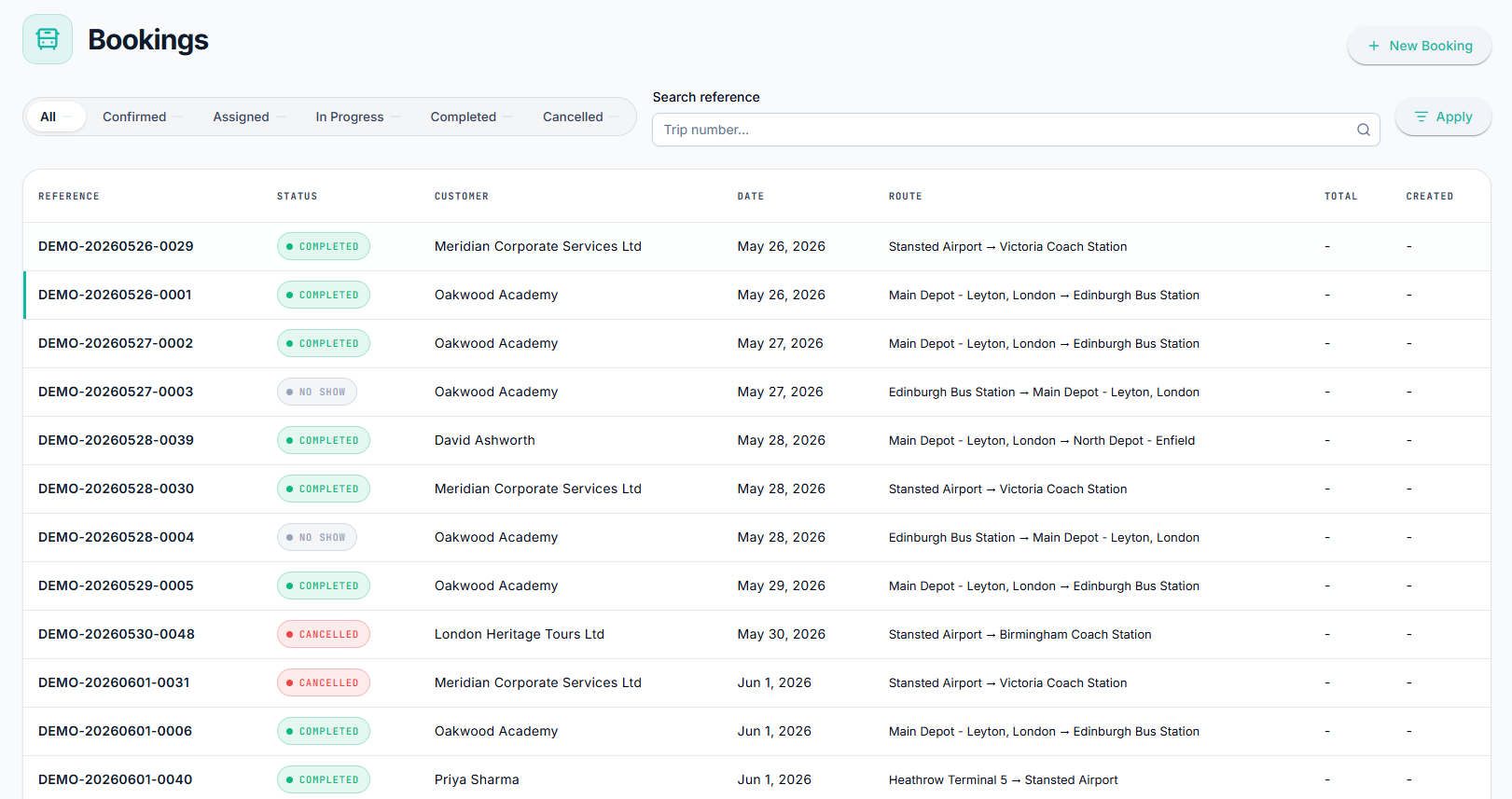
A structured weekly schedule helps operators review upcoming trips, workload and capacity without checking multiple spreadsheet tabs.
Coach management software vs spreadsheets: the operational difference
The main difference is not the number of fields available. A spreadsheet can theoretically contain almost any information. The difference is how that information is connected, updated and used during daily operations.
A structured booking workflow
In a spreadsheet-based process, a customer request may begin in email, move into a quote document, appear later in a booking sheet and finally be copied into a dispatch schedule. Each transfer creates another opportunity for data to be missed or entered differently.
With a structured platform, customer, journey, route, passenger and scheduling information can remain connected as the job moves from request to confirmed booking and operational assignment.
A current view of dispatch activity
A dispatch board can separate unassigned, assigned, in-progress and completed work. This makes the operational status visible without requiring someone to interpret colours, notes and formulas in a spreadsheet.
For example, a dispatcher starting a morning shift can immediately focus on journeys that still require action instead of reviewing every booking line individually.
Centralized vehicle and driver records
Specialist software can keep vehicle and driver information in the same operational environment as bookings and schedules. Teams can therefore work with structured records rather than repeatedly typing names, registration numbers, capacities and contact details.
Transitour also supports vehicle compliance information such as inspections, insurance, tachograph calibration and maintenance. According to the product documentation, vehicles can be blocked when required compliance has expired, helping operators avoid assigning resources that should not be used.
Connected reporting and invoicing
Spreadsheet operations often require managers to prepare reports by combining information from booking, dispatch and finance files. This takes time and can make it difficult to compare operational activity with revenue or vehicle utilization.
A connected system can provide a clearer handoff from completed work to invoicing and reporting. Transitour includes invoice tracking and reporting views for revenue, quote conversion and fleet utilization, giving managers a more structured basis for reviewing performance.
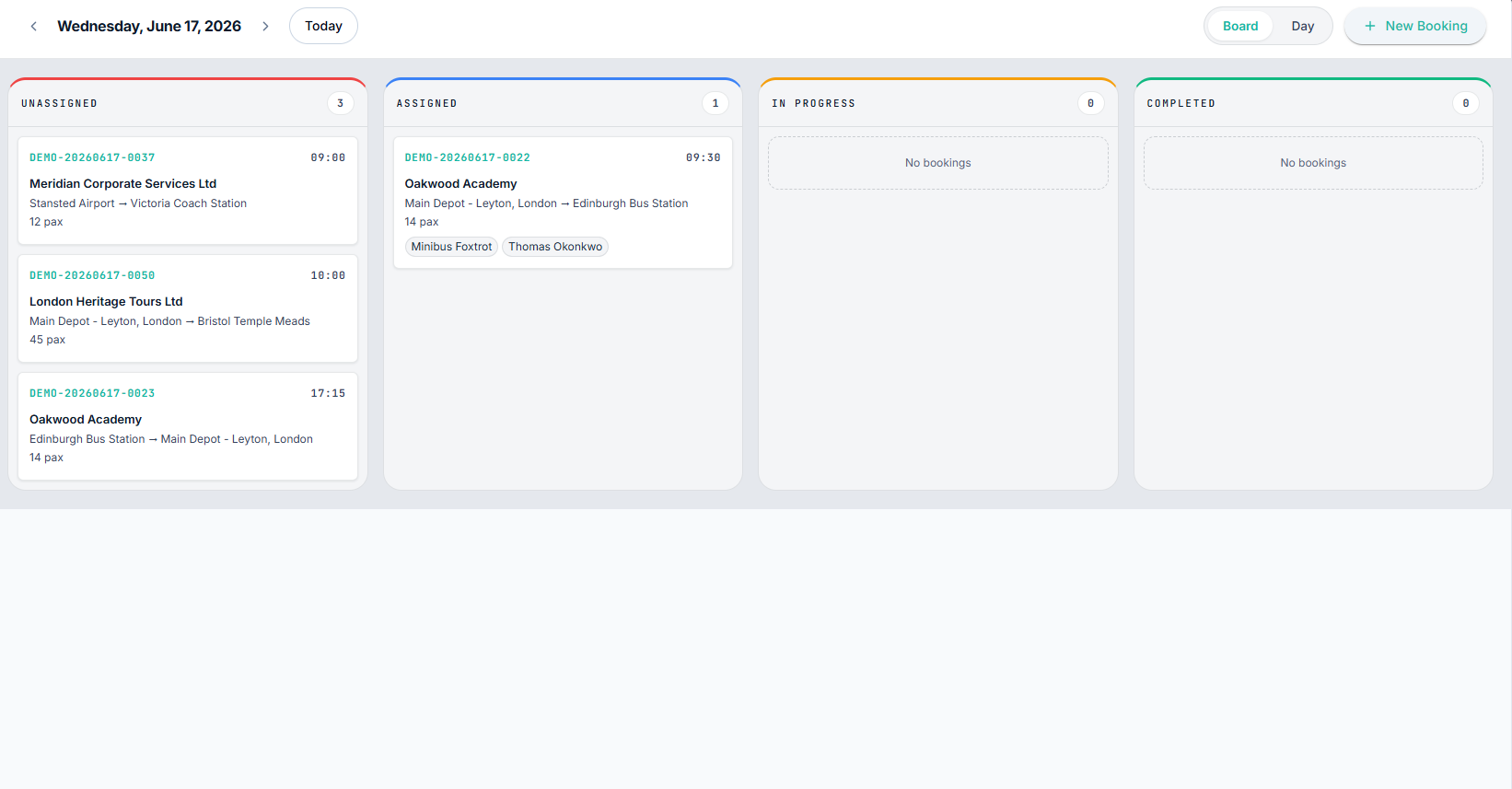
Transitour gives dispatch teams a clear board view of unassigned, assigned, in-progress and completed bookings.
Seven signs that it is time to upgrade
There is no universal fleet size at which every operator must stop using spreadsheets. The better indicator is the amount of operational friction and risk created by the current process.
1. Your team checks several files before confirming availability
When accepting a booking requires opening a schedule, a vehicle list, a driver calendar and a separate customer file, the process is already fragmented.
2. Last-minute changes are frequently communicated manually
Phone calls and messages will always be part of transport operations. However, they should not be the only record of a changed pickup time, route or assignment.
3. Bookings are occasionally duplicated or overlooked
Repeated data entry increases the chance that a confirmed job is copied twice, entered incorrectly or never transferred to the final schedule.
4. Only one person fully understands the planning system
If the operation becomes difficult to manage when a particular dispatcher is absent, the company needs a more accessible operational structure.
5. Preparing weekly schedules takes too long
Manually arranging trips across vehicles and drivers becomes harder as recurring services, private hire, school work, tours and contract bookings compete for the same resources.
6. Management reporting requires manual consolidation
If revenue, completed trips, vehicle usage and quote conversion must be calculated in separate spreadsheets, management decisions are being delayed by administrative work.
7. Growth creates more administration than revenue
A growing booking volume should improve the business. When every additional journey generates more copying, checking and follow-up, the operating model is no longer scaling efficiently.
What to look for in coach management software
Not every fleet platform is designed for coach operations. Basic vehicle tracking may show where a vehicle is located, but it does not necessarily manage the commercial and operational workflow surrounding each journey.
When comparing systems, focus on the daily processes your team needs to control:
- Quotes and configurable pricing.
- Confirmed bookings and booking statuses.
- Weekly scheduling and recurring trips.
- Vehicle and driver assignment.
- Dispatch visibility.
- Multi-stop routes and journey details.
- Vehicle compliance records.
- Invoices and payment status.
- Operational and revenue reporting.
- Role-based access for different teams.
The system should also fit the size and structure of the company. A smaller operator may need a straightforward way to centralize daily work, while a larger or multi-base business may require integrations, configurable workflows and more advanced onboarding support.
How Transitour supports the move away from spreadsheets
Transitour is designed to connect the operational steps that coach and bus companies frequently manage through separate spreadsheets, calendars and administrative tools.
The platform brings together structured quoting, bookings, scheduling, dispatch and invoicing. Teams can review bookings by status, organize upcoming journeys in a weekly schedule and maintain central records for drivers and vehicles. It also supports recurring trips, multi-stop routes, configurable pricing and role-based access.
This does not mean every manual process must disappear immediately. Operators can begin by centralizing the areas creating the greatest risk, such as confirmed bookings, weekly scheduling or dispatch assignments. Once the core operational information is in one system, reporting and invoicing can become easier to manage.
For companies handling enquiries through their website or WhatsApp, Transitour + AI can also support lead capture, enquiry qualification, draft quotations and the routing of confirmed bookings into dispatch. This is most relevant when slow response times and repetitive quote preparation are limiting growth.
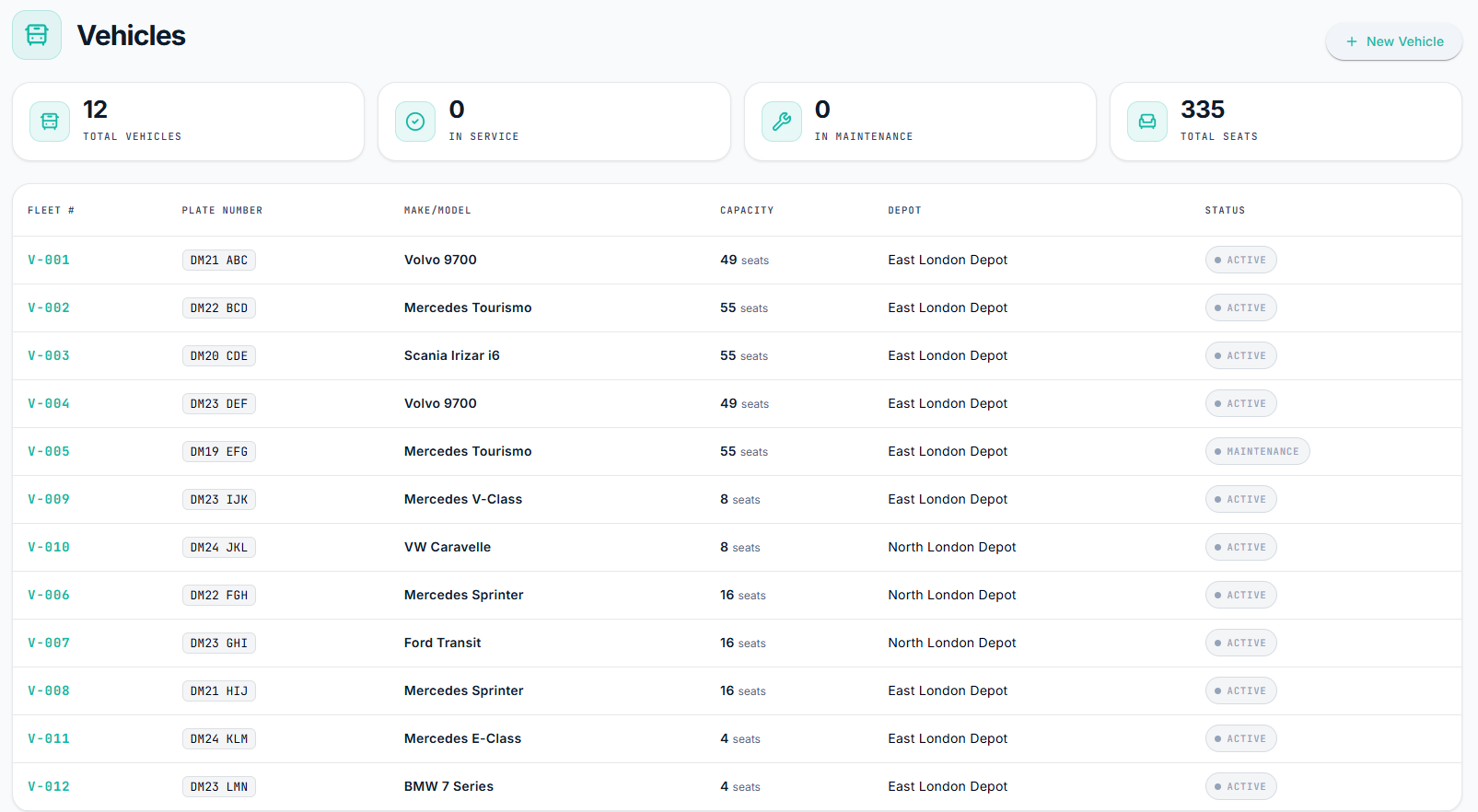
Fleet utilization reporting helps managers identify idle capacity and review how vehicles are being used.
Planning the transition without disrupting operations
Moving from spreadsheets does not need to involve a sudden replacement of every existing process. A practical transition can be completed in stages.
Document the current workflow
Identify where customer requests arrive, how quotes are prepared, when a job becomes a confirmed booking and how vehicle and driver assignments are communicated.
Choose the first operational priority
For many operators, the best starting point is either the weekly schedule or the dispatch board. These areas usually provide an immediate improvement in visibility.
Prepare clean operational data
Review vehicles, drivers, pricing rules, regular customers, recurring services and standard locations before importing or entering them into the new platform.
Define team responsibilities
Decide who can create bookings, assign drivers, update journeys, manage invoices and review reports. Role-based access is more effective when these responsibilities are clear.
Run a controlled test
Use a selection of real or representative journeys to confirm that the new workflow reflects how the company actually operates. This allows the team to adjust processes before wider adoption.
Conclusion: upgrade when spreadsheets stop providing control
Spreadsheets can remain useful for small and simple operations. The need to upgrade appears when they no longer provide a dependable, current and shared view of bookings, schedules, drivers, vehicles and financial activity.
The strongest reason to adopt coach management software is not to make the operation look more digital. It is to reduce uncertainty, connect commercial and operational information and give the team a clearer way to manage daily work as the company grows.
See how Transitour can replace fragmented spreadsheets with structured coach management software. Start a free 7-day trial or request a demo to review the workflow with the Transitour team: https://www.transitour.es/en/features