 Transitour
DMC Operations Software: How to Centralize Suppliers, Transport and Bookings

DMC operations software becomes increasingly important when a destination management company has to coordinate multiple bookings, transport services, clients, locations and operational changes at the same time. What works for a small number of groups can quickly become difficult to control once information is spread across spreadsheets, emails, calendars, messaging apps and separate supplier systems.
For a DMC, the challenge is not simply taking a booking. A single programme may involve airport pickups, coaches, hotels, guides, restaurants, activities and several different suppliers. Each service has its own times, locations and operational dependencies. The transport element alone may involve several vehicles, drivers, stops and changes over several days.
This is why centralization matters. The objective is not necessarily to replace every specialist supplier platform with one application. It is to create a more reliable operational structure so the team knows what has been booked, what transport is required, when it must happen and how each service fits into the wider itinerary.
Why DMC operations become difficult to manage as volume grows
Many DMCs begin with flexible tools because they are quick to set up. A spreadsheet may contain the itinerary, another file may contain transport costs, emails hold supplier confirmations, and a shared calendar shows arrival and departure times.
The problem appears when the operation scales. Information starts being duplicated, updated in one place but not another, or dependent on individual team members knowing where the latest version is stored.
A typical group movement can illustrate the issue. Imagine a 40-person group arriving at an airport on Monday, travelling to a hotel, attending several activities during the week and returning to the airport on Friday. The DMC may need to coordinate:
- the client and group details;
- arrival and departure times;
- pickup and drop-off locations;
- vehicle capacity;
- multiple stops during excursions;
- driver and vehicle assignment;
- changes to confirmed services;
- the operational status of each transport booking;
- and the financial workflow associated with completed services.
If these elements live in disconnected documents, every change creates another opportunity for inconsistency.
What DMC operations software should centralize
The exact scope of a DMC platform depends on the business. Some systems concentrate on itinerary building and supplier contracting; others focus on reservations, transport or back-office processes. For DMCs with a significant ground-transport component, one of the biggest opportunities is to centralize the operational information that turns a confirmed itinerary into services that can actually be delivered.
1. Clients, bookings and operational data
Once a request becomes confirmed business, operations teams need a reliable record of the client and the services associated with that booking. Searching through inboxes for the latest version of a request is inefficient and makes handovers more difficult.
Transitour provides centralized client and booking records so transport-related information can remain connected to the operational workflow. The platform supports the process from quotation and booking through scheduling, dispatch and invoicing.
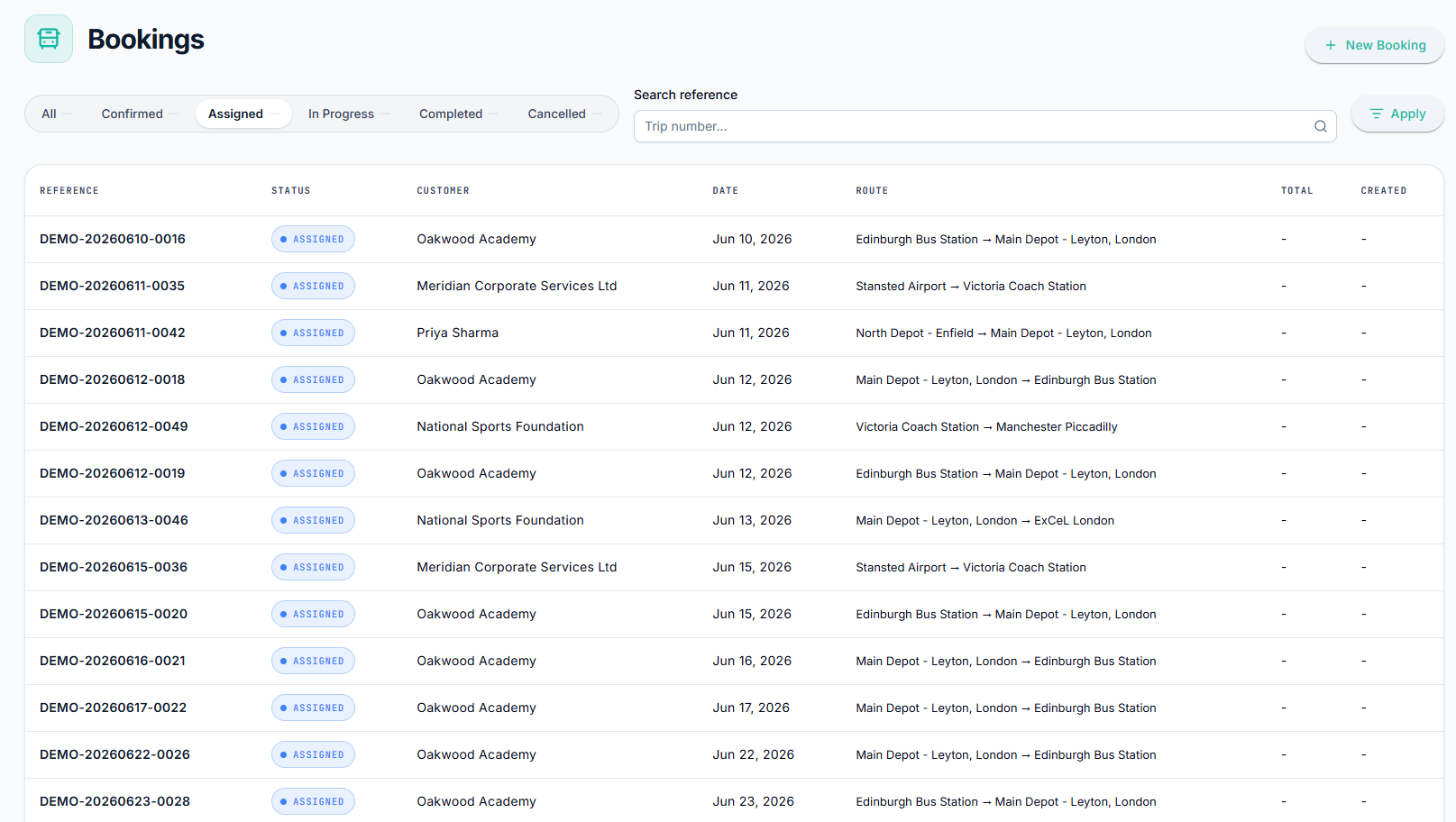
A centralized bookings view gives DMC operations teams one place to track transport services, clients, dates, routes and booking status.
This kind of visibility is particularly useful when several people are involved in the same programme. Sales, reservations and operations can work from structured booking information instead of maintaining separate copies of the same trip.
2. Locations and complex ground transport
DMC transport is rarely limited to a simple journey from point A to point B. Airport transfers, hotels, restaurants, attractions, venues, stations and event locations may all form part of the same programme.
Saved locations can reduce repetitive data entry, while structured route information makes it easier to prepare recurring pickups and destinations. Transitour supports multi-stop routes, including automatically calculated kilometres, waiting time and notes by leg.
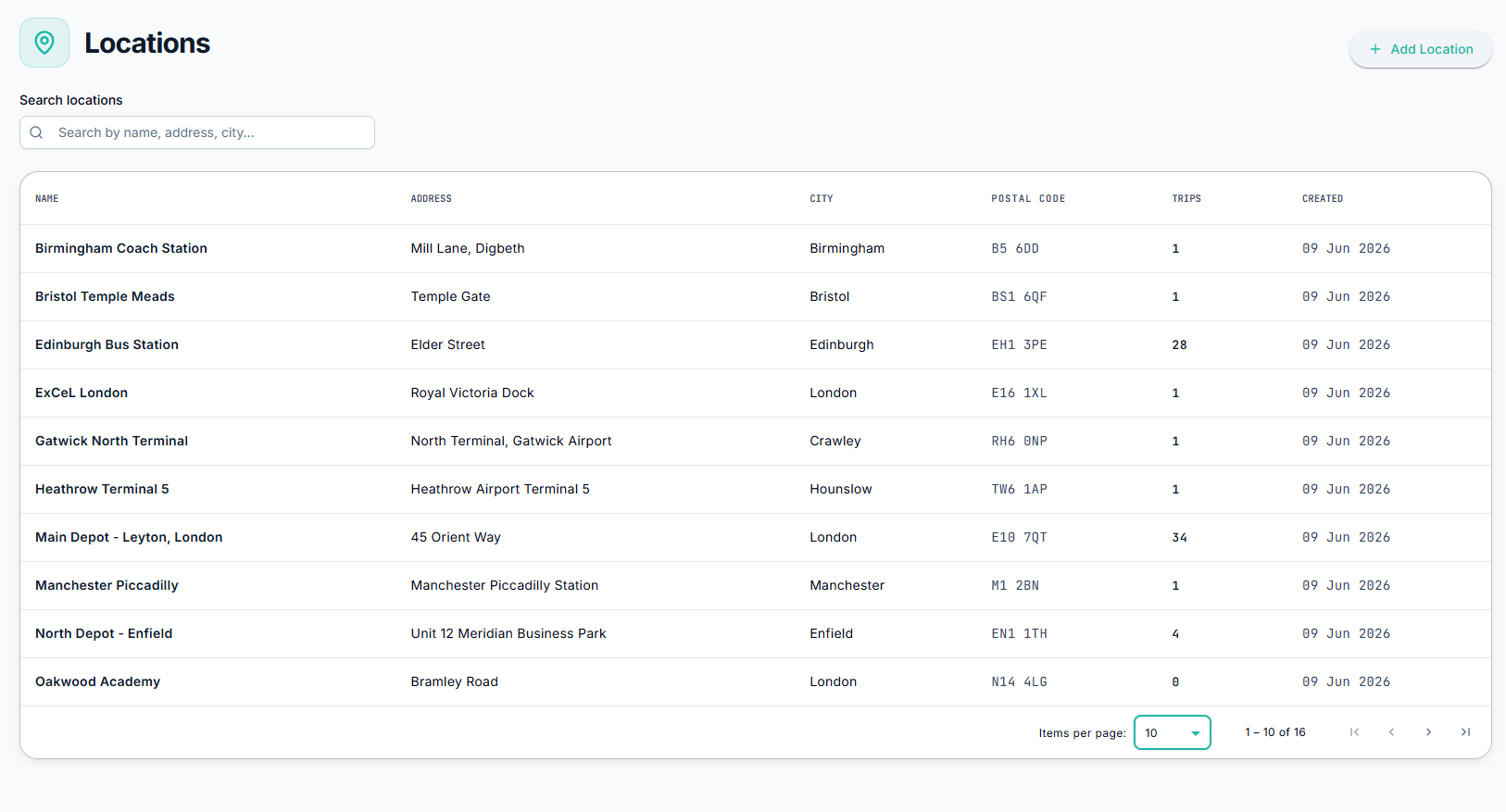
Saved locations help DMC transport teams standardize recurring pickup, drop-off, hotel, airport and event points.
This matters when a DMC handles repeated destinations or multiple groups using the same operational network. Instead of rewriting the same location information for every movement, teams can create a more consistent operational base.
3. Scheduling vehicles and drivers around confirmed bookings
A confirmed booking is only commercially useful if the operation has the capacity to deliver it. That requires visibility over vehicles, drivers and timing.
Transitour is designed around real availability checks and operational assignment. Its dispatch workflow can help teams see bookings by status and assign resources while taking availability into account. Vehicle information can also be managed centrally, including capacity, base and operational status.
For DMCs that use their own vehicles, operate a transport division or manage a dedicated fleet, this can provide a clearer bridge between the itinerary sold to the client and the transport that must be delivered on the ground.
DMC operations software and supplier management are not always the same thing
It is important to distinguish between broad DMC supplier management and transport operations management.
A DMC may work with hotels, restaurants, guides, activity providers and external transport companies. A full supplier-management platform may therefore need specialist capabilities for hotel contracting, inventory, commissions or activity products.
Transitour should not be positioned as replacing every one of those systems. Its documented strength is the operational management of transport: quotations, bookings, routes, schedules, vehicles, drivers, dispatch, invoices and related reporting.
For a DMC, that means Transitour can serve as the structured transport operations layer while other specialist systems continue to handle services outside that scope. This distinction is important because centralization works best when each system has a clear operational responsibility.
From a confirmed programme to daily dispatch
Consider a DMC managing several incoming groups during the same week. One group needs airport transfers and two excursions. Another has a three-day programme involving several hotels. A corporate group requires scheduled transfers between a conference venue and its accommodation.
The operational team needs to know what is happening today, tomorrow and later in the week. A static itinerary document is not enough once drivers and vehicles have to be allocated.
Transitour includes scheduling and dispatch views designed to turn confirmed bookings into an actionable daily operation. Bookings can move through operational stages such as unassigned, assigned, in progress and completed, giving the dispatch team a clearer view of what still requires attention.
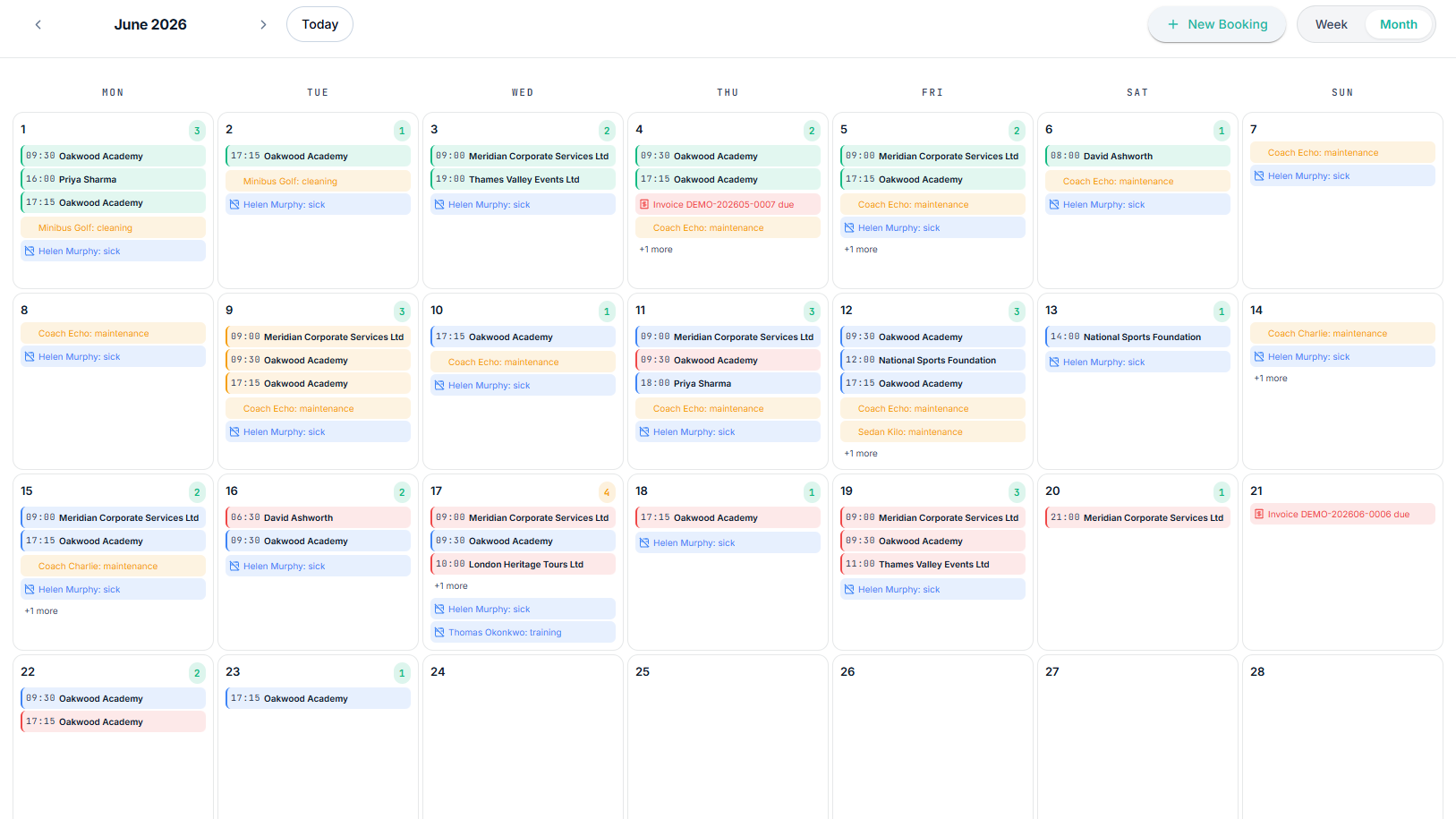
Transitour gives transport teams a clear daily view of unassigned, assigned, in-progress and completed bookings.
This becomes increasingly useful during busy periods, when several groups may arrive or depart within a short window and operational changes must be handled without losing visibility of other services.
Standardizing recurring DMC transport services
Not every DMC movement is unique. Regular airport transfers, contracted corporate services, seasonal programmes and repeated group itineraries can generate similar transport requirements week after week.
Transitour supports recurring trips and contracts, allowing repeated transport services to be organized in a structured way rather than recreated manually each time. Its recurring-trip functionality is designed for repeated routes and scheduled services, while contract records can connect longer-term agreements with associated bookings.
For operations teams, standardization can mean less repetitive administration and a more consistent foundation when programmes are repeated.
Connecting operations with invoicing and reporting
Centralization should not stop when a vehicle completes a journey. Operations also need a clear handoff to the financial side of the business.
Transitour connects completed operational activity with invoice management and provides reporting around bookings, invoices, income and quote conversion. This allows managers to follow the workflow beyond dispatch instead of rebuilding financial information from separate operational spreadsheets.
For a growing DMC, this visibility can help answer practical questions: Which transport work has been completed? What still needs to be invoiced? How much activity is being generated? Are quotations turning into bookings?
What to look for when choosing DMC operations software
Before introducing another tool, a DMC should identify where operational fragmentation is creating the most work. Useful questions include:
- Can teams see confirmed transport bookings in one place?
- Can routes, stops and recurring locations be managed consistently?
- Can operations see vehicle and driver availability before assignment?
- Can confirmed services move directly into scheduling and dispatch?
- Can booking status be tracked without relying on email updates?
- Can completed services flow into invoicing and reporting?
- Can different members of the team access the information relevant to their role?
- Can the system integrate with other parts of the technology stack when required?
Transitour supports role-based access as well as a REST API and webhooks, which can be relevant for DMCs that need their transport operation to form part of a broader travel technology environment.
When is it time to move away from spreadsheets?
The trigger is usually not a specific company size. It is operational complexity.
If the team repeatedly copies booking information between systems, struggles to identify the current version of a trip, has difficulty seeing transport capacity, or spends too much time coordinating assignments manually, the cost of fragmented working is already becoming visible.
A specialized system does not remove the need for good operations management. It gives the team a structured environment in which that management can take place.
Centralize the transport side of your DMC operation
The main value of DMC operations software is creating a clearer connection between what has been sold and what must be delivered. For DMCs managing complex ground transport, centralizing clients, transport bookings, locations, schedules, vehicle assignments, dispatch and financial follow-up can remove a significant amount of operational fragmentation.
Transitour is specifically focused on that transport workflow. It brings quotations, bookings, scheduling, dispatch and invoicing into one structured platform and can support DMCs that need better control of the ground-transport element of their programmes.
If your team is evaluating DMC operations software because transport bookings are becoming difficult to manage across spreadsheets, calendars and disconnected tools, you can book a Transitour demo or start a 7-day free trial to see how the workflow fits your operation.