 Transitour
Fleet Scheduling Best Practices for Coach Operators
Why Scheduling Matters for Coach Operators
Effective fleet scheduling is the backbone of any successful coach or bus operation. Whether you manage five vehicles or fifty, how you plan and allocate your fleet directly impacts profitability, customer satisfaction, and driver retention. Poor scheduling leads to missed bookings, idle vehicles, overworked drivers, and razor-thin margins that threaten the long-term viability of your business.
In today's competitive transport landscape, coach scheduling tips that worked a decade ago no longer cut it. Clients expect reliability and punctuality, regulations demand compliance, and your team deserves tools that make their jobs easier rather than harder. Getting bus fleet scheduling right is not optional — it is a strategic imperative.
Common Scheduling Mistakes
Before diving into best practices, it is worth understanding where most operators go wrong. Recognizing these pitfalls is the first step toward building a more resilient operation.
- Over-reliance on spreadsheets and whiteboards. Manual tools cannot detect conflicts in real time, and a single oversight can cascade into multiple failures on the day of service.
- Ignoring driver hours and rest regulations. Scheduling a driver who is approaching their legal limit is not just risky — it is a compliance violation that can result in fines and reputational damage.
- No buffer time between jobs. Back-to-back bookings with zero margin for delays, refuelling, or vehicle cleaning are a recipe for late departures and frustrated clients.
- Reactive instead of proactive planning. Waiting for bookings to come in and then scrambling to fit them into the schedule leads to suboptimal resource utilization and missed revenue opportunities.
- Failing to account for seasonality. Demand patterns shift dramatically between peak season, school terms, and quiet months. Operators who ignore this end up either turning away work or paying for underutilized assets.
Fleet Scheduling Best Practices
1. Adopt Digital Scheduling Tools
The single most impactful change any coach operator can make is to move from manual scheduling to a purpose-built digital platform. Modern fleet scheduling software provides real-time visibility into vehicle and driver availability, automatic conflict detection, and centralized booking management. This eliminates the guesswork and reduces the administrative burden on your dispatch team.
When evaluating tools, look for solutions designed specifically for coach and bus operations rather than generic calendar applications. Industry-specific platforms understand concepts like vehicle capacity validation, home base tracking, and multi-stop itineraries that general-purpose tools simply cannot handle.
2. Build Buffer Time into Every Schedule
Experienced operators know that no day goes exactly according to plan. Traffic delays, late passenger arrivals, and unexpected vehicle issues are inevitable. By building buffer time between consecutive bookings, you create resilience in your schedule. A good starting point is 30 to 45 minutes of buffer for local work, and 60 minutes or more for long-distance services.
Buffer time also gives drivers a chance to conduct walk-around checks, clean the vehicle, and take legally required breaks. The result is a calmer, safer, and more professional operation.
3. Manage Driver Availability Centrally
Driver availability is often the most constrained resource in a coach operation. Holidays, sickness, training days, and regulatory rest periods all reduce the pool of available drivers on any given day. A centralized system that tracks real-time driver availability — including worked hours, upcoming leave, and license expiry dates — prevents the costly mistake of assigning a driver who is not actually available.
This centralized approach also makes it easier to distribute work fairly across your team, which improves morale and reduces turnover.
4. Plan for Seasonal Demand
Coach hire demand follows predictable seasonal patterns. School and university contracts peak during term time, corporate events cluster around conference seasons, and tourism work surges in summer and around holidays. By analyzing historical booking data, you can forecast demand more accurately and adjust your fleet and staffing levels accordingly.
Seasonal planning also informs maintenance scheduling. Arrange major services and MOT renewals during your quieter months so that every vehicle is road-ready when demand peaks.
5. Use Capacity and Requirement Validation
Assigning a 16-seat minibus to a booking that requires 50 seats is an obvious error, but subtler mismatches happen more often than you might think. Does the booking require wheelchair accessibility? Is a toilet on board necessary for a long journey? Does the client need Wi-Fi or USB charging? Automated capacity and requirement validation ensures the right vehicle is matched to every job, every time.
6. Centralize Your Dispatch View
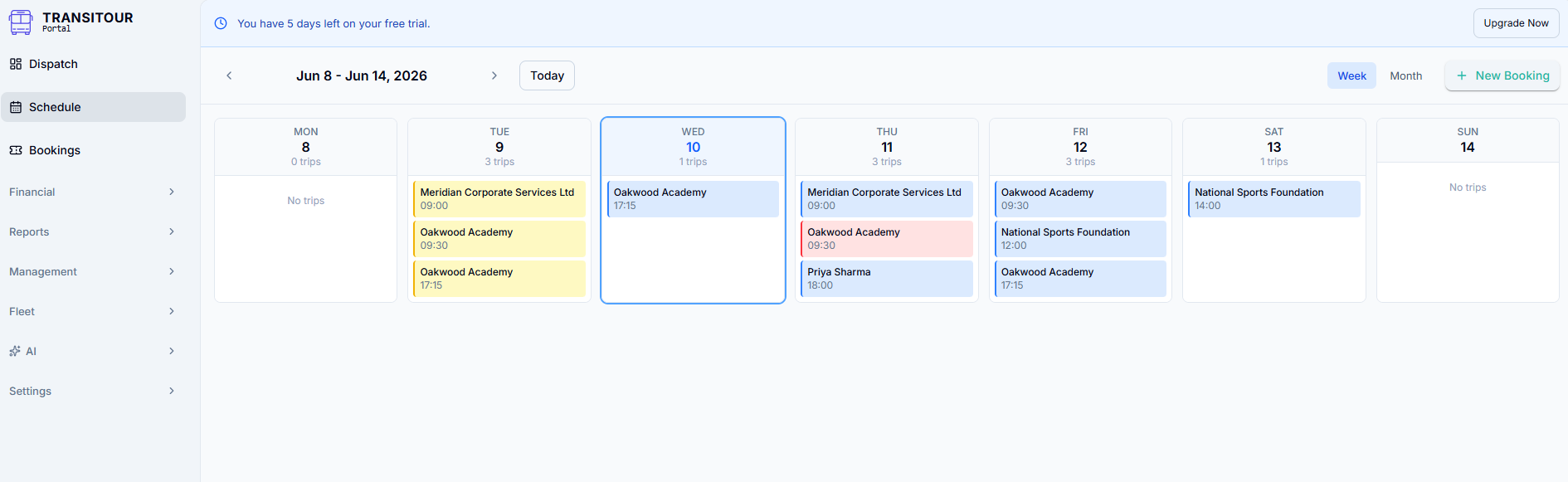
A unified dispatch board that shows all bookings, drivers, and vehicles in one place is essential for operational control. Whether you prefer a board view, a daily timeline, a weekly calendar, or a monthly overview, having a single source of truth prevents miscommunication and allows your team to respond quickly to changes.
How Transitour Helps
Transitour was built from the ground up for coach and bus operators who are serious about fleet scheduling best practices. The platform provides intelligent scheduling with real-time driver and vehicle availability checks, automatic conflict detection, and capacity validation — all in one unified system.
With four dispatch views (board, day, week, and month), Transitour gives your operations team complete visibility over every booking. The structured pricing engine ensures consistent, profitable quotes, while the integrated invoicing workflow connects the entire journey from quote to payment.
Whether you are running a small fleet or managing a large, multi-depot operation, Transitour scales with you. Stop wrestling with spreadsheets and start running your coach operation intelligently.