 Transitour
Motorcoach Software: What Operators Need Beyond Basic Fleet Tracking
Choosing motorcoach software is no longer just about knowing where vehicles are. For many coach and tour transport operators, the bigger challenge is managing the full operational chain: quote requests, bookings, driver and vehicle assignments, schedules, dispatch, invoicing and reporting.
Fleet tracking can tell you where a coach is. It does not always tell you whether the right vehicle was assigned, whether the driver has the correct availability, whether a booking is still pending, whether a quote was accepted, or whether a completed trip has been invoiced correctly.
That difference matters. A motorcoach company may have excellent vehicles and experienced drivers, but still lose time and margin because the operation is spread across emails, spreadsheets, calendars, WhatsApp messages, accounting tools and individual team members’ memory.
This is where modern motorcoach software needs to go further. It should support the real work of a coach operator, not only the location of the fleet.
Why basic fleet tracking is not enough for motorcoach operations
Fleet tracking is useful. It helps teams understand vehicle location and movement. But motorcoach operations involve many steps before and after a vehicle is on the road.
A typical request may start with a school, company, travel agency, DMC or private group asking for a quote. The team must understand the route, dates, times, passenger count, vehicle type, luggage needs, stops, waiting time and client-specific pricing. Then the quote needs to be sent, followed up, confirmed, assigned, dispatched and eventually invoiced.
When these steps are handled separately, operators often face the same problems:
- Quotes take too long to prepare.
- Confirmed bookings are not immediately visible to operations.
- Dispatchers need to check multiple places before assigning drivers and vehicles.
- Schedule conflicts are detected too late.
- Completed trips are not always connected cleanly to invoicing.
- Managers lack visibility over utilization, revenue and quote conversion.
For a small fleet, these issues may feel manageable for a while. For a growing operator, a multi-base business or a company working with tour operators and DMCs, they quickly become expensive.
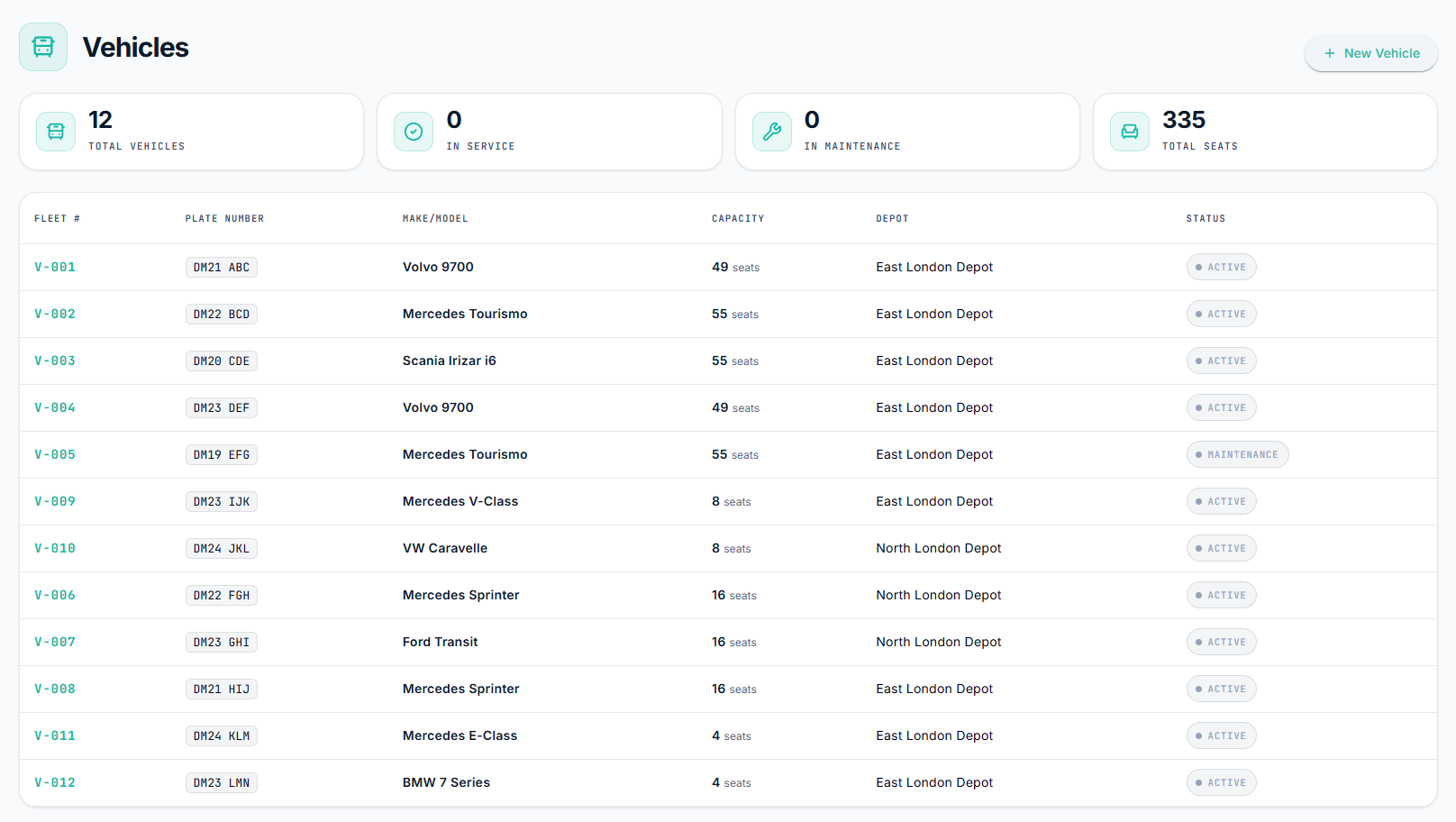
A central vehicle list gives operations teams visibility over capacity and availability.
What motorcoach software should include beyond tracking
The best motorcoach software should connect commercial, operational and financial workflows. The goal is not to replace every role in the company, but to give each team a shared operational structure.
1. Quote management connected to operations
For motorcoach operators, quoting is not a simple price field. A quote may depend on route distance, waiting time, passenger capacity, vehicle type, customer pricing, minimum charges, time bands or contract rules.
When quoting is disconnected from operations, the sales team may confirm a job before dispatch has a clear view of availability. That creates pressure later, especially during busy weeks, school trips, airport transfers, corporate events or multi-day tours.
A stronger system should help teams manage quotes, track their status and move accepted work toward booking and dispatch without re-entering the same information several times.
2. Booking management as a single source of truth
In many transport companies, the real booking record is scattered across an email thread, a calendar entry, a spreadsheet row and a message to the dispatcher. That makes it difficult to know which version is correct.
Modern coach booking software should centralize customer details, trip information, route data, passengers, dates, times, stops and operational notes. This is especially important for DMCs and tour transport companies that manage many changes from clients, hotels, airports, venues and guides.
A centralized booking workflow reduces the risk of missing small but important details: a changed pickup time, an extra stop, a different vehicle type, or a client note that only one person saw.
3. Dispatch visibility by status
Dispatch is where the operational reality becomes visible. A confirmed booking is not enough. The team needs to know whether it is unassigned, assigned, in progress or completed.
A dispatch board helps operations teams work from a live view instead of a static spreadsheet. It also makes it easier to see which jobs still need attention before the service day begins.
For example, a dispatcher preparing for tomorrow’s airport transfers should not need to check emails, ask the sales team and open a separate calendar to understand the day. The dispatch view should show what is ready, what is missing and what is already moving.
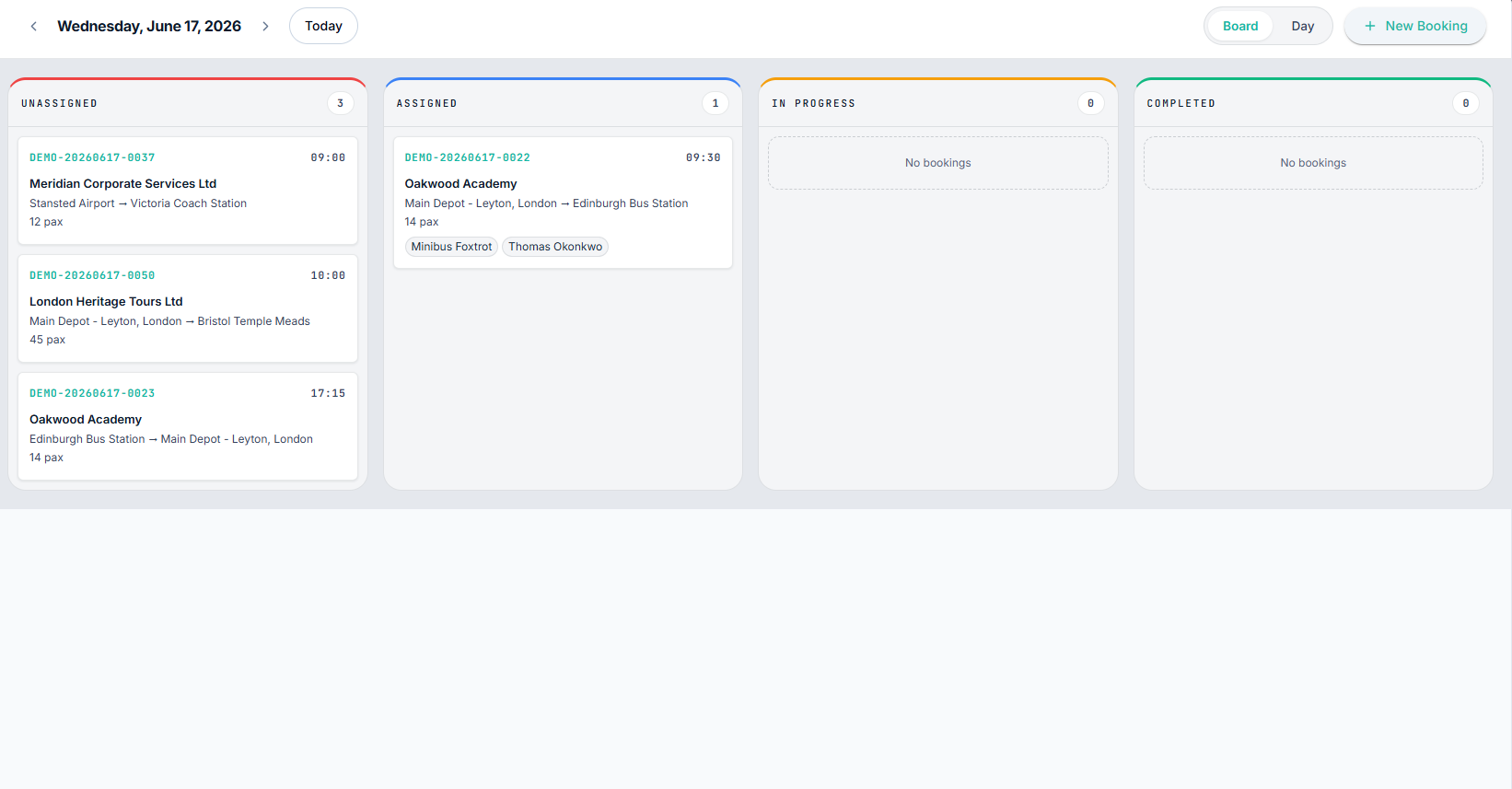
Transitour gives dispatch teams a clear board view of bookings by operational status.
Motorcoach software for scheduling, drivers and vehicles
A motorcoach business is a capacity business. Profitability depends on assigning the right vehicle, the right driver and the right time slot without creating conflicts or leaving assets idle.
This is why motorcoach software should support scheduling and resource planning, not just booking storage.
Weekly planning
A weekly schedule helps teams see upcoming workload by day. This matters when the same fleet is serving school runs, corporate shuttles, private hire, tour groups and recurring contracts.
Without a structured schedule, teams may accept bookings that look possible in isolation but become difficult when combined with driver hours, vehicle availability, depot location, maintenance or previous assignments.
Driver and vehicle assignment
Assigning a vehicle is not only a question of availability. The vehicle needs the right capacity, luggage space, base, status and compliance. The driver also needs to be suitable and available for the job.
A practical coach management system should make these records easier to access. Operations teams should be able to work with a central view of vehicles, drivers and bookings instead of rebuilding the plan manually every day.
Recurring services
Many motorcoach companies do not only manage one-off trips. They also handle school runs, employee shuttles, corporate contracts, seasonal routes and repeated transport services.
Recurring work needs structure. A repeated service should not require the team to create the same trip manually again and again. The system should help operators standardize repeatable work while still leaving room for changes when needed.
Reporting: the missing layer in many transport operations
Many operators know how busy they are. Fewer can quickly see which services are profitable, which vehicles are underused, how many quotes convert into bookings or how much revenue is still pending.
That is a problem because motorcoach operations are often high-effort and margin-sensitive. A full coach does not automatically mean a profitable job. A busy week does not always mean the fleet is being used efficiently.
Reporting should help managers answer practical questions:
- How many bookings were completed this month?
- Which vehicles are used most often?
- Where is capacity sitting idle?
- How much revenue is pending?
- Which quotes are still open?
- How well are quotes converting into confirmed bookings?
When reporting is connected to bookings, invoices and revenue, the business can move from reactive administration to better operational control.
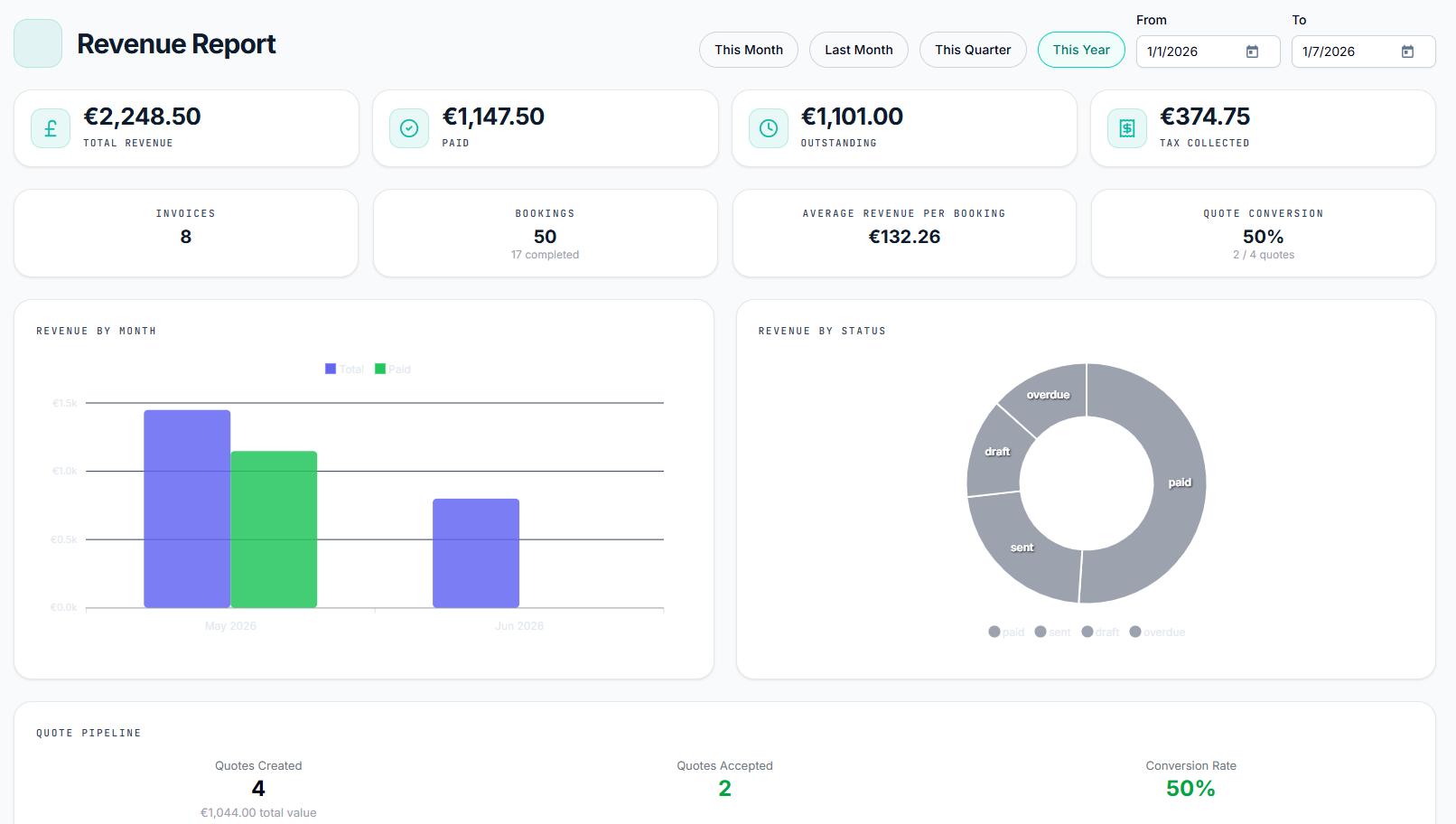
Revenue reporting connects bookings, invoices and quote conversion in one management view.
Where AI can help motorcoach operators
AI should not be treated as a vague feature. For transport operators, the commercial value is practical: faster response, fewer missed leads and less manual work during the early stages of a request.
Transitour + AI is designed to capture leads from WhatsApp and web channels, qualify enquiries, draft quotes and route confirmed bookings toward the dispatch panel. This can be especially useful for operators that receive requests outside office hours or manage a high volume of repetitive quote enquiries.
The advantage is not simply automation. The advantage is keeping the commercial workflow connected to operations. A lead that becomes a booking should not disappear into a message thread. It should move into the system where the team can plan, assign, dispatch and invoice it.
How Transitour approaches motorcoach software
Transitour is built for operators that need one structured platform for quoting, booking, scheduling, dispatch and invoicing. It supports coach, bus, limousine, taxi and MPV operations, making it relevant for mixed fleets and travel transport businesses.
The platform is designed around the workflow from the first customer request to the final invoice. Operators can manage configurable pricing, multi-stop routes, bookings, dispatch views, vehicle and driver records, invoicing and reporting in one environment.
For teams moving from spreadsheets, calendars and disconnected tools, the main value is operational continuity. The quote, the booking, the assignment, the trip status and the invoice belong to the same process.
That matters for owners, transport managers and customer service teams because each group needs a different view of the same operation. Sales needs to respond quickly. Dispatch needs visibility. Drivers need clear assignments. Management needs reliable reporting.
When should an operator upgrade from basic tools?
There is no single fleet size that defines the right moment. Some operators feel the need with a few vehicles because they manage complex bookings. Others reach the limit when they expand into more contracts, more clients, more bases or more recurring services.
Common signs include:
- Your team prepares quotes manually for similar requests every week.
- Bookings are confirmed before dispatch has checked the full picture.
- Drivers, vehicles and schedules are managed in separate files.
- Invoicing depends on someone manually checking completed jobs.
- Managers cannot easily see revenue, utilization or quote conversion.
- Clients expect faster answers than your current process can support.
At that point, the question is not whether the company needs more tracking. The question is whether it needs better operational control.
Conclusion: motorcoach software should manage the operation, not only the fleet
The right motorcoach software should help operators manage the complete journey from quote to booking, from scheduling to dispatch, and from completed trip to invoice and reporting.
Fleet tracking remains useful, but it is only one part of the picture. Coach and bus operators need systems that reflect how their teams actually work: commercial requests, routes, passengers, vehicles, drivers, schedules, statuses, invoices and performance data.
Transitour helps motorcoach, coach and bus operators bring these workflows into one structured SaaS platform. If your team is still managing quotes, bookings, dispatch and invoicing across disconnected tools, you can book a demo or start a free trial to see how Transitour can support your operation.
Ready to evaluate motorcoach software for your operation? Book a Transitour demo or start your free trial and see how quoting, booking, dispatch, invoicing and reporting can work together in one platform.