 Transitour
Tour Operator Software: The Complete Guide for Growing Travel Businesses

As a travel business grows, managing each booking becomes more complicated. A single request may involve several passengers, multiple stops, vehicle requirements, driver availability, pricing rules, schedule changes and an invoice that must match the service delivered. Tour operator software helps bring these connected tasks into one operational system instead of distributing them across spreadsheets, calendars, inboxes and separate finance tools.
This guide explains what growing tour operators, destination management companies and transport businesses should expect from an operational platform. It also looks at where specialist transport functionality becomes essential, particularly when a company manages its own coaches, buses, minibuses, limousines or contracted passenger services.
What is tour operator software?
Tour operator software is a digital platform used to organise the commercial and operational work behind tours and travel services. Depending on the product, it may cover enquiries, quotations, customer records, bookings, itineraries, scheduling, payments, transport and reporting.
Not every platform is designed for the same type of operator. Some systems focus primarily on selling packaged tours, accommodation or activities. Others are built around passenger transport and help coordinate the vehicles, drivers, routes and schedules required to deliver each booking.
This distinction matters. A DMC arranging airport transfers, excursions and corporate movements needs more than a basic reservation calendar. A coach operator delivering tours needs to know whether the right vehicle and driver are available before confirming the work. A growing travel company may need both customer-facing booking processes and a reliable operational workflow behind them.
Why growing travel businesses outgrow manual tools
Spreadsheets and shared calendars may be adequate when a company manages a small number of services. The problem appears when booking volume, fleet size or team size increases.
Information begins to move through several disconnected places:
- A customer request arrives through email, telephone, WhatsApp or a website form.
- Pricing is calculated in a spreadsheet or based on information known by one employee.
- The confirmed booking is copied into a calendar.
- Vehicle and driver assignments are handled in another document.
- Changes are communicated through calls or messages.
- The finance team recreates the service details to issue the invoice.
Every manual handover creates another opportunity for delays, duplicated data or conflicting information. The commercial team may confirm a journey without seeing operational capacity. Dispatch may work from an outdated version of the booking. Finance may not know whether a trip was completed or changed.
The objective of specialist software is not simply to store more information. It is to connect the stages of the operation so that a booking can move from request to delivery and invoicing without being rebuilt at every step.
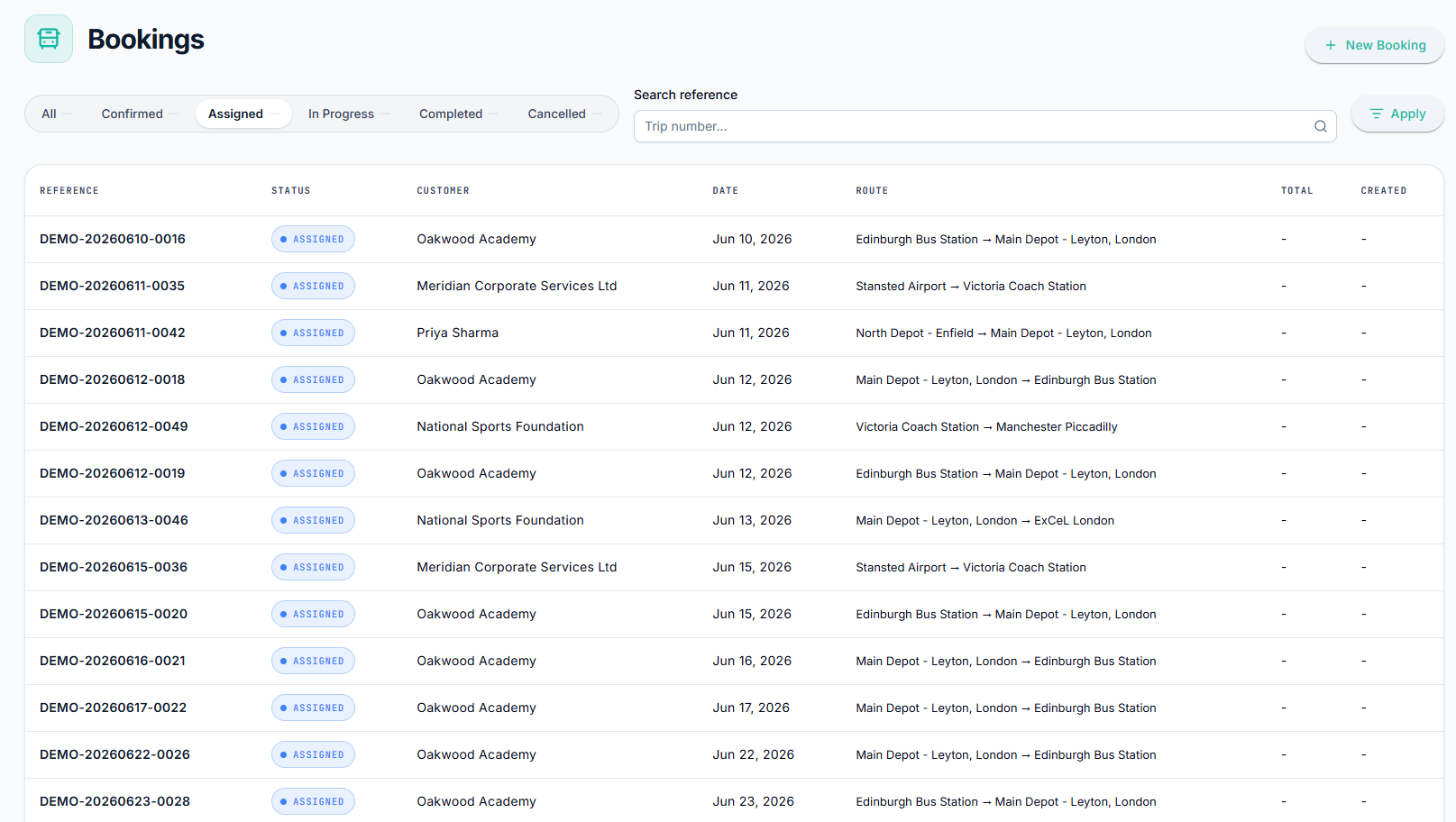
A centralised bookings list gives travel teams one source of truth for clients, routes, dates and operational status.
Essential capabilities in tour operator software
1. Enquiry and quotation management
Responding quickly is important, but speed should not come at the cost of pricing accuracy. A useful platform should help teams create consistent quotations from structured information such as route, journey duration, vehicle type, number of passengers, waiting time and customer-specific rates.
For transport-led businesses, configurable pricing rules are particularly valuable. They reduce dependence on individual employees remembering each rate and make it easier to explain how a price was calculated.
Transitour supports configurable rate plans, minimum charges, time-based rules, customer rates and multi-stop routes. Each quote can therefore be prepared from an operational pricing structure rather than from an isolated calculation.
2. Booking management
Once a quotation is accepted, the information should move into the booking workflow without unnecessary re-entry. The booking record should keep the essential details together, including the customer, dates, passenger requirements, route, stops and current status.
Status visibility is especially useful when teams need to distinguish between confirmed, assigned, in-progress, completed and cancelled work. It gives commercial, operations and finance teams a shared view of what is happening.
3. Route and itinerary details
Transport services rarely consist of a simple journey from one point to another. Airport transfers may include flight-related timing. Tours can involve several collection points, attractions and hotels. Corporate movements may require repeated journeys across several days.
A suitable system should allow the team to record multiple stops, journey notes, passenger information and timing requirements in a structured way. Saved locations can also reduce repetitive data entry for frequently used airports, hotels, stations, venues and depots.
4. Scheduling and capacity visibility
A booking is only commercially useful when the company can deliver it. That means checking the upcoming workload and understanding where capacity is available.
Weekly schedule views help operations teams see busy days, quieter periods and overlapping trips. They also make it easier to prepare for recurring services, seasonal tours, school movements or regular corporate transport.
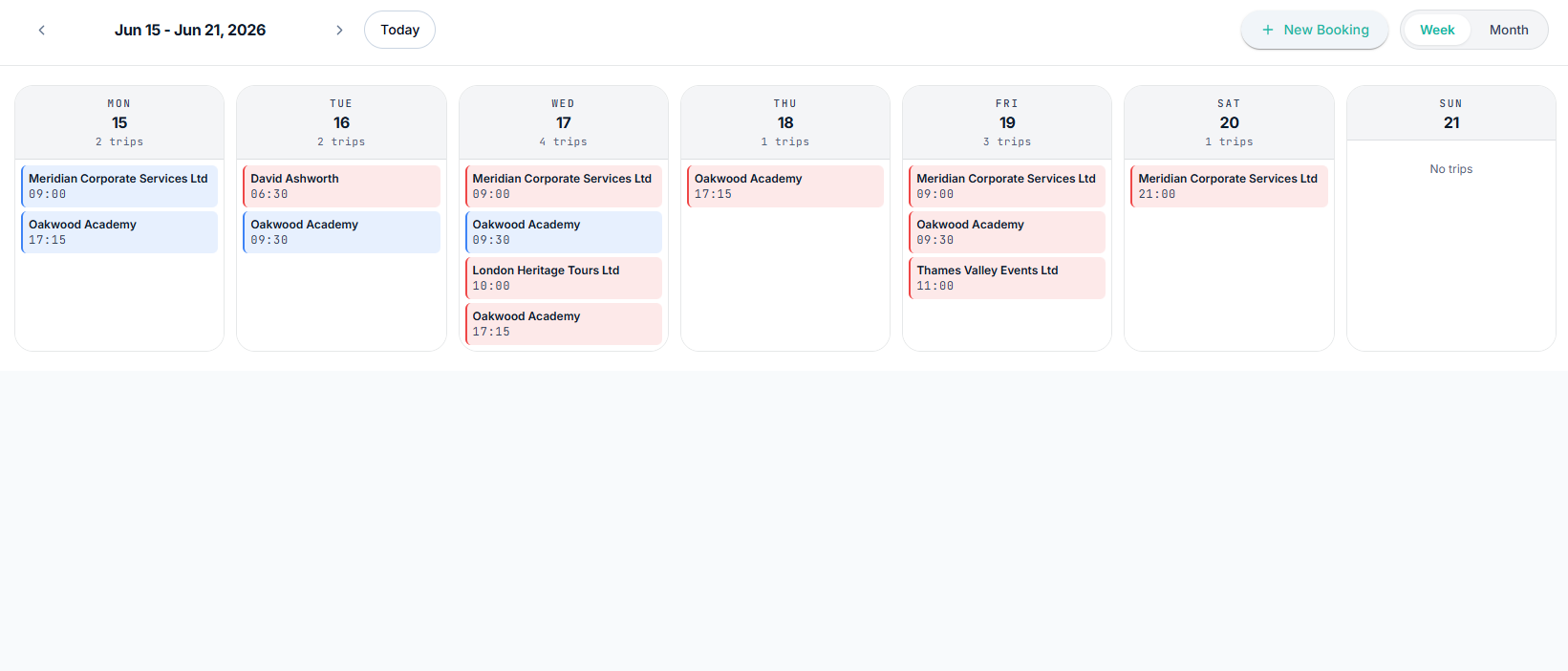
The weekly schedule helps operators review upcoming trips, workload and capacity before operational conflicts develop.
5. Vehicle and driver assignment
Generic booking tools usually stop once a reservation is placed on a calendar. Transport operations continue much further.
Teams need to match the booking with a suitable vehicle, considering passenger capacity, luggage requirements, vehicle status and base. They also need to assign an available driver with the correct licence and working hours.
Transitour connects bookings with vehicle and driver records and provides dispatch views for unassigned, assigned, in-progress and completed services. This gives the dispatch team a clearer operational sequence than a shared calendar or message thread.
6. Recurring services and contracts
Many growing travel businesses handle repeated work alongside individual bookings. Examples include hotel shuttles, school routes, cruise transfers, corporate transport, seasonal excursions and long-term agreements with agencies or DMCs.
Recreating these services manually every week adds avoidable administrative work. Recurring trip and contract management helps teams standardise repeated services while keeping the corresponding bookings visible.
7. Invoicing and financial handover
Operational software becomes more valuable when completed trips connect with invoicing. Without that connection, finance teams must search through emails and calendars to determine what should be billed.
A structured quote-to-invoice process improves traceability. Teams can follow quotations, bookings, completed services, invoice status and outstanding amounts without maintaining separate versions of the same job.
8. Reporting for operational decisions
Growth should be measured by more than the total number of bookings. Managers also need to understand quote conversion, revenue per booking, pending revenue, fleet utilisation and idle capacity.
These figures help answer practical questions:
- Are more quotations becoming confirmed bookings?
- Which periods or vehicles have unused capacity?
- How much revenue remains pending?
- Is booking growth translating into better fleet utilisation?
- Where is operational capacity limiting further sales?
Transitour includes revenue and fleet utilisation reporting that connects operational activity with financial visibility. This gives managers a more useful basis for decisions than exporting unrelated data from several systems.
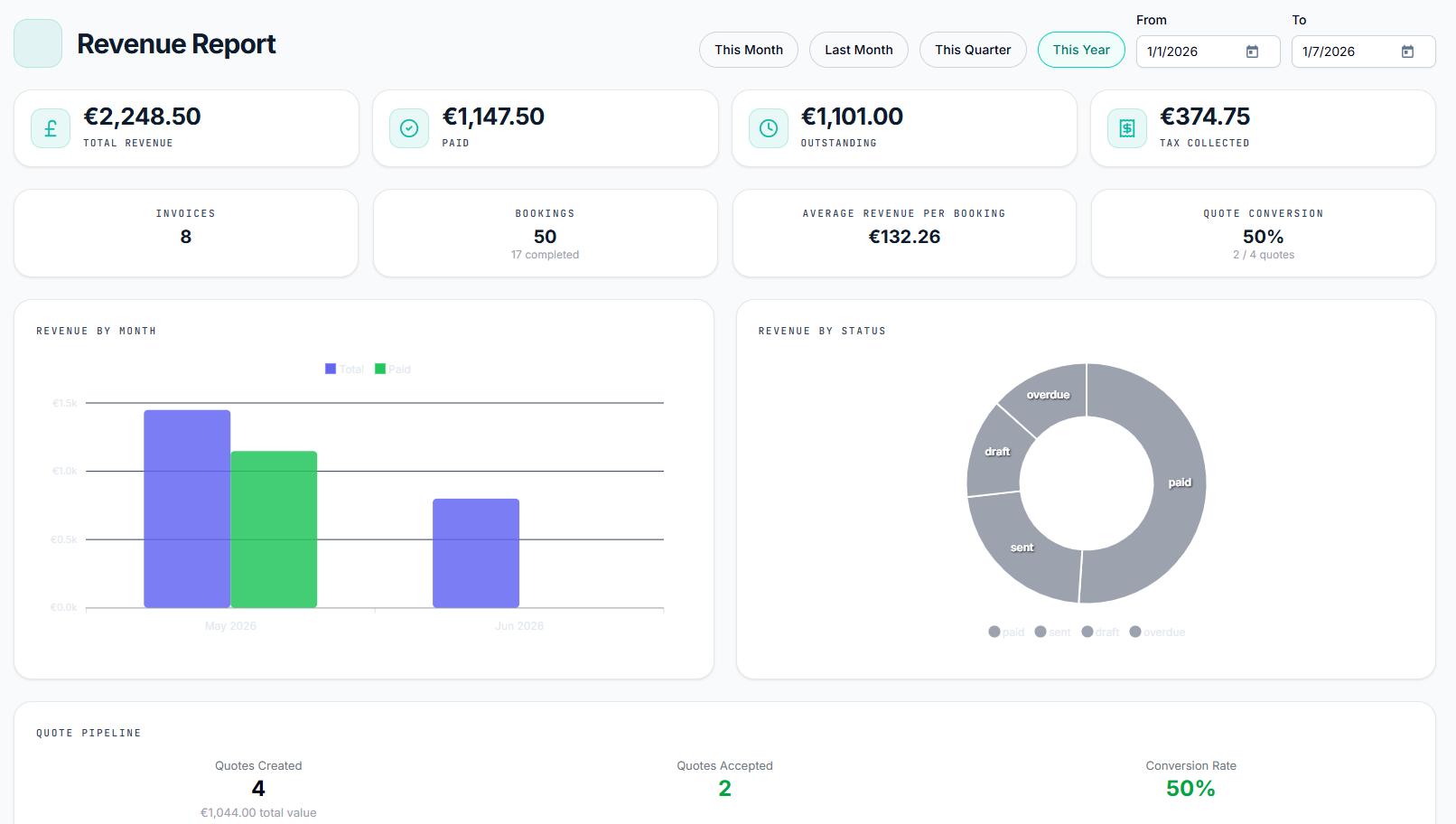
Revenue reporting connects bookings, invoices, pending payments and quote conversion in one management view.
Where AI can support tour operations
Artificial intelligence is most useful when it reduces a specific operational bottleneck. For many operators, that bottleneck begins before the booking is created.
Enquiries arrive outside office hours or while the team is managing current services. Important details may be missing, and preparing each initial quotation can take time. An AI-assisted workflow can help capture the enquiry, request relevant information and prepare a draft response for the next stage.
Transitour + AI is designed to capture leads from WhatsApp and the website, qualify enquiries, draft quotations and route confirmed bookings into the dispatch workflow. This does not remove the need for operational control. It reduces repetitive work around the first response and helps the team move structured requests into the system.
Tour operator software for DMCs and transport partners
DMCs frequently coordinate transport as part of a wider programme that may also include hotels, venues, guides and activities. Transitour should not be considered a complete replacement for every supplier or itinerary management platform used by a DMC.
Its role is more specific: it can provide a structured operational system for the transport component of the programme. This is useful when the DMC operates vehicles directly, manages a dedicated transport division or needs closer coordination with a passenger transport operator.
For example, a multi-day incentive programme may involve airport arrivals, hotel transfers, evening movements and excursions. Each service has different passenger numbers, times, stops and vehicle requirements. Managing those movements in a transport-focused system gives the operations team better control over capacity, assignment and delivery.
How to choose the right tour operator software
Before comparing interfaces or feature lists, document how work currently moves through the business. Identify where information is entered more than once, where delays occur and where teams lose visibility.
When reviewing a platform, consider the following questions:
- Does it support the services you actually sell and operate?
- Can quotations follow your own pricing rules?
- Can bookings include multiple stops and detailed trip information?
- Can operations see vehicle and driver availability before assignment?
- Can recurring work be managed without rebuilding each journey?
- Does completed work connect with invoicing and reporting?
- Can different roles access the information relevant to them?
- Can the system scale as bookings, users, vehicles or bases increase?
- Are API access or webhooks available for future integrations?
Data hosting, access control and onboarding also deserve attention. Transitour provides role-based access, API and webhook capabilities, EU-hosted SaaS infrastructure and plans designed for operators ranging from small fleets to larger multibase organisations.
Moving from fragmented tools to one operational workflow
Software implementation should begin with the core information that supports daily work: vehicles, drivers, customers, locations, pricing plans and recurring services. The team can then define how a request becomes a quotation, when it becomes a confirmed booking and how it moves into scheduling and dispatch.
The greatest benefit comes from consistency. When teams agree on one workflow and one source of operational information, they spend less time checking versions and more time managing the service.
Is Transitour the right tour operator software for your business?
Transitour is particularly relevant for tour operators, coach companies, DMC transport teams and travel businesses that manage passenger transport as a core part of their operation. It brings quotations, bookings, scheduling, dispatch, vehicles, drivers, invoicing and reporting into a connected platform.
For a growing business, the value of tour operator software is not simply automation. It is the ability to accept more work without losing control of pricing, capacity or service delivery.
See how Transitour can support your travel and transport operations. Explore the platform, request a demo or start a free 7-day trial of tour operator software built around real booking and dispatch workflows.