 Transitour
Coach Dispatch Software: How to Manage Bookings, Drivers and Vehicles in One Place

Why coach operators need better dispatch control
For many coach and bus operators, the daily dispatch process still depends on spreadsheets, phone calls, WhatsApp messages, emails and information stored in different tools. At first, this may feel manageable. A dispatcher knows the regular drivers, the vehicles are familiar, and bookings can be copied into a calendar or spreadsheet. But as soon as the operation grows, manual dispatch becomes a risk. This is where coach dispatch software becomes a practical requirement, not just an optional upgrade.
The problem is not only that manual work takes time. The bigger issue is that the operation has no single source of truth. A booking may be confirmed by email, the driver may receive updated instructions by message, the vehicle allocation may sit in a spreadsheet, and the invoice may be created later in a separate accounting tool. When information is spread across different places, errors become difficult to spot before they affect the service.
Common dispatch problems include double assigning the same vehicle, sending incomplete instructions to a driver, missing a booking update, allocating a vehicle that is not available, or discovering too late that a driver is already scheduled elsewhere. These issues are not caused by lack of effort. They happen because manual dispatch does not give operations teams enough visibility.
Transitour is designed for transport operators that want to move away from fragmented tools and manage quotes, bookings, schedules, dispatch and invoicing from one structured platform. For coach operators, bus operators, tour transport companies, DMCs and travel businesses, that means less time checking information manually and more control over the actual operation.
What is coach dispatch software?
Coach dispatch software is a system that helps transport operators plan, assign, track and manage daily coach and bus operations. Instead of using separate spreadsheets, calendars and messages, the dispatcher can work from one platform where bookings, drivers, vehicles, statuses and schedules are connected.
In practical terms, modern bus dispatch software should help an operations team answer the questions they ask every day: Which bookings are confirmed? Which jobs are still unassigned? Which driver is available? Which vehicle can be used? Are there conflicts in the schedule? Has the trip started? Has it been completed? Can the trip now move toward invoicing?
A modern real-time dispatch board gives dispatchers a clear view of operational status. Jobs can be organized by stage, such as unassigned, assigned, in progress or completed. This makes it easier to identify what needs attention without searching through emails or asking colleagues for updates.
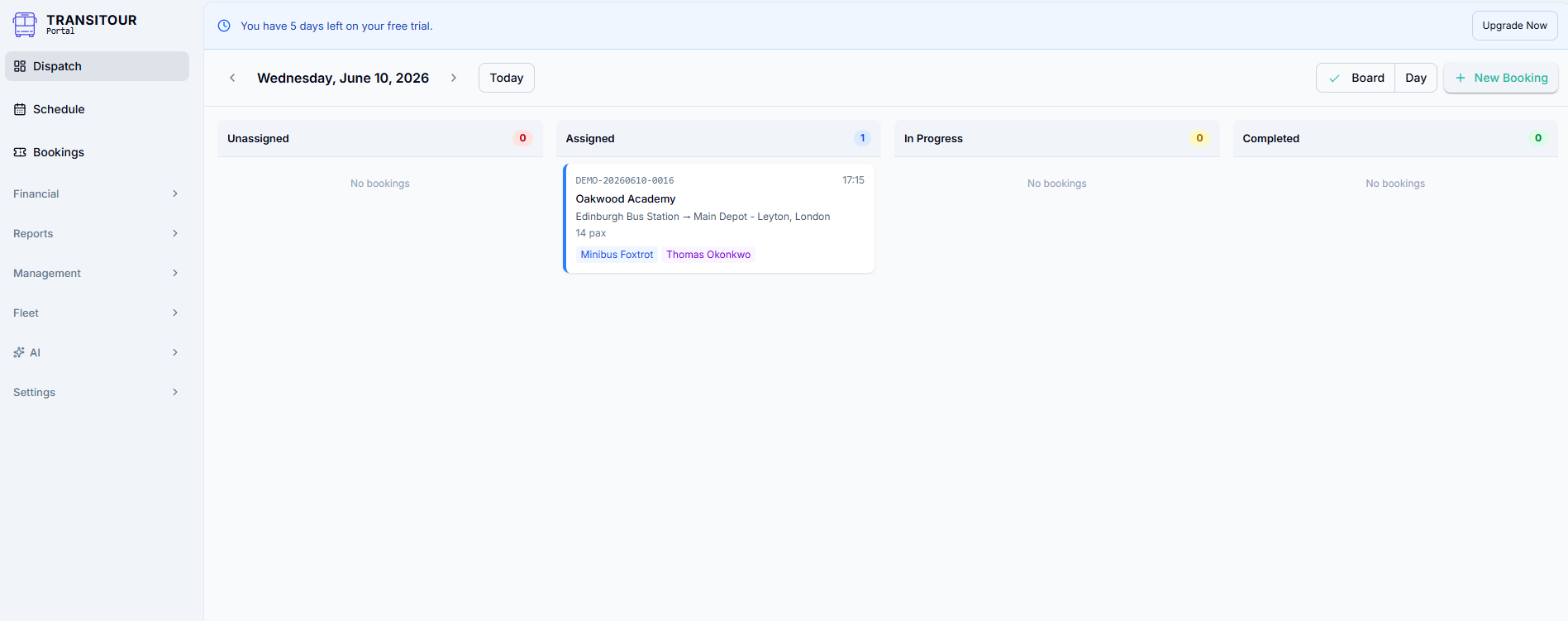
A dispatch board helps operations teams see which bookings still need action and which trips are already moving through the workflow.
Booking management software for transport operations
Bookings are the starting point of the dispatch workflow. When booking information is incomplete or disconnected, every later step becomes harder. A dispatcher needs to know the client, route, pickup time, stops, passenger requirements, vehicle needs, driver notes and commercial status before assigning resources.
With manual booking management, details can easily become outdated. A customer may confirm a change by email while the spreadsheet still shows the original plan. A dispatcher may assign a vehicle based on an older version of the trip. A driver may receive instructions that do not include the latest stop or timing update.
Transitour connects the commercial and operational workflow. Quotes can become confirmed bookings, and bookings can then move into dispatch. This helps operators reduce duplicated data entry and keeps the booking closer to the operational plan. For operators handling tours, school trips, corporate transfers, shuttles or seasonal services, this structure is essential.
Good booking management software does not simply store reservations. It gives the operations team the information they need to act on each reservation. The value is not only administrative; it directly affects service reliability.
Driver assignment without guesswork
Driver allocation is one of the most sensitive parts of dispatch management. Assigning the wrong driver, missing availability, or overlooking working time constraints can create operational and compliance problems. In a manual environment, dispatchers often depend on memory, phone calls or separate records to check who can take a job.
Transitour helps reduce this uncertainty by bringing driver availability into the dispatch workflow. The platform is designed to support real availability checks, including driver hours and leave schedules. This makes driver assignment more structured than simply choosing a name from a spreadsheet.
For a coach operator, this matters because availability is not only about whether a driver is free at a certain time. The dispatcher must also consider existing assignments, rest periods, location, and the operational fit for the job. A dispatch management software platform should help surface conflicts before they become service failures.
Vehicle assignment and fleet dispatch software
Vehicle allocation creates a similar challenge. A vehicle may look available on a calendar, but still be unsuitable for a job because of capacity, maintenance, compliance status or another operational constraint. When these details are tracked outside the dispatch process, the risk of mistakes increases.
Transitour supports operators by connecting vehicle information with dispatch planning. The platform is built for fleets that include coaches, buses, limousines, taxis and MPVs, and it helps validate vehicle capacity and compliance status before assignment. It also supports reminders for vehicle compliance such as ITV, insurance, tachograph calibration and maintenance.
This is where fleet dispatch software becomes more useful than a shared calendar. A calendar can show time slots, but it does not understand whether a vehicle should be blocked, whether it fits the passenger requirement, or whether it is suitable for a specific type of service. Transitour is designed to give dispatchers a more operational view of the fleet.
Scheduling and planning visibility
Dispatch is not only about today. Operators also need visibility across the coming days and weeks. A single-day view may help with immediate work, but weekly and monthly planning are important for capacity management, recurring services, tours and busy seasonal periods.
Transitour includes multiple dispatch views, including board, day, week and month views. This allows different team members to work at the level of detail they need. A dispatcher can focus on today's live work, while a transport manager can review the coming week and identify pressure points before they become urgent.
For operators running shuttle services, school trips, airport transfers, tours or corporate contracts, schedule visibility is not a minor convenience. It is what allows the business to accept more work with confidence, because the team can see whether the capacity is really available.
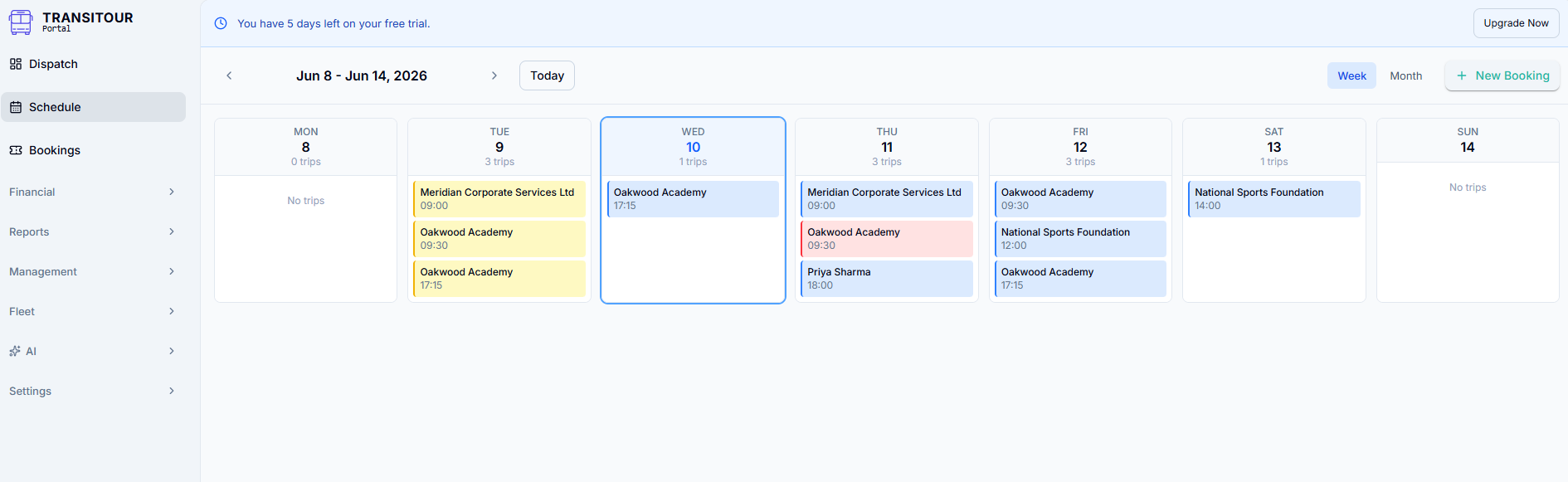
Weekly schedule visibility helps operators plan capacity, review upcoming trips and avoid last-minute dispatch pressure.
Status tracking from booking to completed trip
In a manual operation, the status of a trip is often known only when someone asks. Has the booking been assigned? Has the driver received the job? Is the trip in progress? Has it been completed? If the answer depends on a phone call or message, the dispatcher is always reacting late.
A real-time dispatch board helps teams work from visible statuses instead of assumptions. When bookings move through operational stages, the dispatcher can identify what needs action and where the workflow is blocked. This is especially useful when multiple people are involved in the same operation.
Transitour connects booking, dispatch and invoicing workflows, helping operators keep the trip lifecycle structured from the first quote to the final invoice. This reduces the chance that completed work remains unbilled or that operational status is unclear.
Conflict prevention before the day of service
One of the most important benefits of coach management software is conflict prevention. Dispatch conflicts are expensive because they often appear at the worst possible time: shortly before pickup, during a busy morning, or when the client is already waiting.
Manual checks can miss overlapping assignments, unavailable drivers, unsuitable vehicles or compliance issues. Transitour is designed to detect conflicts between bookings, drivers, vehicles and operational constraints. For operators, this means fewer surprises and fewer last-minute corrections.
Conflict prevention also improves commercial confidence. When a client requests an additional service, the team can check availability more quickly and respond with greater certainty. Faster, more reliable responses can help operators win more bookings without overloading the dispatch team.
Reporting and operational visibility
Dispatch data is valuable beyond the day of service. Operators need to understand how bookings, invoices, paid revenue and quote conversion are developing over time. Without reporting visibility, it is difficult to know whether the operation is improving, where revenue is being generated, or where follow-up is needed.
Transitour connects operational work with invoicing and reporting visibility. Completed trips can move into invoicing, and the business can review performance from a more structured base than scattered spreadsheets. For owners, transport managers and accounting teams, this makes operational data easier to use.
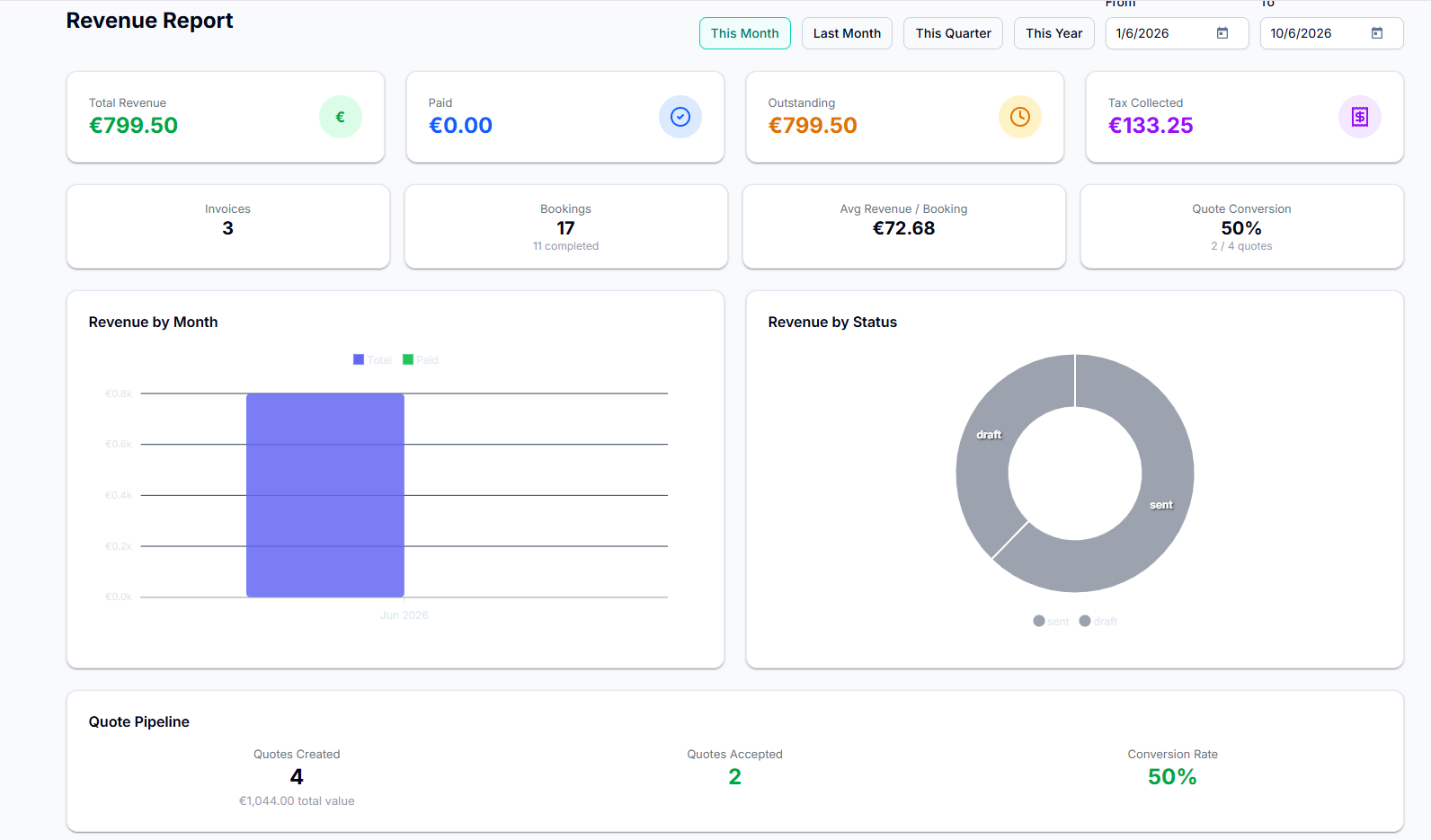
Reporting visibility helps operators connect dispatch activity with revenue, invoicing and quote conversion.
How Transitour helps coach operators manage dispatch
Transitour helps coach operators manage dispatch by bringing the core workflow into one platform: quote, book, assign, dispatch and invoice. Instead of moving information between spreadsheets, messages and accounting tools, teams can work from a structured system designed for transport operations.
For dispatchers, Transitour provides board, day, week and month views so that active jobs and future schedules can be managed with better visibility. For transport managers, the platform supports real availability checks across drivers and vehicles. For owners and accounting teams, the connection between completed trips and invoicing helps reduce administrative gaps.
Transitour also supports the operational details that matter in real coach and bus businesses: configurable pricing, multi-stop routes, vehicle compliance reminders, role-based access, API-first workflows and webhooks. For operators that use the AI plan, Transitour can also help capture leads from WhatsApp and the web, qualify requests, draft quotes and route confirmed bookings toward the dispatch board.
The result is not a generic calendar with transport terminology added on top. Transitour is built around the workflow of operators that need to manage bookings, drivers, vehicles, schedules, dispatch and invoicing with fewer manual steps.
Move from manual dispatch to a structured system
If your operation still depends on spreadsheets, calls, WhatsApp messages, emails or disconnected tools, the main risk is not just lost time. The real risk is lack of visibility. When dispatch information is fragmented, your team has to work harder to prevent errors, confirm availability and keep clients informed.
Coach dispatch software gives operators a better way to manage daily work. Transitour brings bookings, drivers, vehicles, schedules, statuses, conflict checks, invoicing and reporting visibility into a single operational platform.
To see how Transitour can help your team replace manual dispatch with a clearer, more reliable workflow, book a demo, start a free trial or contact our operations team.