 Transitour
Travel Operations Software: How to Connect Quotes, Bookings, Dispatch and Invoicing
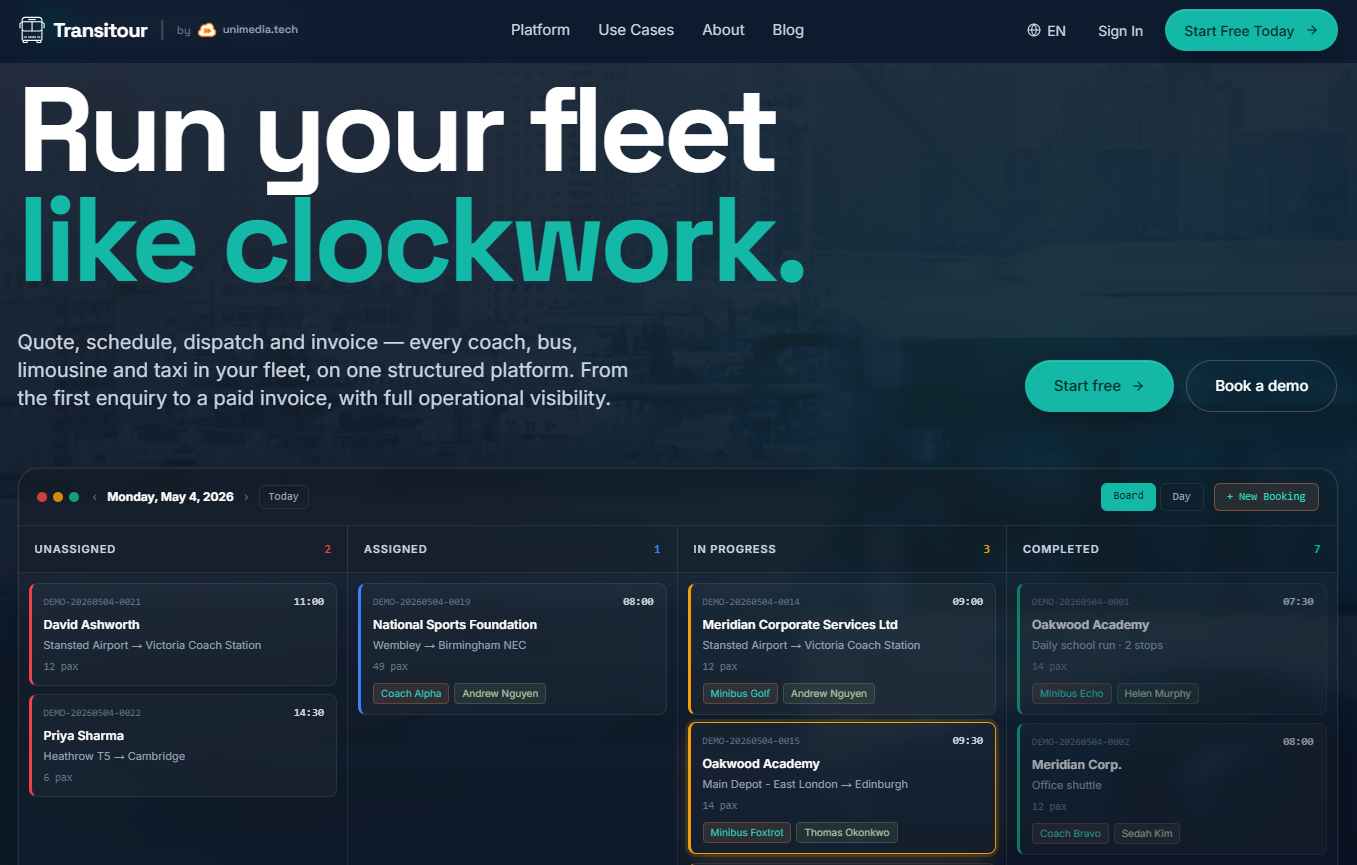
Travel operations software becomes essential when quotes, bookings, dispatch and invoicing are no longer easy to manage with emails, spreadsheets, calendars and separate accounting tools. For coach operators, bus companies, DMCs and travel businesses, the real challenge is not only taking more requests. It is keeping every confirmed trip operationally clear, financially traceable and ready to execute without duplicating information across disconnected systems.
A customer may request a coach for an airport transfer, a multi-day tour, a school trip, a corporate shuttle or a private group movement. The sales team needs to respond quickly with a reliable quote. Operations need to know whether the right vehicle and driver are available. Dispatch needs a clear view of what is assigned, in progress or completed. Finance needs the final trip data to invoice correctly. When each step lives in a different tool, small gaps turn into delays, rework and missed revenue.
This is where a structured platform such as Transitour can help transport and travel operations teams connect the full workflow: quote, booking, planning, dispatch and invoice. Instead of treating these as separate administrative tasks, Transitour is designed around the operational sequence that transport teams actually manage every day.
Why disconnected travel operations create hidden costs
Many growing operators do not fail because they lack demand. They struggle because demand arrives faster than their internal process can handle it. A DMC may receive transport requests from agencies, hotels and corporate clients. A coach operator may receive enquiries by email, WhatsApp and phone. A bus company may run a mix of one-off bookings, recurring shuttles and seasonal contracts.
At first, the workflow looks manageable. A quote is created in a spreadsheet. The booking is copied into a calendar. The dispatcher adds driver notes manually. The finance team checks emails at the end of the month to prepare invoices. But as the number of vehicles, routes, clients and changes increases, the process starts to create operational friction.
- Quotes are prepared with outdated rates or missing surcharges.
- Confirmed bookings are not always visible to dispatch early enough.
- Driver, vehicle or base availability is checked manually.
- Route details are copied from one system to another.
- Operations and finance disagree on what has been completed or invoiced.
- Managers cannot easily see conversion, pending revenue or fleet utilization.
The result is not only extra admin. It affects response time, customer experience, resource planning and profitability. Travel operations software should reduce those gaps by giving teams a single operational source of truth.
What travel operations software should connect
The value of travel operations software is not just having a digital list of bookings. The real value is connecting the steps that normally break apart as the business grows. For transport-focused travel companies, that means linking commercial requests with operational execution and financial follow-up.
1. Quotes that reflect the real service
A quote is not just a price. It includes route, date, time, passenger numbers, luggage, vehicle type, waiting time, client terms and sometimes multiple stops. If the quote is built separately from the operational system, the team may win the booking but still need to rebuild the trip later for dispatch.
Transitour supports configurable rates, route-based pricing and multi-stop route management, helping operators prepare structured quotes that can be connected to the booking workflow. This is especially useful for coach hire, airport transfers, tours, school movements, corporate transport and recurring services where small pricing differences can affect margin.
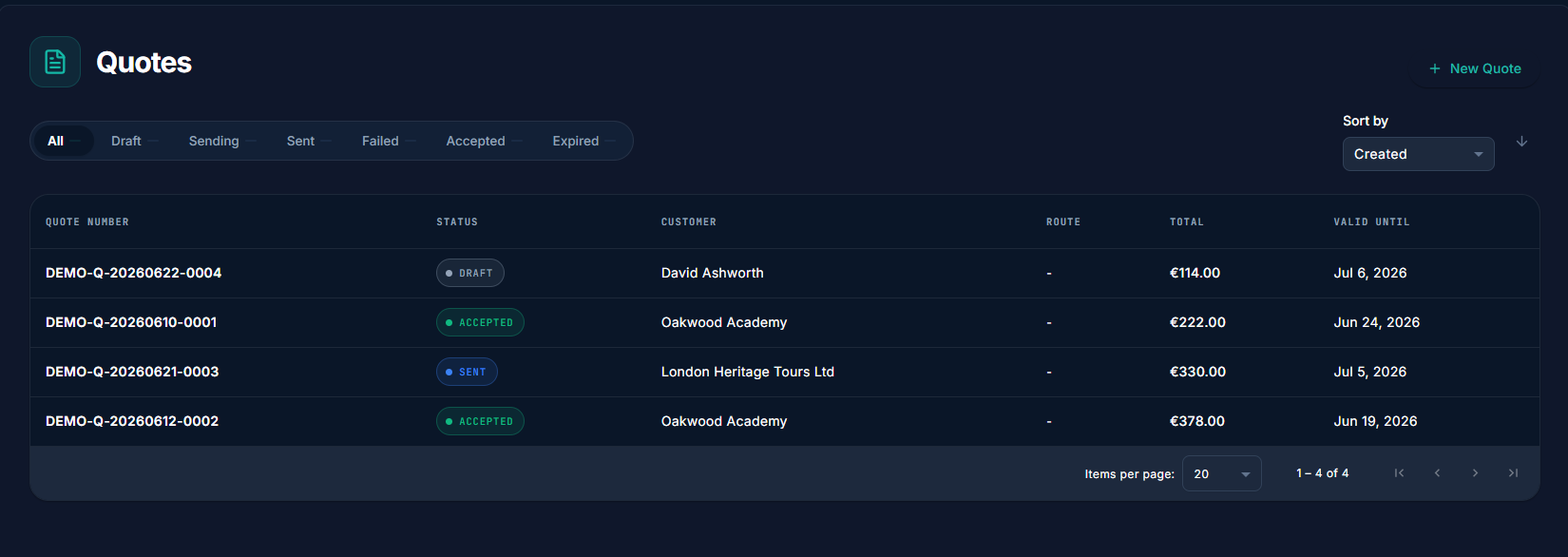
Quote tracking helps teams follow commercial opportunities before they become confirmed bookings.
2. Bookings that become operational records
Once a customer confirms, the booking should not disappear into another spreadsheet. The operational team needs the same information: client, pickup point, destination, intermediate stops, time, passengers, vehicle requirements, driver notes and any special instructions.
For coach operators and DMCs, this handoff is critical. A confirmed private tour may require a specific vehicle size. A school trip may require recurring pickup locations. A corporate shuttle may depend on fixed times and contract terms. If the booking is created from clean operational data, the dispatch team can work with fewer assumptions.
Transitour centralizes reservations and supports structured booking workflows, helping teams keep trips searchable, traceable and connected to the rest of the operation.
3. Dispatch that shows what is actually happening
Dispatch is where commercial promises become real services. A quote may be accepted, but the trip still needs a driver, a vehicle and a clear status. Teams need to know which bookings are unassigned, assigned, in progress and completed. They also need to react quickly when changes happen.
This is where generic calendars often fall short. A calendar can show time, but it does not always show operational readiness. It may not make it obvious which trips still need allocation, which vehicle is assigned, whether a driver is available or whether a job has moved into execution.
Transitour’s dispatch board is designed to give operations teams a clearer view of daily work by status. For teams handling multiple vehicles, bases or service types, this visibility helps reduce last-minute confusion and manual coordination.
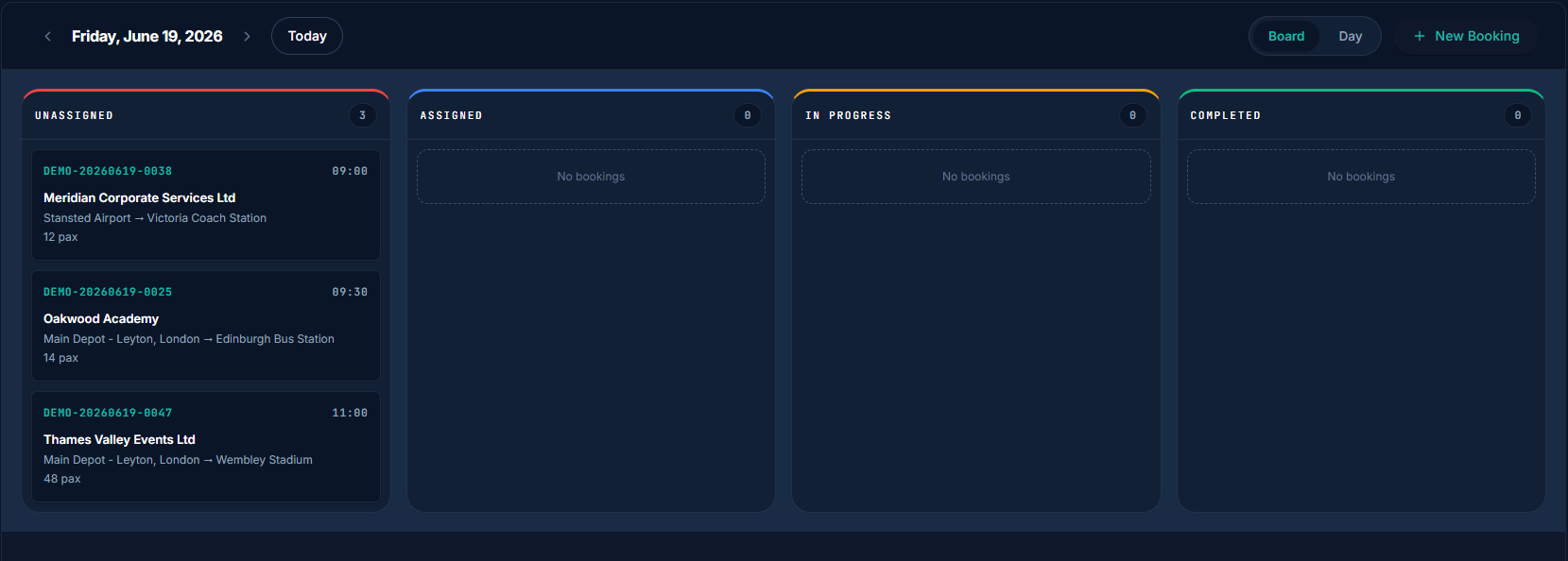
Suggested caption: Transitour gives dispatch teams a clear board view of bookings by operational status.
4. Invoicing that follows the completed trip
Finance should not need to reconstruct the operation from emails. Once a trip is completed, the invoicing workflow should be based on the same structured information used by sales and dispatch. This reduces the risk of missed charges, delayed invoices or disputes with clients.
For transport businesses, invoicing is especially sensitive because pricing may depend on route, waiting time, client terms, taxes, contract rules or extras. If the invoice does not match what was quoted and delivered, the business loses time defending or correcting it.
Transitour connects operational activity with invoice generation and tracking, giving teams a clearer link between bookings, completed work and financial follow-up.
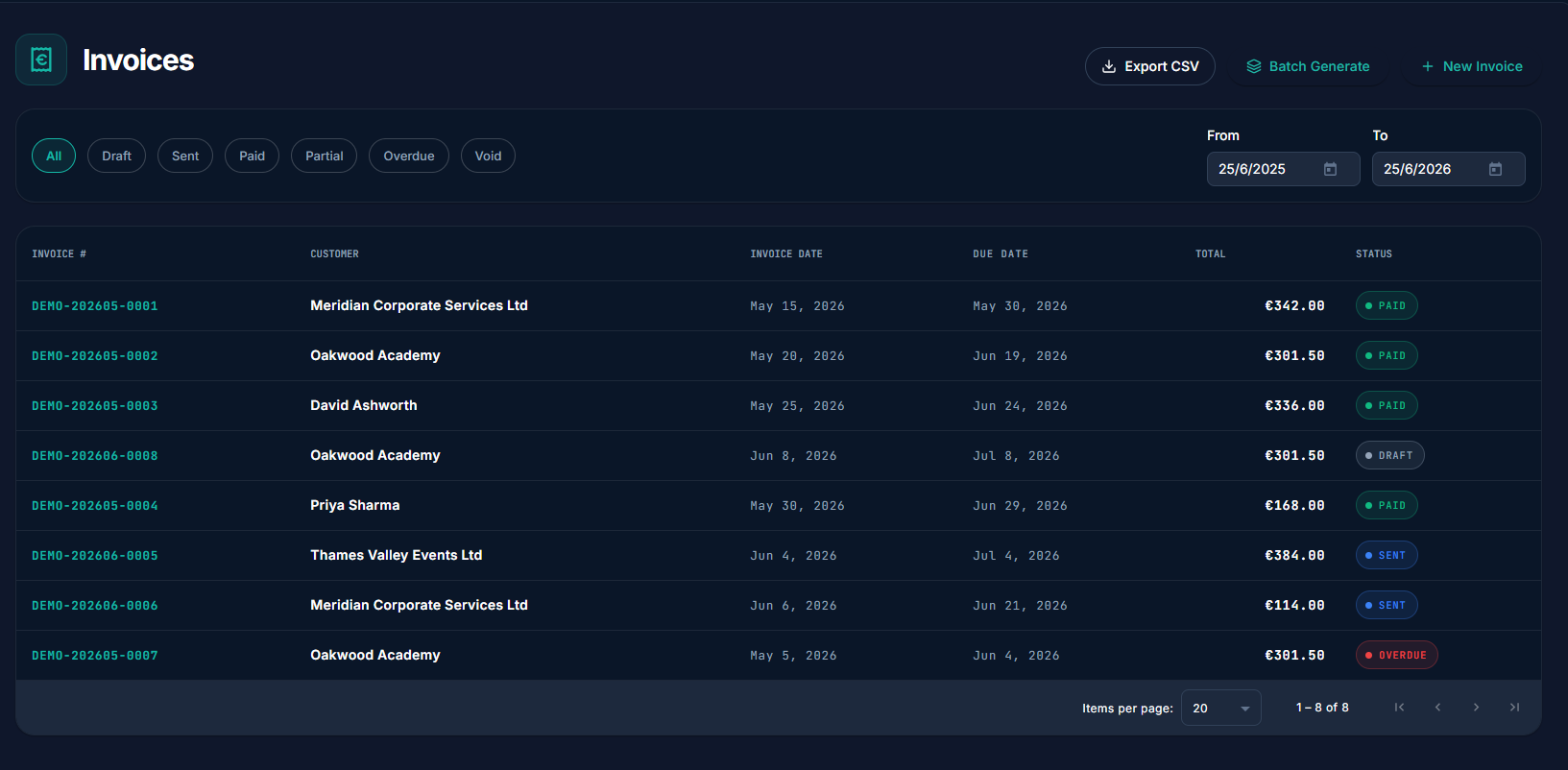
Transitour connects operational activity with invoicing and payment visibility.
How this workflow looks in a real transport operation
Imagine a DMC receives a request for a three-day group tour. The client needs airport pickup, hotel transfers, daily sightseeing routes and a final return transfer. The request arrives by email, but the operations team also receives updates by phone and WhatsApp. The group size changes twice before confirmation.
In a disconnected process, sales prepares the quote in one file, operations rebuilds the itinerary elsewhere, dispatch assigns the vehicle manually and finance later checks the final details before invoicing. Every change creates another chance for information to be missed.
In a connected workflow, the request can move through a more structured process. The quote is based on route and service details. Once accepted, the booking carries operational information forward. The dispatch team can assign the appropriate vehicle and driver. The completed trip can then support invoicing and reporting.
The same logic applies to coach operators managing school trips, corporate transport, airport transfers, contract work or private hire. The goal is not to add more software to the business. The goal is to remove repeated manual handoffs between teams.
Why tour operators and DMCs need transport-specific workflows
Many travel businesses already use a CRM, booking system or accounting platform. These tools can be useful, but they often do not understand the operational details of transport. A CRM may track the client relationship, but not vehicle capacity. A calendar may show a trip, but not whether a suitable driver and vehicle have been assigned. An accounting tool may issue an invoice, but not manage the route, stops or dispatch status behind it.
Transport-focused travel operations require more than generic task management. Teams need to manage vehicle types, passenger capacity, pickup and drop-off locations, multi-stop routes, driver assignment, compliance details, recurring trips and operational statuses. When those details are handled outside the main workflow, the business becomes dependent on individual memory and manual checks.
Transitour is positioned for operators that need a structured system for transport operations rather than a generic travel database. It supports coach, bus, limousine, taxi and MPV operations, which makes it relevant for businesses that manage different types of passenger transport services from one operational environment.
Where automation and AI can help
Automation is most valuable when it removes repetitive work without removing operational control. For transport and travel teams, the first opportunity is often the commercial intake process: answering requests, qualifying enquiries and preparing quotes faster.
Transitour + AI is designed to help capture leads from WhatsApp and the web, qualify requests, draft quotes and route confirmed bookings into the dispatch workflow. For teams that receive enquiries outside office hours or during busy operational periods, this can help reduce response delays and increase the number of opportunities handled without adding more manual admin.
AI should not replace operational judgment. A dispatcher still needs visibility, control and the ability to make decisions. But when AI helps structure incoming requests and reduce repetitive quote preparation, the team can spend more time on exceptions, customer service and resource planning.
What to look for before choosing travel operations software
Before selecting a platform, operators should look beyond a simple booking list. The right system should support the complete operational chain from request to invoice.
- Quote management: Can the system support structured pricing, route details and client-specific conditions?
- Booking visibility: Can teams see confirmed, assigned, in-progress, completed and cancelled bookings clearly?
- Dispatch workflow: Can dispatchers assign drivers and vehicles from an operational board?
- Scheduling: Can the team see upcoming work by day or week and reduce planning conflicts?
- Fleet and driver data: Can vehicle, driver and capacity information support better allocation?
- Invoicing connection: Can completed operational work flow into financial follow-up?
- Reporting: Can managers see revenue, utilization and quote conversion in a practical way?
- Scalability: Can the platform support a small fleet today and more vehicles, users or bases later?
For operators managing transport manually, these questions are often more useful than comparing long feature lists. The most important test is whether the system reduces the number of times the same trip data must be entered, checked or corrected.
Conclusion: travel operations software should connect the whole workflow
The strongest reason to invest in travel operations software is not simply to become more digital. It is to connect the work that keeps transport businesses moving: quote preparation, booking confirmation, planning, dispatch, invoicing and reporting.
When these steps are disconnected, teams lose time, visibility and margin. When they are connected, sales, operations and finance can work from the same structured information. Customers receive faster responses. Dispatchers have a clearer view of the day. Finance can invoice with more confidence. Managers can see how the business is performing.
Transitour helps coach operators, bus companies, DMCs and travel transport teams manage this workflow in one structured platform. If your team is still connecting quotes, bookings, dispatch and invoicing manually, it may be time to see how Transitour can help.
Ready to connect your transport operation from quote to invoice? Start a free trial, book a demo or talk to the Transitour team to see how travel operations software can support your daily workflow.